
Best Places To See Fall Foliage In The White Mountains Of New Hampshire

The White Mountains have some of the best fall colors in New England. Each year, the region’s maples, birch, beech, and other hardwoods turn shades of red, orange, and yellow, mixed in with plenty of evergreen.
There are also so many ways to see the colors here. You can drive through mountain passes, hike to overlooks, ride a gondola above the trees, or simply spend the day exploring one of the area’s small towns.
If you’re planning a fall trip, these are some of the best places to see fall foliage in the White Mountains, along with a few tips to help plan your visit.

Top Spots To See Fall Foliage In The White Mountains Of New Hampshire
Kancamagus Highway
Driving the Kancamagus Highway is one of the best things to do in the White Mountains during fall, and easily one of the most famous fall foliage drives in New England.
The 34.5 mile scenic drive follows NH Route 112 between Lincoln and Conway, winding through White Mountain National Forest. Along the way, you’ll pass mountain overlooks, the Swift River, waterfalls, rocky gorges, and seemingly endless fall color.
While you can drive the Kanc relatively quickly, it’s much better when you take your time and make stops along the way. Albany Covered Bridge, Lower Falls, Rocky Gorge, Sabbaday Falls, and scenic viewpoints like Pemigewasset Overlook are a few worth adding to your drive — I’ll cover several of these in more detail throughout this guide.
The Kancamagus Highway itself is free to drive, although some stops along the route require a White Mountain National Forest recreation pass or day-use fee.
Tip: If you have extra time, consider detouring onto Bear Notch Road as well. It’s another beautiful fall drive with several overlooks and tends to be much less talked about than the Kanc.

Franconia Notch State Park
Franconia Notch State Park is one of the best places to see fall foliage in the White Mountains, and I’d definitely make time for it during a fall trip.
The park stretches for about eight miles through a narrow mountain pass, with Franconia Notch Parkway running right through the middle. This makes it really easy to explore by car, stopping at different attractions as you go.
Some of the best things to do in Franconia Notch State Park during fall include hiking Artist’s Bluff, walking through Flume Gorge, seeing Echo Lake and Profile Lake, stopping at The Basin, hiking to Lonesome Lake, or biking the Franconia Notch Recreation Path.
Even if you’re short on time, I think it’s worth simply driving Franconia Notch Parkway. The road is surrounded by mountains and fall color, and there are several places to stop along the way.
I’ve highlighted a few of my favorite fall experiences here below, but for a more detailed look at the park, check out my Best Things To Do In Franconia Notch State Park guide.
Flume Gorge
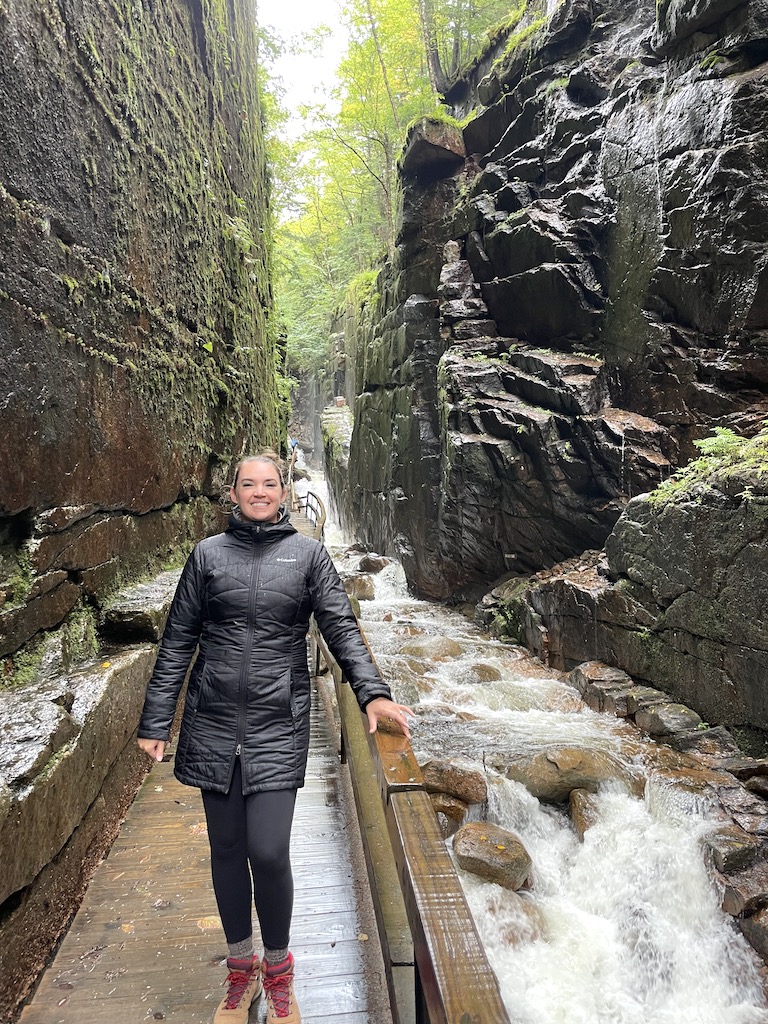
Flume Gorge is one of my favorite attractions in Franconia Notch State Park and especially beautiful surrounded by fall color. The natural gorge has towering granite walls, waterfalls, and a series of wooden boardwalks and stairs that take you directly through the narrow chasm.
The full loop is about 2.2 miles and includes much more than the gorge itself. You’ll also pass waterfalls, two covered bridges, forested trails, and some really beautiful mountain scenery along the way. There are quite a few stairs through the gorge, and they can be wet and slippery, so wear shoes with good traction.
Flume Gorge requires a paid ticket and timed reservation. You’ll definitely need to book in advance during peak fall colors. For current information and reservations, visit New Hampshire State Parks: Flume Gorge.

Artist’s Bluff
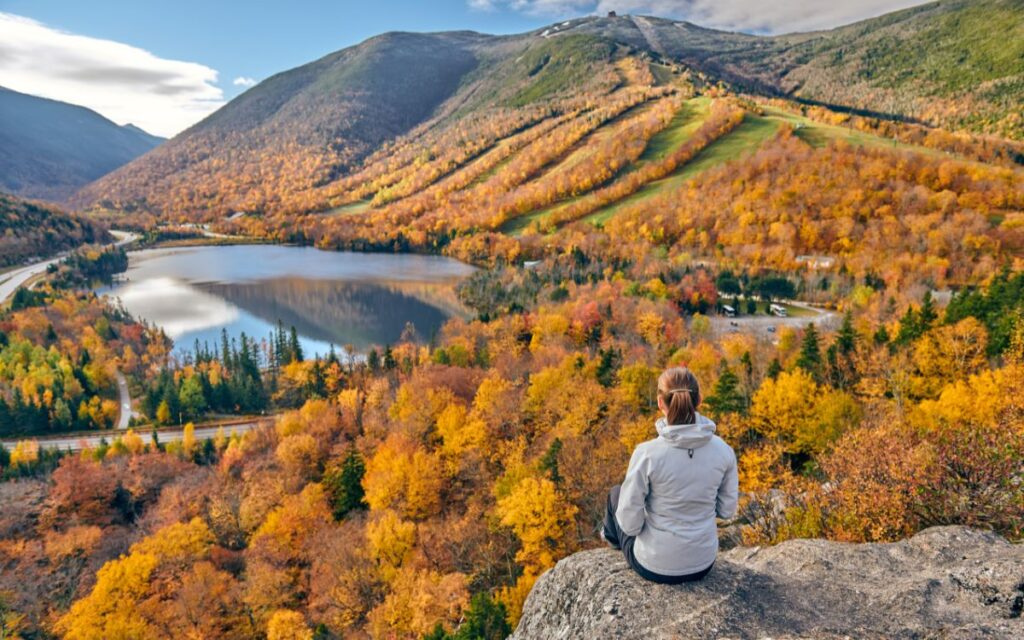
For one of the most iconic fall views in Franconia Notch, hike Artist’s Bluff.
The overlook looks down over Echo Lake, surrounded by the White Mountains and, if your timing is right, a huge display of fall color. It’s easy to see why this is one of the most photographed foliage views in the region. The popular loop is about 1.5 miles with 400+ feet of elevation gain and is generally considered moderate. Don’t let the short distance fool you, though, the trail is steep and rocky in sections.
Like many spots on this list, Artist’s Bluff gets extremely busy during fall foliage season, so I’d go early if this hike is high on your list.
Cannon Mountain Aerial Tramway – Closed
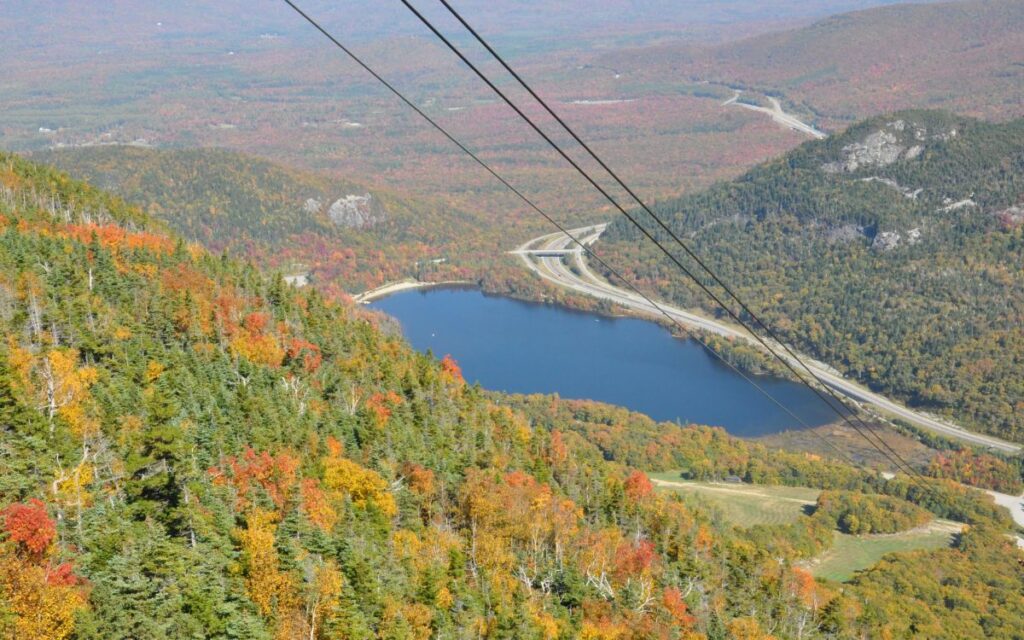
The Cannon Mountain Aerial Tramway was previously one of the best ways to see fall foliage in Franconia Notch, thanks to panoramic views from the 4,080-foot summit of Cannon Mountain.
However, after 45 years of operation, the tram was permanently retired in October 2025.
The good news is a replacement is underway. A third-generation aerial tram is currently being developed, with the replacement project scheduled for completion in 2028.
So, unfortunately, you can’t ride the tram during your fall visit right now. But in the meantime, you can still visit the Cannon Mountain area and keep an eye on Cannon Mountain Aerial Tramway for updates.
Go For A Scenic Train Ride
A scenic train ride is a fun way to see the fall colors in the White Mountains, and there are two main railroads to consider.
Conway Scenic Railroad departs from North Conway and offers a few different excursions. For fall, I’d go with the Mountaineer, a 4 – 4.5 hour round trip through Crawford Notch. The route follows the Saco River and passes through some really beautiful mountain scenery, including Frankenstein Trestle and Willey Brook Bridge.
The railroad also offers the Valley Train, which is only about an hour, but doesn’t have the same “wow” factor as the Mountaineer Route. So I’d skip this one, especially if fall colors are your main goal.
Another option is Granite State Scenic Railway, which departs from Lincoln and follows the Pemigewasset River. The ride is much shorter than the Mountaineer, making it easy to fit into a day of exploring the Lincoln and Franconia Notch area, while still offering plenty of beautiful fall colors along the river.
Tip: Book your train tickets as early as possible if you’re visiting around peak foliage. These rides are extremely popular in fall.


Crawford Notch State Park
Crawford Notch State Park is another popular place to see fall foliage in the White Mountains. The park follows a dramatic mountain pass, with Route 302 running right through it, so you can see quite a bit without committing to a long hike.
The drive is beautiful in fall, and there are several quick stops along the way that make it easy to slow down and see more of the park.
Silver Cascade is one of the best, with a roughly 250-foot waterfall visible just off Route 302. There’s a parking area across the road, making this a quick stop that requires very little walking.
Saco Lake, near the northern end of the notch, is another easy place to stop. The small lake sits right at the base of the mountains and is especially pretty when the surrounding trees begin to change.
If you have more time, Crawford Notch also has some excellent hiking. Mount Willard is one of the most popular options, with a relatively short but steady climb leading to a wide overlook of Crawford Notch. Arethusa Falls and Frankenstein Cliff are other popular hikes in the area, and Sawyer River Trail & Road is one of my personal favorite spots to catch fall colors here.

Mount Washington
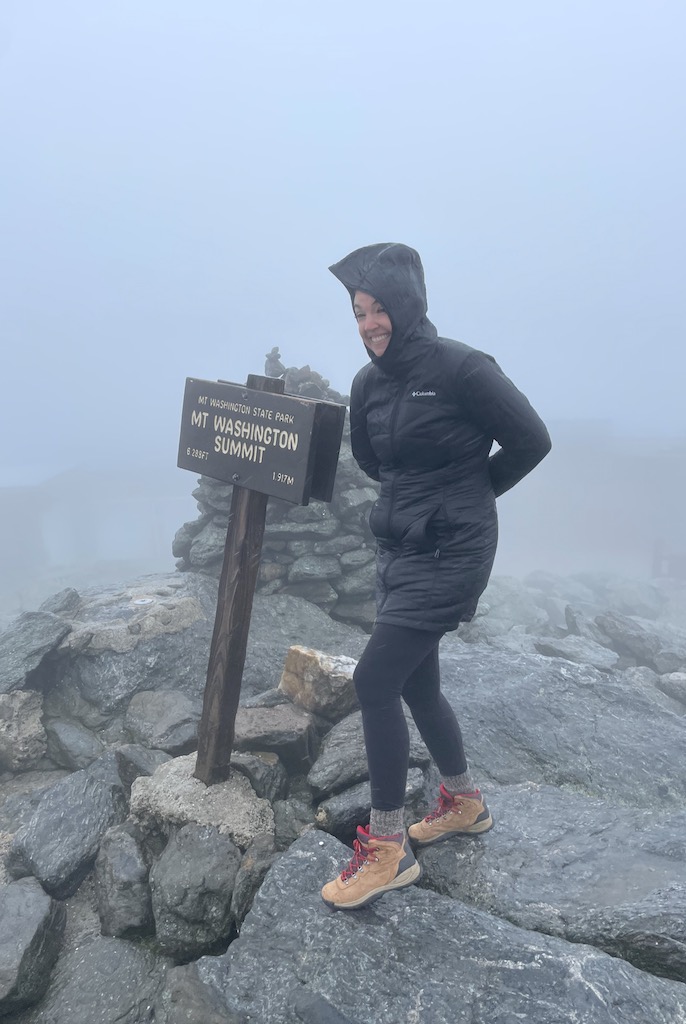
At 6,288 feet, Mount Washington is the highest peak in the Northeast and offers a completely different perspective on fall in the White Mountains.
As you make your way up the mountain, you’ll start among the fall colors at lower elevations before the landscape gradually changes and eventually rises above the tree line. On a clear day, the summit has sweeping views over the surrounding mountains and valleys, so while there aren’t colorful deciduous trees at the top, you can look out over miles of fall foliage below.
Weather plays a huge role here, though. Mount Washington is known for extreme and rapidly changing conditions, and visibility at the summit can vary significantly from what you’re seeing at the base. We had almost no visibility at the summit during our early fall visit.
There are two main ways to reach the top without hiking: the Mount Washington Cog Railway and Mount Washington Auto Road.
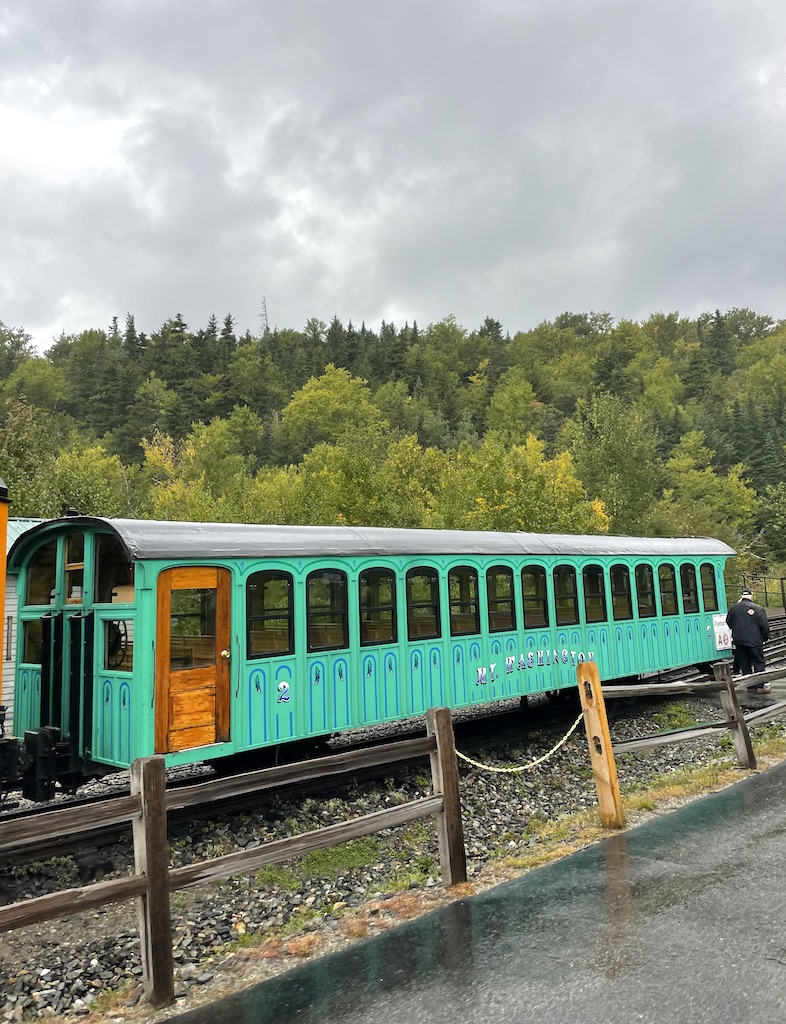
The historic Cog Railway climbs the western side of Mount Washington and is probably the more unique of the two experiences. You’ll pass through the changing landscape as the train climbs toward the summit, with plenty of fall color around the lower portion of the route.
Mount Washington Auto Road approaches from the opposite side of the mountain and climbs about 4,600 feet over eight miles. You can drive your own vehicle or take a guided tour, which is a good alternative if you’re not comfortable driving the steep and winding road yourself.
Both the Cog Railway and Auto Road are seasonal and weather dependent, especially later in fall, so check operating conditions before you go. Also, bring warm layers. The weather at the summit can be drastically different from what you experienced at the base.

Omni Mount Washington Resort
The Omni Mount Washington Resort is one of the most recognizable hotels in New England, and its setting is especially beautiful in fall.
The historic resort dates back to 1902 and sits at the base of Mount Washington, surrounded by the White Mountains. In fall, the grand white hotel against the surrounding red, orange, and yellow trees is quite the view.
There’s plenty to do here beyond staying overnight. The resort has restaurants and bars, a spa, golf courses, horseback riding, and access to the many activities at nearby Bretton Woods — which I’ll get into more below.
Non-guests can visit the resort as well, so it’s worth stopping by to walk around, take in the views, or grab something to eat. Of course, if you’re looking for somewhere special to stay during a fall trip, spending a night or two at Omni Mount Washington Resort would give you more time to enjoy the property and surrounding area.

Bretton Woods
Just across from the Omni Mount Washington Resort is Bretton Woods, another really beautiful place to spend some time during a fall trip.
The main highlight this time of year is the Skyway Gondola, which takes you up Mount Rosebrook to Rosebrook Lodge. The ride gives you views over the surrounding mountains and, once at the top, you’ll have excellent views toward Mount Washington and the Presidential Range. In fall, you’re looking out over miles of colorful forest below.
You can spend some time exploring at the top as well. There are hiking trails around the summit, or you can grab something to eat at Rosebrook Lodge before taking the gondola back down.
There’s plenty more to do around Bretton Woods if you want to make more of a day out of it. Depending on when you visit, options include hiking, mountain biking, horseback riding, the canopy tour, golf, and fly fishing.
Go For A Hike
Hiking is one of the best ways to experience fall foliage in the White Mountains. There are hundreds of trails throughout the region, ranging from quick walks to waterfalls to challenging mountain hikes with wide open foliage views.
A few hikes to consider include:
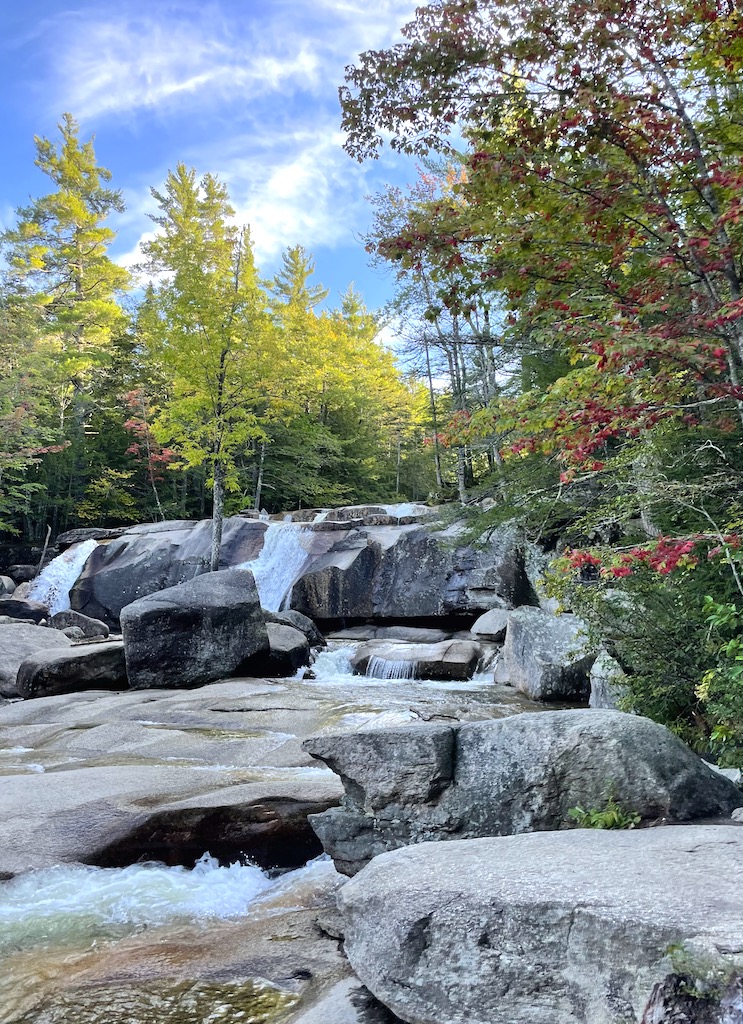
- Diana’s Baths — 1.3 miles: An easy walk to a series of waterfalls and pools surrounded by forest.
- Sabbaday Falls — 0.7 miles: Another easy option, with a short walk from the Kancamagus Highway leading to a beautiful waterfall.
- Artist’s Bluff — 1.5 miles: A short but rocky, moderate hike with one of the most recognizable fall views in the White Mountains, overlooking Echo Lake.
- Mount Willard — 3.1 miles: A moderate hike in Crawford Notch with a wide open view looking straight down the notch.
- Arethusa Falls — 2.8 miles: A moderate hike through the forest to one of New Hampshire’s tallest waterfalls.
- Franconia Ridge Loop — about 8.5 miles: A very difficult, full day hike best left to experienced and well prepared hikers, but one with incredible views from above the tree line.
There are far too many trails in the White Mountains to cover here, so I recommend checking AllTrails for more options near wherever you’re staying. You can filter by distance and difficulty to find something that works for you.
Also, don’t underestimate the weather this time of year. Conditions can change quickly in the White Mountains, and higher elevations can be significantly colder than the valleys below. Check the forecast and trail conditions before heading out, and come prepared with layers.
See The Covered Bridges
It wouldn’t be a fall trip to New England without seeing at least a few covered bridges, and there are plenty scattered throughout the White Mountains.
Many date back to the 1800s, when bridges were covered to help protect the wooden structure from New England’s harsh weather. Today, they also happen to look especially beautiful surrounded by fall colors.
A few worth looking for during your trip include:
- Albany Covered Bridge — One of my favorites for fall. This historic bridge crosses the Swift River just off the Kancamagus Highway, so it’s an easy stop to work into your drive.
- Saco River Covered Bridge — Located in Conway Village and spanning the Saco River. This is an easy one to see if you’re staying around North Conway.
- Honeymoon Covered Bridge — A beautiful red covered bridge right in Jackson Village. This one would be easy to pair with Jackson Falls and some time exploring town.
- Flume Covered Bridge — Located along the Flume Gorge loop in Franconia Notch State Park. You’ll need a ticket/reservation for Flume Gorge to access it.
- Swift River Covered Bridge — Another historic bridge in Conway, located where the Swift and Saco rivers meet.
You definitely don’t need to seek out every covered bridge in the region. I’d add one or two that fit naturally into your itinerary — chances are you’ll already be passing near several of them while exploring the White Mountains.
Rocky Gorge Scenic Area
Rocky Gorge Scenic Area is an easy stop along the Kancamagus Highway and especially pretty when the surrounding forest changes color.
From the parking area, it’s just a short walk to the gorge, where the Swift River rushes through a narrow, rocky channel. A footbridge crosses the river here, and you can continue a little farther to Falls Pond, which is also surrounded by beautiful fall colors.
You don’t need a ton of time here, making this an easy stop to add while driving the Kanc. There’s a parking area directly off the highway, and a White Mountain National Forest recreation fee/pass is required.
Sugar Hill
There are lots of beautiful towns throughout the White Mountains in fall, but Sugar Hill is one of the most popular for fall colors.
The small town sits just outside Franconia Notch and is surrounded by mountain scenery, with views toward the Franconia and Presidential ranges. In fall, the surrounding forests and sugar maples turn bright shades of red, orange, and yellow.
Take some time to drive the quiet roads around town and enjoy the views. St. Matthew’s Chapel is an especially pretty stop in fall, and Coffin Pond is another easy place to see the foliage reflected across the water.
You can also stop by Polly’s Pancake Parlor, a longtime Sugar Hill favorite known for pancakes made with locally ground grains and New Hampshire maple syrup.
Just know that Sugar Hill’s fall beauty isn’t exactly a secret. The town gets very busy during peak foliage, especially around its most photographed spots. If you can, visit early in the day and be mindful that many of the best views are along residential roads and private property.
Loon Mountain
Loon Mountain is another great place to see the fall colors, especially if you’re staying around Lincoln.
The main highlight this time of year is the Gondola Skyride, which climbs 1,738 vertical feet to the summit of Loon Peak. You’ll get mountain and foliage views throughout the ride, followed by an even wider view over the White Mountains once you reach the top.
There’s more to do at the summit than simply turn around and ride back down. You can climb Herbert’s Observation Tower for an even higher viewpoint, walk the short summit trails, explore the glacial caves, or grab something to eat. On a clear day, views stretch from Mount Moosilauke toward Mount Washington.
If you want to spend more time at Loon, there are also hiking and mountain biking trails, a zipline, and other seasonal activities around the resort.
The gondola is really the reason I’d prioritize Loon during a fall foliage trip though. Just try to save this one for a clear day — those big mountain views are a major part of the experience.
Echo Lake State Park
Echo Lake State Park is another beautiful place to see fall colors, especially if you want something a little more relaxed than hiking to a mountain overlook.
The park is centered around Echo Lake, which sits beneath Cathedral and White Horse ledges. In fall, the surrounding mountains and colorful forest make a really pretty backdrop for the lake. Depending on seasonal operations, you can kayak or canoe here, or simply walk around the lake and enjoy the views from shore.
One of the biggest highlights is Cathedral Ledge, which rises about 700 feet above the surrounding area. You can hike to the top, but there’s also a seasonal auto road that takes you close to the overlook — a great option if you want a big fall foliage view without much hiking.
There are also picnic areas and additional hiking trails throughout the park, so you can easily spend a few hours here or make it a quick stop while exploring the North Conway area.

Lost River Gorge & Boulder Caves
Lost River Gorge & Boulder Caves is a fun way to see fall colors while exploring something a little different from the overlooks and scenic drives throughout the White Mountains.
Located in Kinsman Notch, the attraction follows a boardwalk through a forested gorge filled with huge boulders, waterfalls, and glacial caves. The surrounding forest turns in fall, so you’ll have plenty of color along the walk.
There are more than 1,000 stairs throughout the route, and you can climb and crawl through several of the boulder caves along the way. The caves are optional, though, so you can bypass them and stick to the boardwalk if you’d prefer.
There’s a fee to enter, and timed reservations are recommended since popular fall dates can sell out. Check current hours and availability at Lost River Gorge & Boulder Caves.

Beaver Pond Scenic Area
Beaver Pond Scenic Area is another easy fall foliage stop, located along Route 112 in Kinsman Notch.
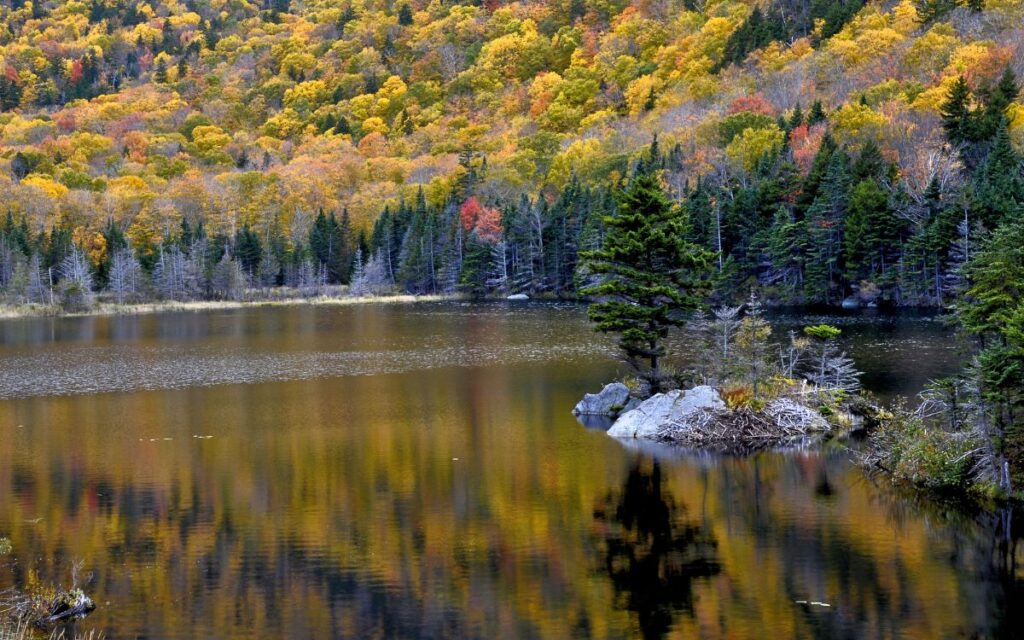
The pond is surrounded by forest and mountains, and on a calm fall day, you’ll often get beautiful reflections of the colorful trees across the water. It’s especially popular with photographers for this reason.
This doesn’t need to be a major time commitment. There’s a parking area right by the pond, so you can stop for a few photos, enjoy the views, and continue on your way through Kinsman Notch. If you’re already visiting nearby Lost River Gorge, it’s an especially easy stop to add to your day.
Cranmore Mountain Resort
Cranmore Mountain Resort is another fun place to spend some time during a fall visit, especially since it’s right in North Conway.
The main draw for fall colors is the Scenic Chairlift, a roughly seven minute ride to the top of Cranmore Mountain. You’ll have foliage views on the way up, followed by a much wider view over North Conway, Mount Washington Valley, and the surrounding mountains from the summit.
Once you’re at the top, you can walk the summit paths and viewpoints or grab something to eat at the Summit Meister Hut. Back at the base, Cranmore also has its Mountain Adventure Park, with additional activities.
You don’t necessarily need to dedicate an entire day to Cranmore, which makes this an easy one to work into time you’re already spending around North Conway.
Ziplining
For a completely different way to see the fall colors, consider ziplining through the White Mountains.
Instead of seeing the foliage from a scenic overlook or hiking trail, you’ll be up among the trees, traveling between platforms on a series of ziplines. It’s a fun option if you want to add something a little more adventurous to your trip.
There are several places to go ziplining throughout the region, including Alpine Adventures in Lincoln and most ski resorts.
This certainly isn’t essential to a White Mountains fall trip, but it’s a fun and unique way to experience the colors if ziplining is already something you’d enjoy.
Rail Bike
Similar to ziplining, rail biking is another fun and slightly different way to see the fall colors.
Lincoln Rail Bikes is a newer option, departing from Lincoln and following the railroad tracks along the Pemigewasset River. The route takes you through the forest and alongside the river, so in fall you’re surrounded by colorful trees for much of the ride, with foliage views across the water as well. The four person rail bikes are motor-assisted, so you can pedal as much or as little as you’d like while enjoying the scenery.
Another option is Silver Lake Railriders, located a little south of the main White Mountains region. Their six mile round trip route follows old railroad tracks through forest and wetlands, giving you another chance to get right among the fall colors. The guided ride takes about 1.5 hours, and both two and four person rail bikes are available.
This is a fun way to get outside, enjoy the foliage at a slower pace, and mix something different into all the scenic drives and overlooks.
Lake Winnipesaukee
If you’re staying around the southern side of the White Mountains and have some extra time, Lake Winnipesaukee is a worthy fall foliage add on.
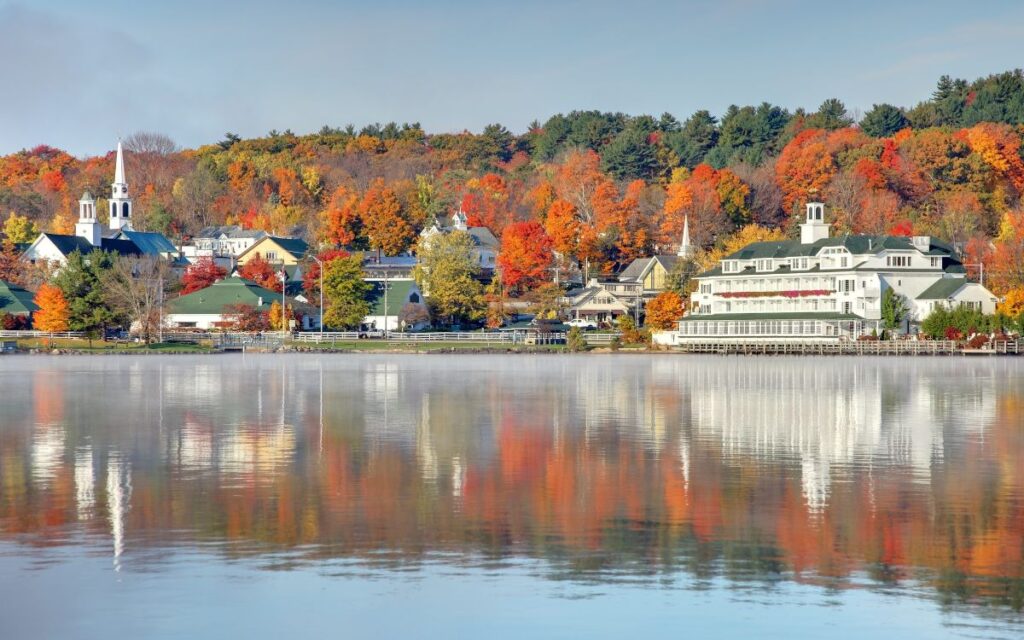
The lake is technically outside the White Mountains, in the Lakes Region, but it’s fairly easy to reach from North Conway and gives you a completely different fall landscape. Instead of mountain overlooks, you’ll get colorful forest surrounding the water, with some really beautiful reflections on calm fall days.
Lake Winnipesaukee is huge, so you don’t need to attempt to see the entire thing. Meredith is a good destination for a short visit, with a walkable downtown and plenty of lake views. You could grab lunch, walk along the waterfront, and enjoy the fall colors before heading back toward the White Mountains.
Dixville Notch State Park
If you’re staying on the northern side of the White Mountains and don’t mind a longer drive, Dixville Notch is another beautiful add on.
Dixville Notch is actually part of New Hampshire’s Great North Woods rather than the White Mountains, but the dramatic mountain scenery and dense forest make it especially pretty in fall. The drive north is part of the appeal too, especially if you take Route 16 through Pinkham Notch and continue toward the Great North Woods.
Once there, you can explore waterfalls, mountain streams, and hiking trails. Baby Flume is one of the easier stops, with a short walk leading to a small gorge carved by Flume Brook.
If you have more time, Table Rock is one of the area’s best known hikes and leads to a dramatic overlook above Dixville Notch. It’s a much more involved option than stopping at Baby Flume, but the view over the notch surrounded by fall color is beautiful.
I wouldn’t go this far out of the way on a short White Mountains trip, but if you’re staying around Gorham or have a longer visit and are looking to get off the beaten path, Dixville Notch can be a great addition.

When To See Fall Colors In The White Mountains
The best time to see fall foliage in the White Mountains is typically late September through early October, although the exact timing changes from year to year.
Higher elevations and northern areas generally begin changing first, with color gradually working its way into lower elevations. This can work in your favor — even if one area is past peak or hasn’t quite reached it yet, you may find better color elsewhere in the region.
Of course, catching true peak foliage requires some luck. Temperature, rainfall, wind, and storms can all affect how quickly the leaves change and how long they stick around. Some years the leaves seem to fall almost as quickly as they turn, while other years the color hangs on much longer.
As your trip gets closer, check the New Hampshire Fall Foliage Tracker for current conditions and the latest foliage reports.
Tips For Visiting The White Mountains In Fall
A fall trip to the White Mountains is absolutely worth it, but this is a popular time to visit and a little extra planning will make your trip much easier.
Plan for crowds. This is my biggest tip. The White Mountains are extremely popular during peak foliage, especially on weekends. Places like the Kancamagus Highway, Franconia Notch, popular hikes, and major overlooks can get very busy. Start early when possible, consider visiting midweek, and come with a general plan rather than figuring everything out as you go.
Have a plan for the Kancamagus Highway specifically. There are a lot of places to stop along the Kanc, and traffic can get heavy during peak foliage. Know which stops you care about most before you start the drive, get going early, and give yourself plenty of time. This is one drive that’s much better when you can take your time rather than rush through it.
Book anything important ahead of time. Hotels, scenic train rides, Flume Gorge, and other popular attractions often sell out during foliage season. If something is a priority, I’d reserve it before your trip.
Pay attention to visibility. Save gondolas, Mount Washington, and big overlooks for clearer days if you can. On cloudy or foggy days, focus on places where you’re down among the trees instead — waterfalls, covered bridges, gorges, forest hikes, and towns don’t depend nearly as much on long distance views.
Check the mountain weather, not just the forecast in town. Conditions at higher elevations can be completely different from what you’re experiencing in North Conway or Lincoln. This is especially important if you’re hiking or heading up Mount Washington. I search the exact place I plan to visit at National Weather Service. Bring layers either way.
Download maps ahead of time. Cell service isn’t reliable everywhere in the White Mountains. Download an offline map before your trip, plus any trail maps you’ll need. I also like to screenshot tickets and reservations so I’m not trying to pull them up without service.
Don’t improvise parking. Lots at popular trails and overlooks can fill up during peak foliage. If there’s nowhere legal to park, move on and come back later rather than parking along the road where it isn’t permitted.
Fall color won’t be the same everywhere. Elevation and location affect when the leaves change, so you may find great color in one part of the White Mountains while another is already past peak or hasn’t quite gotten there yet. Check current foliage reports as your trip gets closer.
Keep a few backup ideas handy. You don’t need two complete itineraries, but it’s helpful to have a few alternatives in mind. If your planned gondola ride is socked in by clouds or a parking lot is completely full, you can swap in something that works better with the conditions that day.

Fall foliage in the White Mountains is nearly unmatched. It’s no surprise there’s so many excellent places to take in the fall colors. I hope you’ve found this helpful in planning your trip and have a great time.
Any questions or additional ideas? Please leave a comment below.
Looking for more ideas? Head on over to Visit White Mountains or check out additional New Hampshire & New England guides below.
More Information For Your Trip To The White Mountains Of New Hampshire:
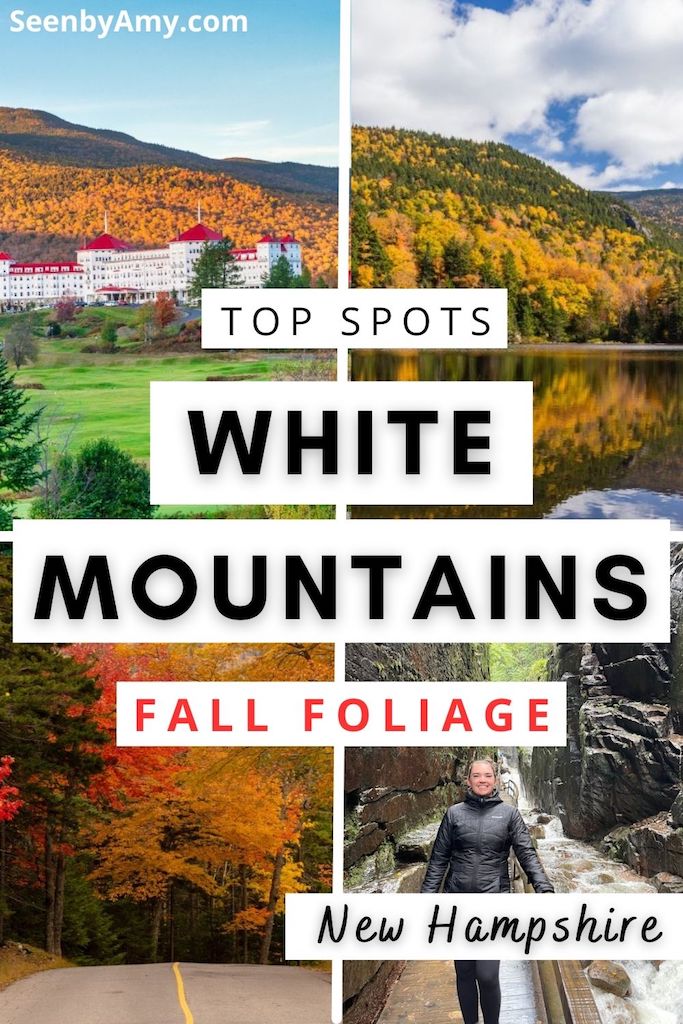
Pin for later!



Keep Up With Amy!
Subscribe to the newsletter for the latest updates in your inbox. And don’t forget to connect on your favorite social platform!
Thank you!
You have successfully joined our subscriber list.