
One Day In White Sands National Park (my exact itinerary!)

White Sands National Park is home to the largest gypsum dune field in the world — a surreal, almost otherworldly landscape tucked into southern New Mexico’s Tularosa Basin.
Despite its relatively small size, this park feels expansive and immersive. Whether you’re here to hike through rolling white dunes, try sand sledding, experience the park’s rare silence, or catch one of the most memorable sunsets in the Southwest, White Sands is surprisingly easy to enjoy in just one day.
Below is exactly how I spent one day in White Sands National Park, along with helpful planning tips to make the most of your visit.
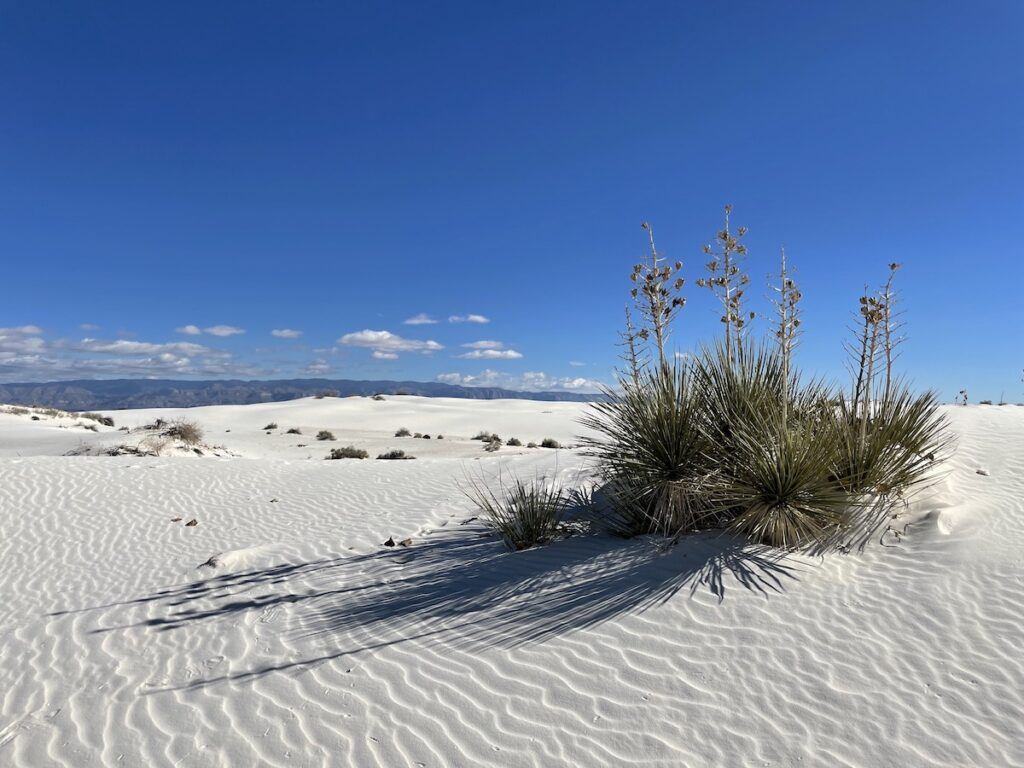
One Day In White Sands National Park Itinerary
White Sands Visitor Center
Before heading out onto the dunes, we stopped at the Visitor Center, which sits just before the main drive into White Sands National Park.
We spent some time walking through the exhibits, which explain how the gypsum dunes formed and highlight the park’s wildlife and history.
This is also where we used the restrooms, topped off our water bottles, and picked up sand sleds and wax for later in the day. Since there’s no water available once you leave the visitor center, this stop is really important before heading out into the dunes.
Here you can also check in with park rangers to confirm trail conditions, ask questions, anything you might need.
After a quick stop, we continued into the park and started hiking.
Hike The Dunes
Exploring the trails was the main focus of our day at White Sands National Park — and the best way to really experience the park.
We started with the shorter, interpretive trails near the park entrance before venturing farther into the dunes later in the day.
Important note: The National Park Service does not recommend hiking when temperatures reach 85°F or higher. Our visit was in winter, so temperatures were well below that threshold. If you’re visiting in summer, plan to tackle longer trails early in the morning or closer to sunset, and save the short interpretive trails for the hottest part of the day.
Playa Trail, Dune Life Nature Walk, & The Interdune Boardwalk
The first hikes we did — and the ones you’ll encounter immediately upon entering the park — were Playa Trail, Dune Life Nature Trail, and the Interdune Boardwalk. All three are located close together and total about 2 miles of walking. We took our time and completed all three in roughly 90 minutes.
What I loved most is that each trail is interpretive, offering insight into the park’s unique wildlife, vegetation, and history — it’s an easy way to learn a lot without committing to a long hike.
Playa Trail – A short walk to a playa, or dry lake bed. Depending on conditions, the playa may appear brown, white, filled with water, or even growing gypsum crystals. This trail also explains the geological history of the area and how the dunes formed — it’s genuinely fascinating.
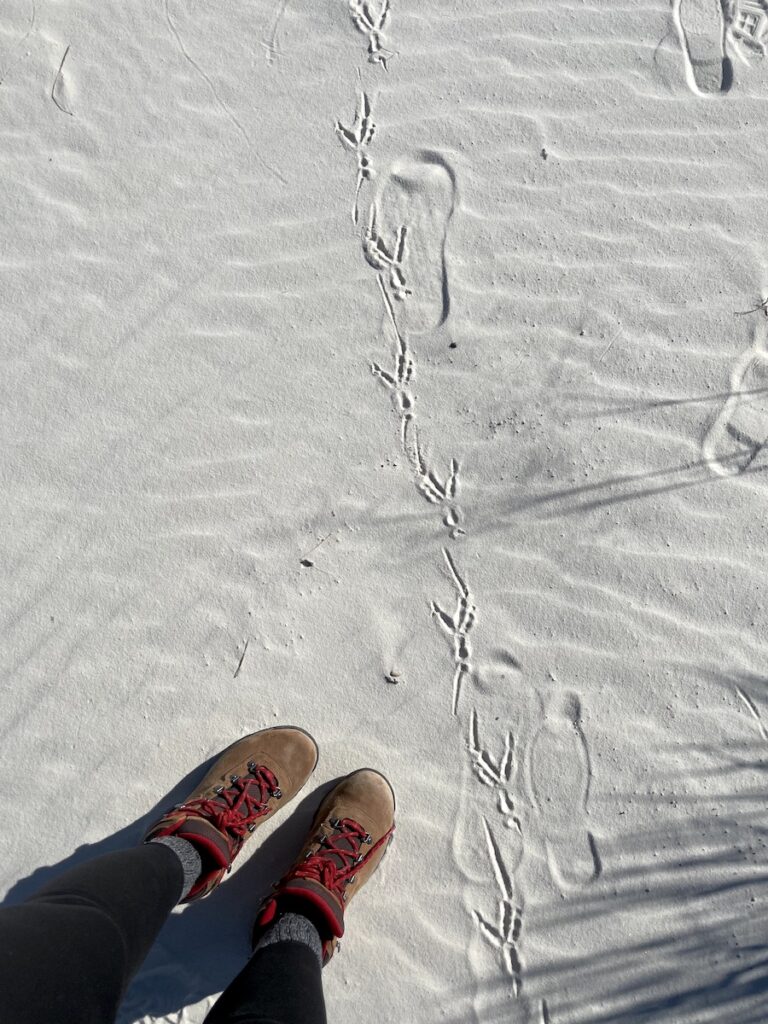
Dune Life Nature Trail – A brief walk through the dunes that highlights the animals and critters that live here, including several species found only in this park. This was my favorite of the three.
Interdune Boardwalk – The park’s only fully accessible trail, offering views across the dunes along with shaded seating. It’s a great option for strollers, wheelchairs, or anyone looking for a more relaxed walk.
Back Country Camping Trail & Alkali Flat Trail
After the short hikes, we completed one more longer hike.
These are the trails that take you into the heart of the dunes.
- Backcountry Camping Trail – 2.2 miles round trip
- Alkali Flat Trail – 5.3-mile loop (and spoiler alert, it’s very much not flat)
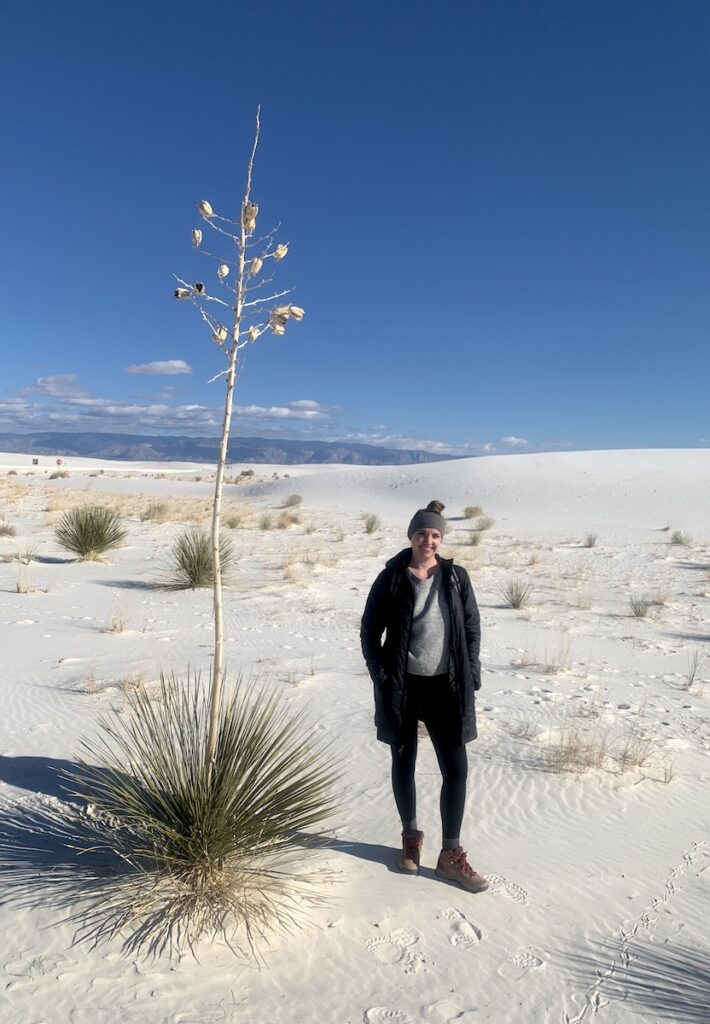
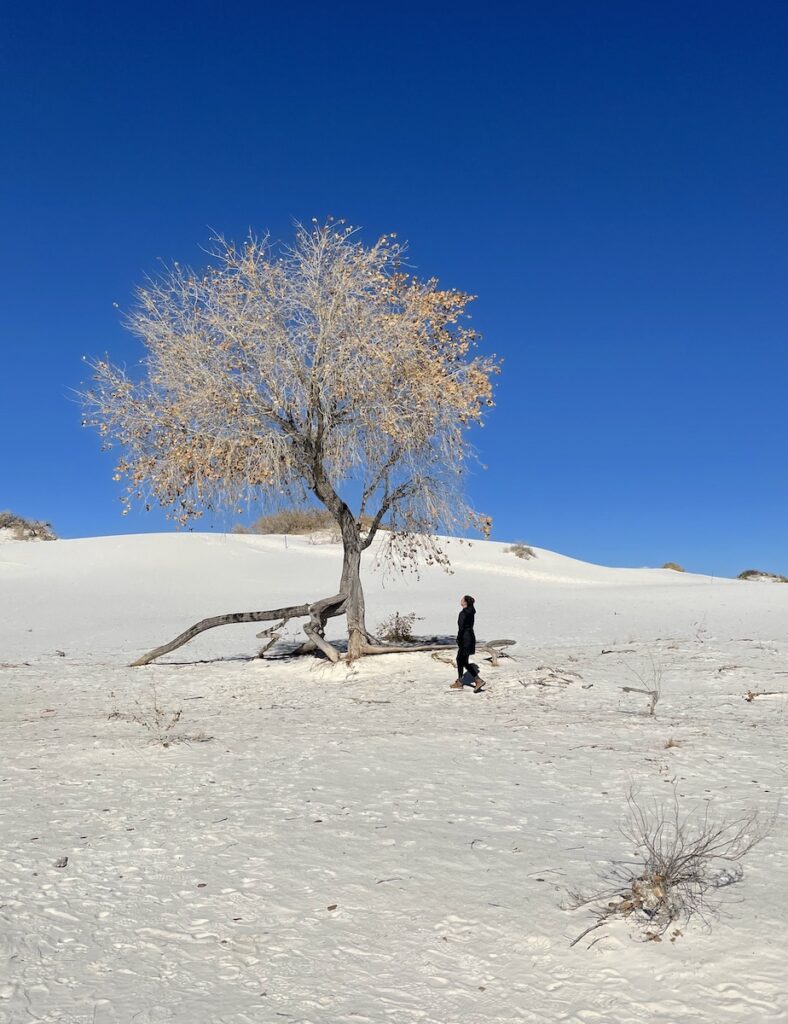
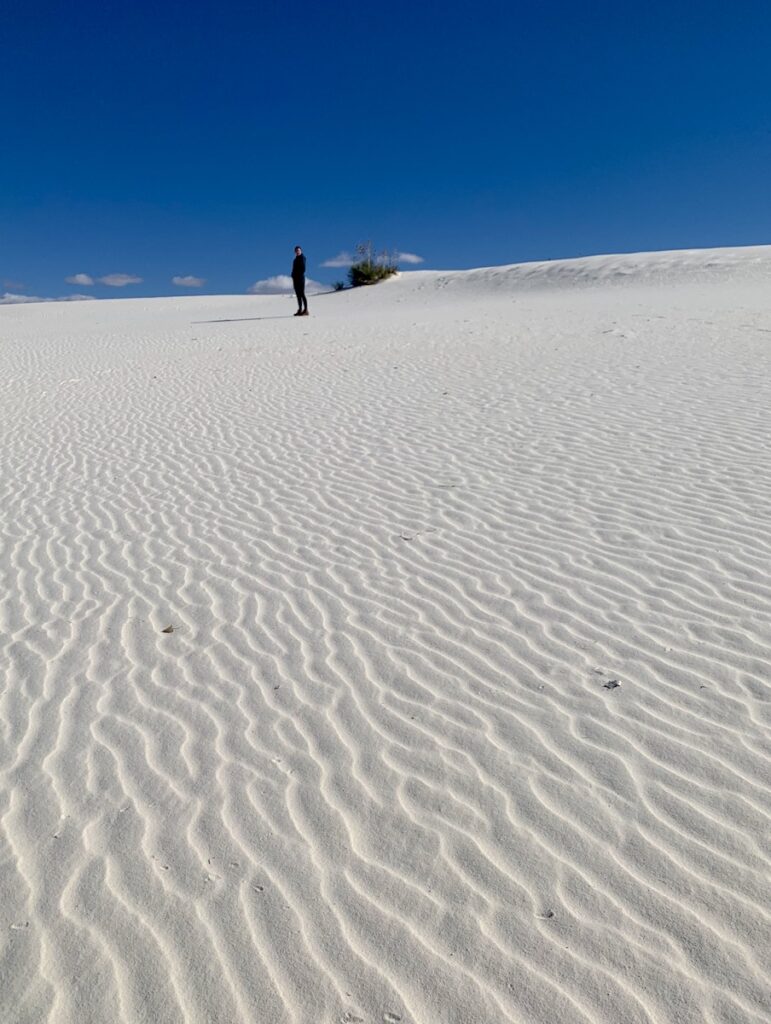
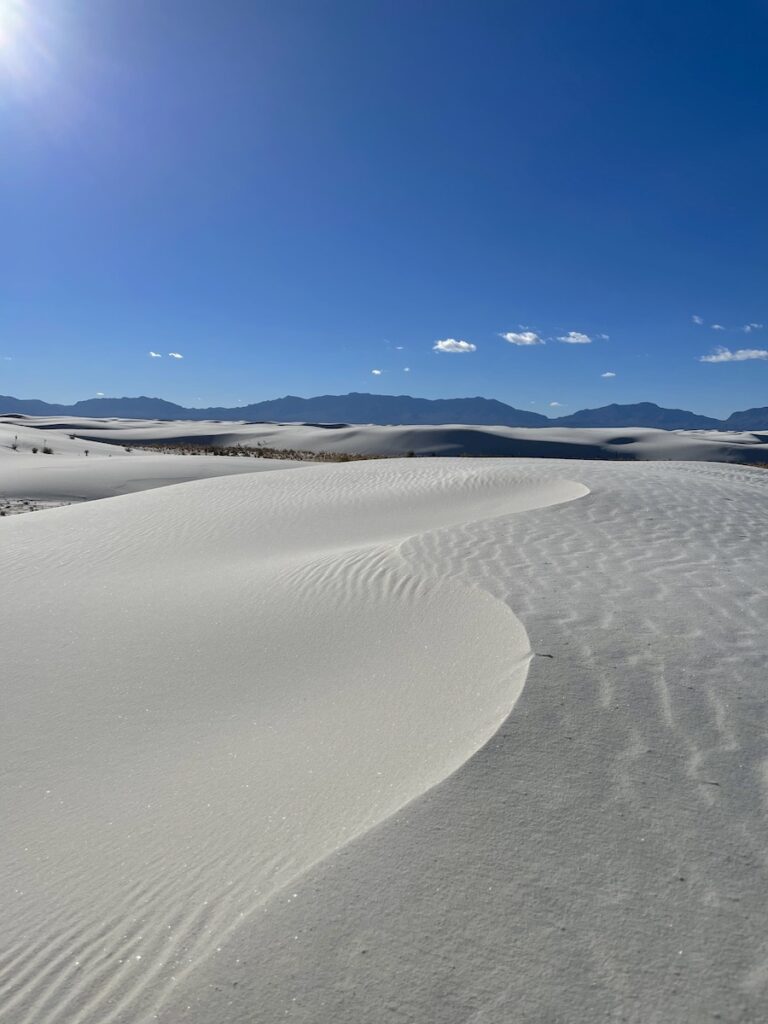
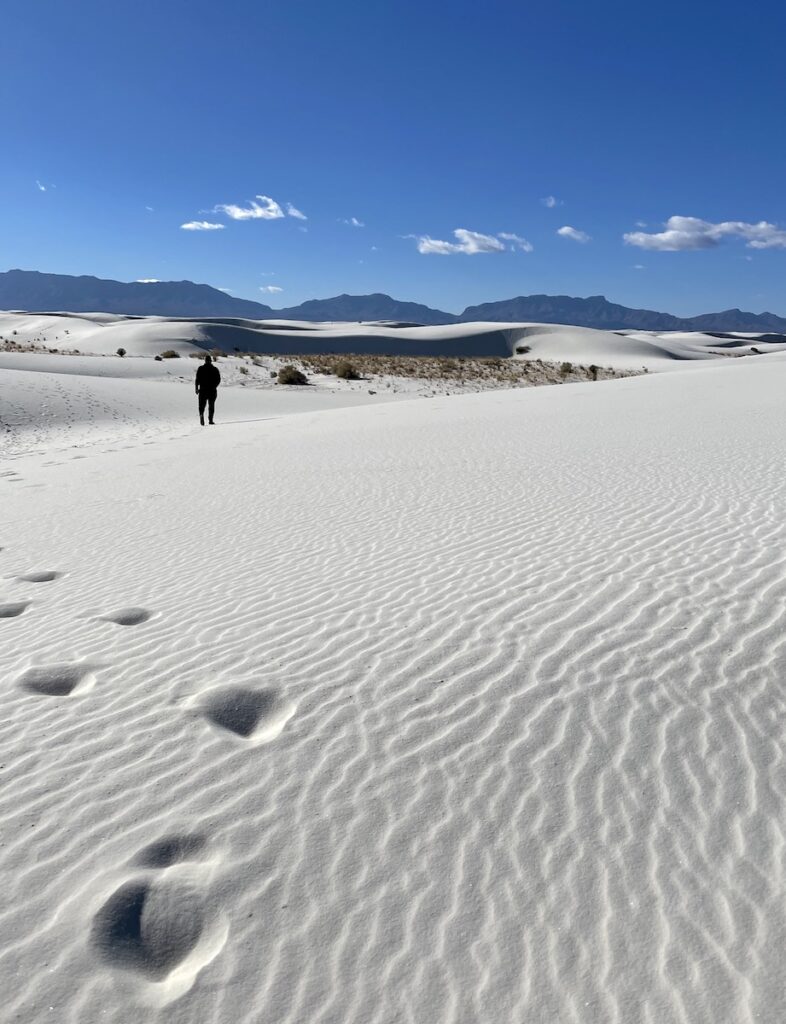
Within minutes of starting these hikes, the road disappears and the landscape becomes nothing but white dunes in every direction. It’s incredibly peaceful — and a little disorienting.
While you’re free to explore off-trail, it’s essential to keep trail markers in sight. Everything looks the same very quickly, and this is not a place you want to get lost.
If solitude is what you’re after, Alkali Flat delivers — but this trail should only be attempted by well-prepared hikers. All recorded fatalities in the park have occurred here, primarily due to heat and dehydration.
Bring far more water than you think you’ll need.
Go Sand Sledding
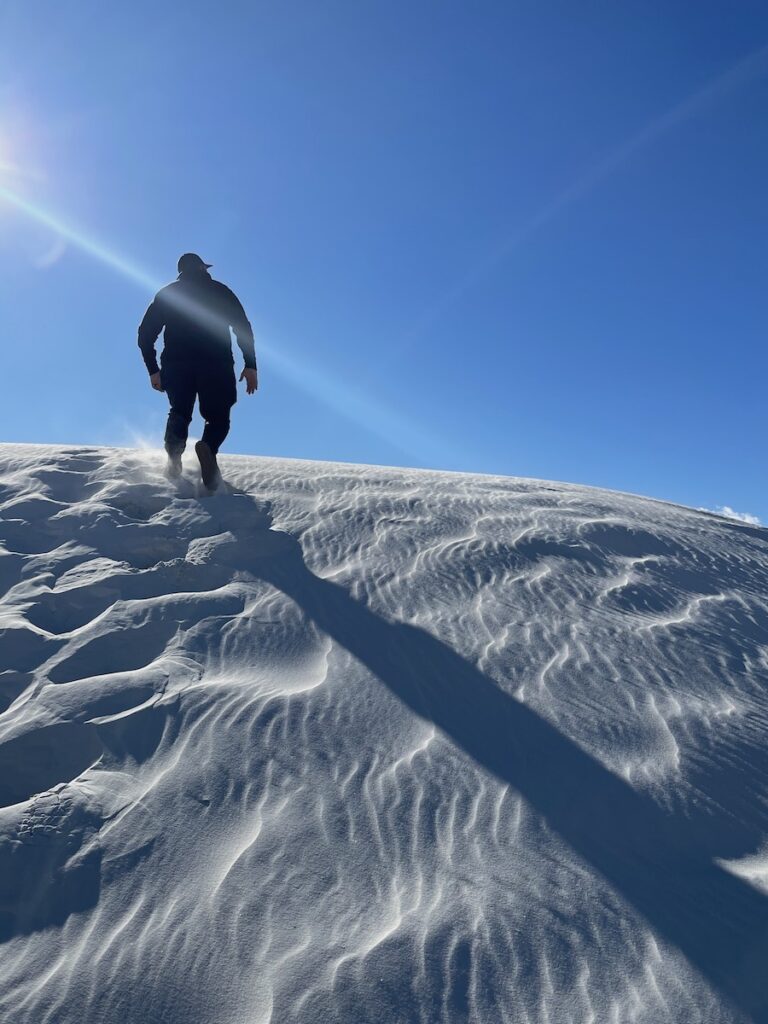
The best part about hiking here, stopping for sand sledding.
Many visitors come to White Sands just for sand sledding, and it’s easy to understand why — the dunes are perfect for snow-free sledding year-round.
You can bring your own sled (a plastic saucer works best) or rent one from the visitor center, which is what we did. Either way, wax is essential. Without it, sleds create too much friction and won’t slide properly.
We did this while hiking Alkali Flat Trail, walk out a bit, and choose a dune that looks fun — just be sure to keep a trail marker in view.
And the best part? Gypsum sand doesn’t stick to you the way regular beach sand does.
If sand sledding isn’t your vibe, check out these Top Things To Do In White Sands National Park for alternate ideas.
Watch The Sunset
Sunset was easily my favorite part of our day at White Sands.
After a late afternoon break in the car we returned to Alkali Flat Trail and found a dune just off the trailhead. We settled in about 30 minutes before sunset and watched the light slowly shift across the dunes and the San Andres Mountains. It was the perfect way to wrap up our one day in White Sands National Park!
A quick heads-up: it gets cold fast once the sun goes down, regardless of season, so bringing an extra layer is a good idea.
Most visitors tend to stay close to the Alkali Flat Trailhead for sunset, but if you’re willing to walk a bit farther out, the crowds thin quickly. Just be sure to bring a headlamp for the walk back and don’t venture too far if you’re not comfortable following trail markers in the dark.
The park also offers ranger-led Sunset Strolls on select evenings, which are absolutely worth checking if one happens to align with your visit. It’s a great way to take in the views while learning about this unique park. Check out the upcoming schedule at White Sands Sunset Strolls.

Where To Stay Near White Sands National Park
There is no lodging inside the park, so you’ll need to stay nearby.
Good base options include:
- Alamogordo, NM – 20 minutes away
- Las Cruces, NM – 1 hour away
- El Paso, TX – 1.5 hours away (closest major airport)
- Carlsbad, NM – 3 hours away (doable if pairing with Carlsbad Caverns)
We stayed at an Airbnb in El Paso, which worked well as a home base for exploring southern New Mexico and western Texas.
For more information and tips, check out Where To Stay Near White Sands National Park (best towns + hotels!).
White Sands National Park Camping
White Sands offers backcountry tent camping only, accessible by hiking in.
Key things to know:
- A permit is required
- Only 10 campsites are available
- Permits are first-come, first-served and issued day-of
- Campfires are strictly prohibited
- Campsites are bare — no tables, no fire pits
All campsites are located along the Backcountry Camping Trail. For the most seclusion, Campsite 5 is the furthest out.
Nearby alternatives include Oliver Lee Memorial State Park, Lincoln National Forest, and other state parks in the region.
There is no RV camping inside White Sands National Park.
Nearby RV-friendly options include:
- Alamogordo–White Sands KOA
- Oliver Lee Memorial State Park
- Aguirre Spring Campground
White Sands National Park Hours & Closures
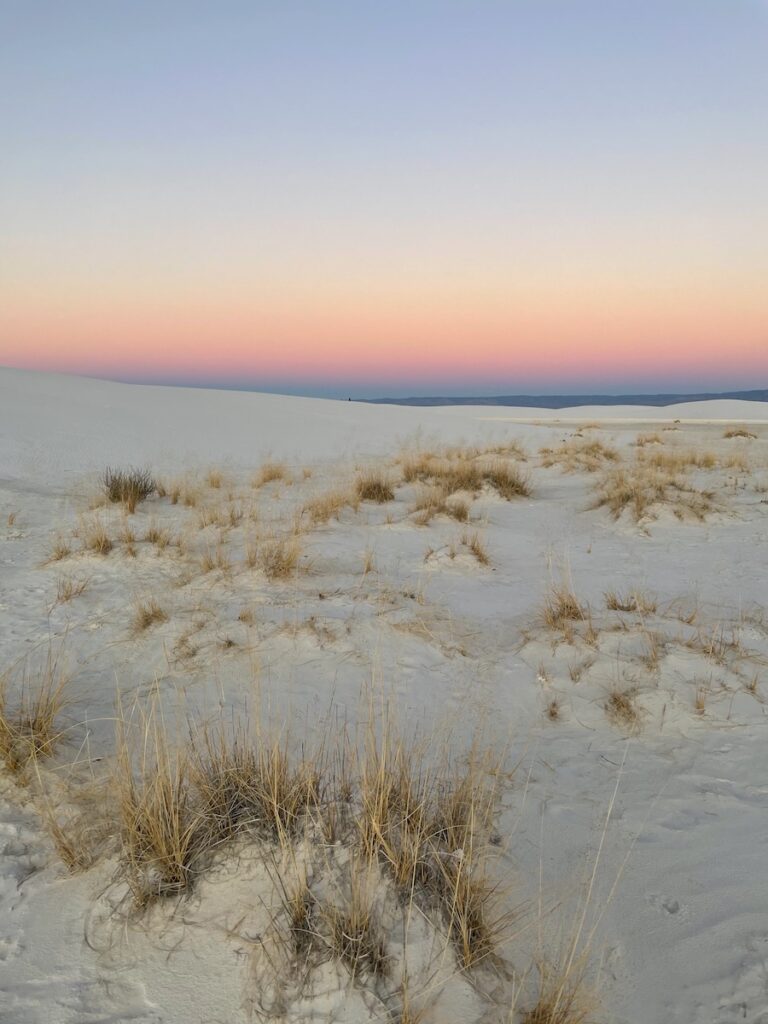
White Sands operates a bit differently than most national parks — it’s part national park, part active missile testing range. Park hours vary by season, typically opening around 7:00 am and closing shortly after sunset. Because of its dual purpose, visitors should be aware that:
- Emergency testing can result in same-day closures (this is rare).
- Scheduled closures do occur and are usually announced two weeks in advance.
Always check the official NPS website before visiting.
It’s best to double check their website before heading out: White Sands Hours & Closures.
White Sands Weather & What To Expect
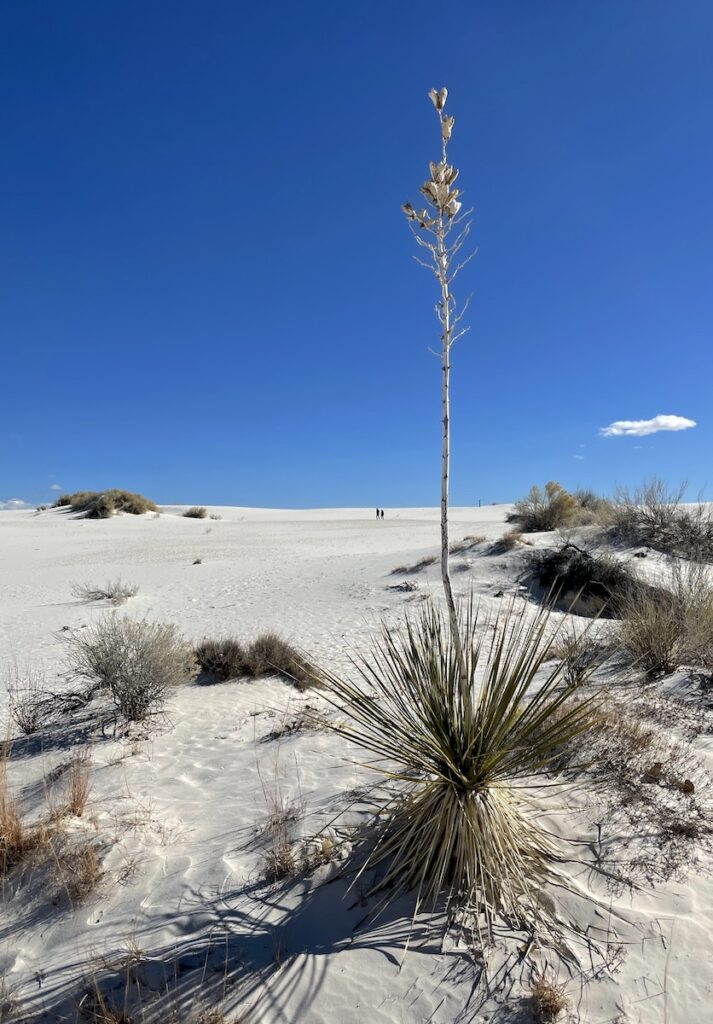
White Sands is bright, exposed, and intense — regardless of season.
- Summer (May–August): Highs often reach the upper 80s to 90s°F, occasionally topping 110°F
- Fall, winter, spring: Generally mild, but still very sunny
- Sunset: Expect a sharp temperature drop
Even during our winter visit on a sunny 45°F day, the sun reflecting off the dunes was exhausting.
Bring plenty of water, sunscreen, and sunglasses.
What Makes White Sands National Park Unique?
Gypsum is a common mineral — but because it dissolves in water, it’s extremely rare to find it in sand form. That’s what makes White Sands so unusual.
At 275 square miles, White Sands is the largest gypsum dune field on earth. To put things into perspective, the second-largest covers just 8 square miles, while the third-largest — located in nearby Guadalupe Mountains National Park — spans only 3 square miles.
So how does a water-soluble mineral become sand?
White Sands sits in a basin, which you can think of as a giant bowl. When it rains, water has nowhere to drain. Instead, it evaporates, leaving gypsum crystals behind. Over time, those crystals break down into fine sand, and persistent winds push the particles together, forming the dunes you see today.
One of gypsum’s most surprising traits is that it doesn’t absorb heat. Even on scorching summer days, the sand often remains cool to the touch — another small detail that makes this landscape feel so unexpected.
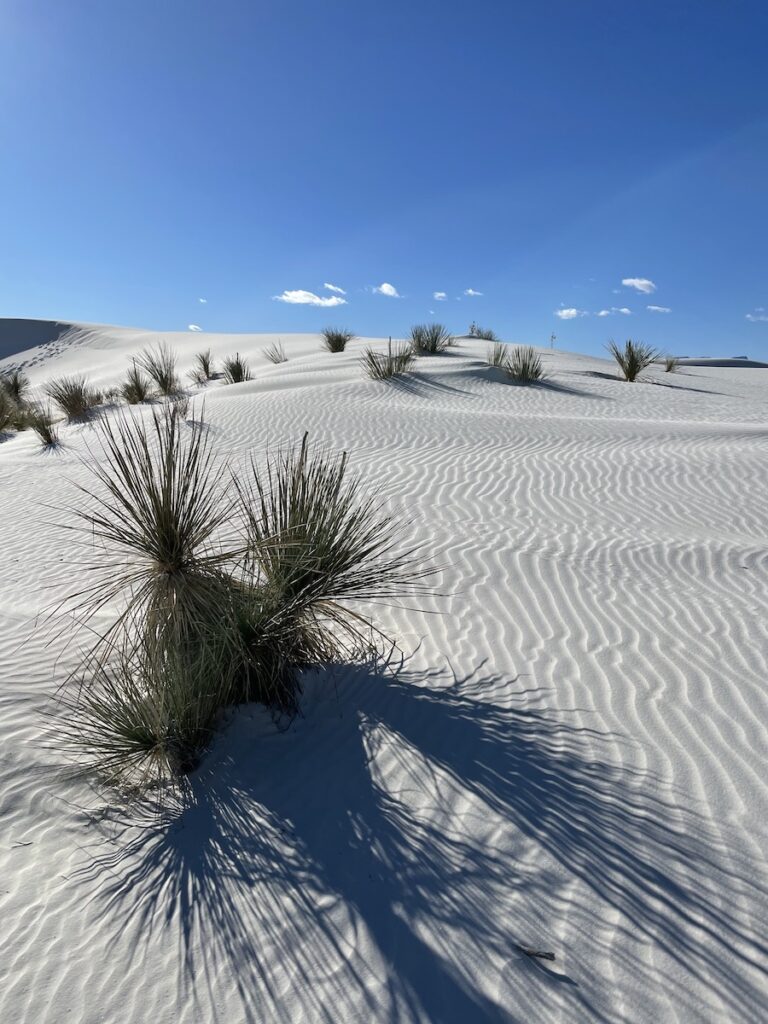
White Sands National Park is one of the most unique landscapes in the U.S., and one day is plenty of time to experience its highlights without feeling rushed. We really enjoyed our time here and I hope you do too!
Any questions? Please leave a comment or reach out on social media.
Looking for more ideas? Below are additional White Sands and national park guides or head on over to White Sands NPS!
More Information For Your Trip To White Sands National Park:
- Top Things To Do In White Sands National Park
- Where To Stay Near White Sands National Park (best towns + hotels!)
- 8 Things You Didn’t Know About White Sands National Park
Additional New Mexico Guides
Pin for later!



Keep Up With Amy!
Subscribe to the newsletter for the latest updates in your inbox. And don’t forget to connect on your favorite social platform!
Thank you!
You have successfully joined our subscriber list.