
Best Things To Do In White Sands National Park

White Sands National Park is one of those places that feels completely unlike anywhere else in the U.S. It’s genuinely one of the most unique national parks I’ve visited.
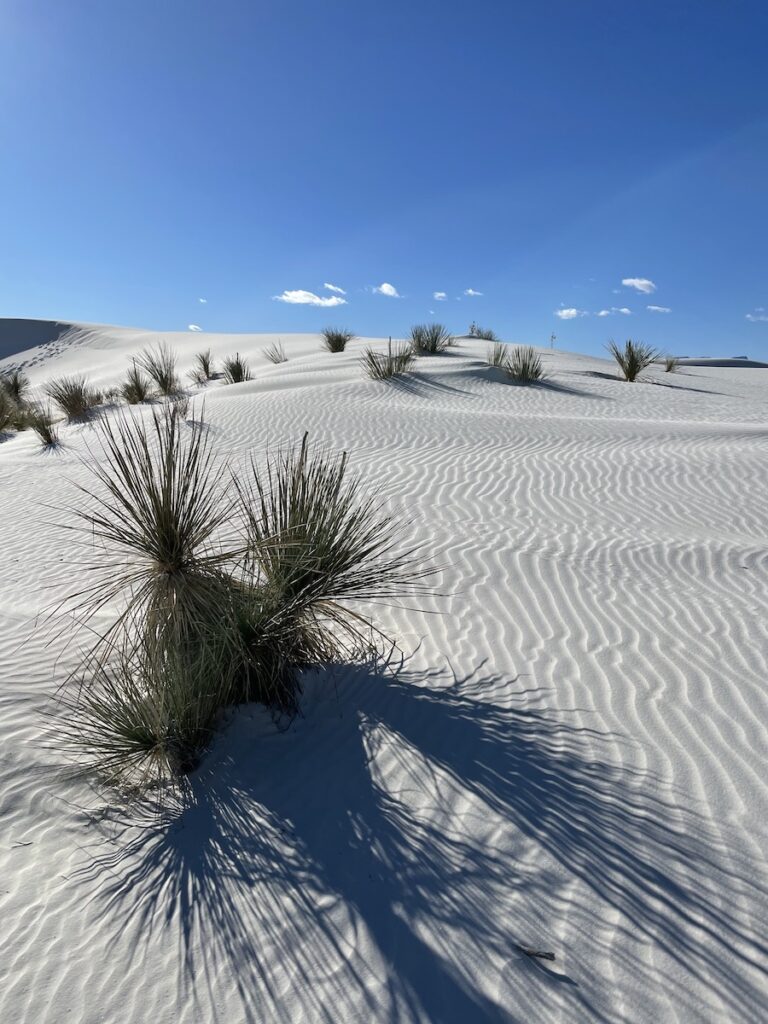
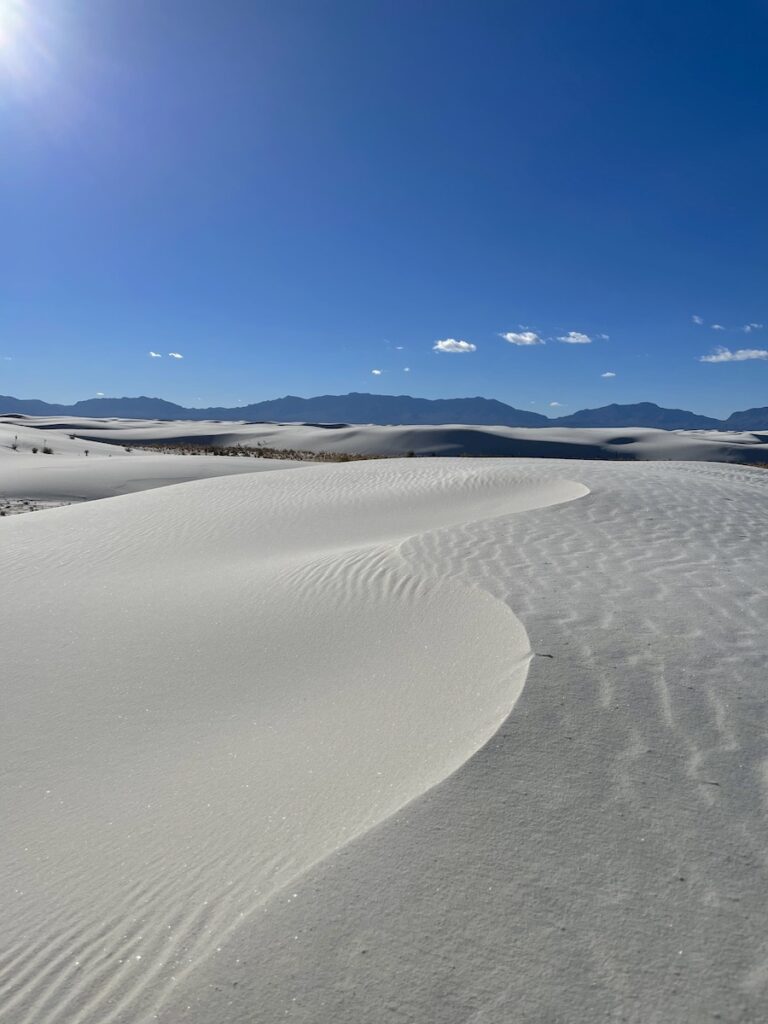
The incredibly rare white gypsum dunes, the eerie quiet, and the constantly shifting landscape are spectacular to witness in person.
While it isn’t a large park, there’s plenty to do — and most visitors are surprised by how much you can experience in a single visit, from hiking and sand sledding to wildlife spotting and sunset views.
Here are the best things to do in White Sands National Park.

Best Things To Do In White Sands National Park
Go Sand Sledding
Sand sledding is one of the most popular activities at White Sands, and once you try it, it’s easy to see why. The dunes are perfectly shaped for sledding and not so steep that climbing back up feels exhausting.
You can bring your own sled (a plastic saucer works best) or rent one from the visitor center. Either way, wax is essential — without it, sleds won’t slide properly. The park’s back loop offers plenty of open space, and it’s easy to find a dune that feels secluded while still staying close to trail markers.
And the best part? Gypsum sand doesn’t stick to you the way regular beach sand does, which makes the whole experience even more enjoyable.

Go For A Hike
Hiking is the best way to experience White Sands up close and appreciate how vast the dunes really are. Trails range from short, educational walks to longer routes that take you deep into the dune field.
One important thing to know: the National Park Service does not recommend hiking when temperatures reach 85°F or higher. There’s no shade, and the bright sand reflects sunlight intensely. If you’re visiting in warmer months, plan longer hikes early in the morning or closer to sunset.
No matter the season, bring plenty of water — there’s no water available beyond the visitor center.
Playa Trail, Dune Life Nature Trail & Interdune Boardwalk
These three trails are the first ones you’ll encounter when entering the park and are an excellent introduction to White Sands. Located close together, they total about 2 miles of walking and can easily be done in one outing.
What makes these trails especially enjoyable is how educational they are. The Playa Trail leads to a dry lake bed and explains how the dunes formed. The Dune Life Nature Trail highlights animals and plant life that have adapted to this environment — including species found nowhere else. The Interdune Boardwalk is fully accessible and offers shaded seating with views across the dunes.
If it’s your first visit, starting here helps you understand the landscape before heading farther into the park.
Note: If you’re short on time and want help deciding how to organize these activities into a realistic visit, I also put together a One Day White Sands National Park Itinerary that walks through exactly how I structured my time.

Alkali Flat Trail
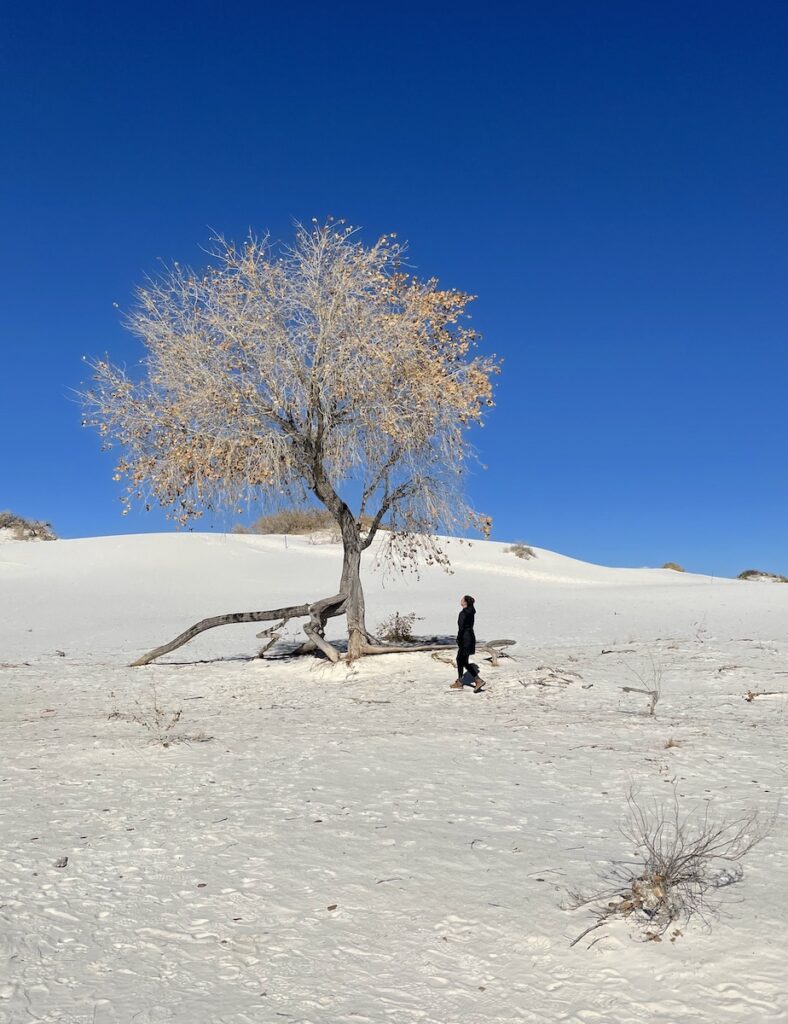
The Alkali Flat Trail is one of the most immersive hikes in White Sands. At 5.3 miles, it loops through the heart of the dunes and offers a real sense of isolation and scale.
Despite the name, this trail is not flat — expect rolling dunes and steady elevation changes. Trail markers are crucial here, as everything quickly begins to look the same. While this hike is incredibly peaceful, it should only be attempted if you’re prepared with plenty of water and are comfortable navigating by markers.
If solitude is what you’re after, this trail delivers — just be sure to respect the environment and your limits.
If you’re looking for a similar experience but don’t want such a long hike, the Backcountry Camping Trail is a shorter 2.2-mile option that still takes you deep into the dunes.
Lake Lucero Guided Hike
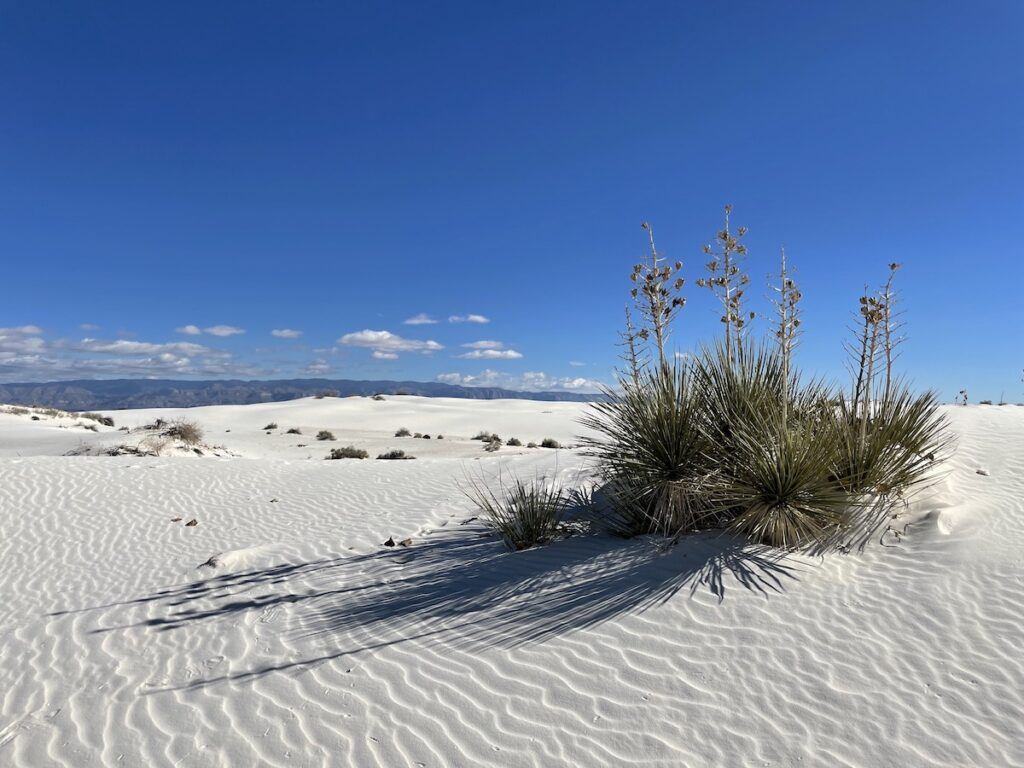
Lake Lucero is one of the most unique features in the park, but it requires more planning than other hikes. Access is only available via ranger-led tours and spots are limited.
The hike takes you to a dry lake bed where gypsum crystals actually form — it’s one of the best places to understand how the dunes came to exist. The experience feels very different from walking the dunes and offers a deeper look at the park’s geology.
If you’re interested, check the park’s website (White Sands Lake Lucero Tour) in advance for tour availability and schedules, this is not something you can do spontaneously.
Visit The White Sands Visitor Center
The visitor center is worth a stop before heading into the park. It’s where you’ll find exhibits explaining the park’s geology, wildlife, and history, as well as up-to-date information on weather, trail conditions, and potential closures. There’s also a small gift shop worth browsing.
This is also where you can rent sand sleds, use restrooms, and top off water bottles — important, since there’s no water once you pass this point. Rangers are available to answer questions and offer recommendations based on the day’s conditions.
It’s a small stop, but a helpful one that sets the tone for the rest of your visit.
Watch The Sunset
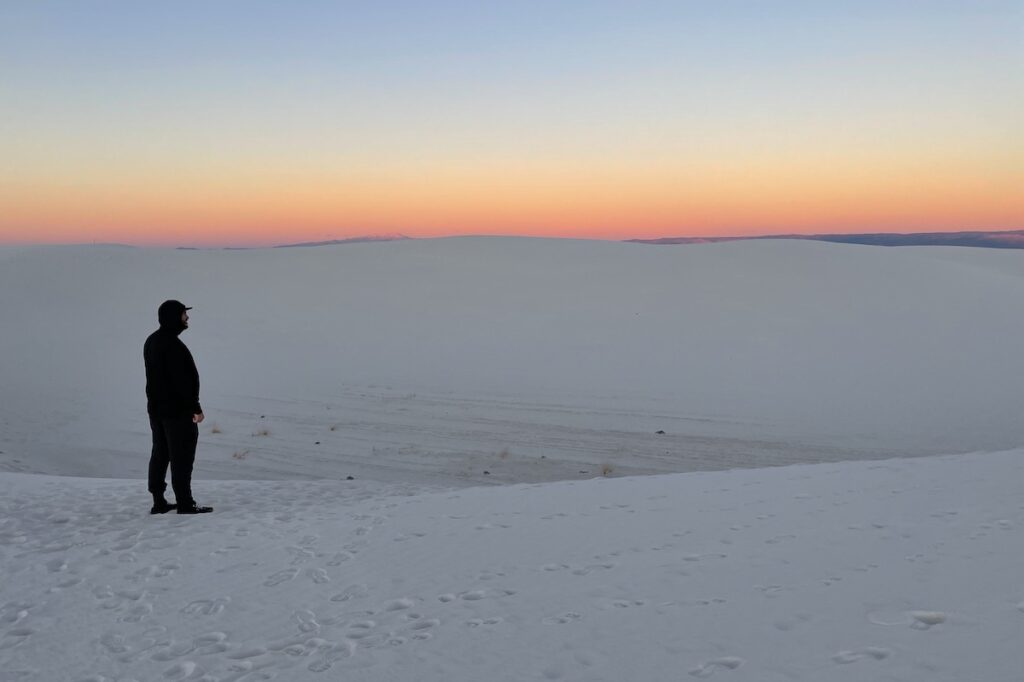
Sunset is easily one of the highlights of visiting White Sands. As the sun drops, the dunes slowly shift from bright white to soft pinks, oranges, and purples, with the San Andres Mountains glowing in the background.
Most visitors gather near the Alkali Flat Trailhead, but if you’re willing to walk a little farther into the dunes, it doesn’t take long for the crowds to thin out. Just make sure to bring a headlamp for the walk back and stay close to trail markers — once the light fades, it’s easy to lose your sense of direction.
If you’d rather not hike at all, you can still get great sunset views from several pullouts along the Dunes Drive Loop.
Temperatures drop quickly after sunset, even in summer, so having an extra layer on hand is always a smart move.
Join A Ranger-Led Program
Ranger-led programs are one of the best ways to learn more about White Sands, especially if it’s your first visit. Offerings vary by season and include options like guided hikes — more than just the one mentioned above — educational talks, and sunset strolls.
These programs provide context you won’t get on your own — from how the dunes move to how wildlife has adapted to survive here. They’re also a great option if you’re visiting during hotter months and want a structured experience led by someone familiar with conditions.
Schedules change by season, so it’s best to check availability at the visitor center or online at Park Ranger Programs before your visit.
Drive Dunes Drive Loop
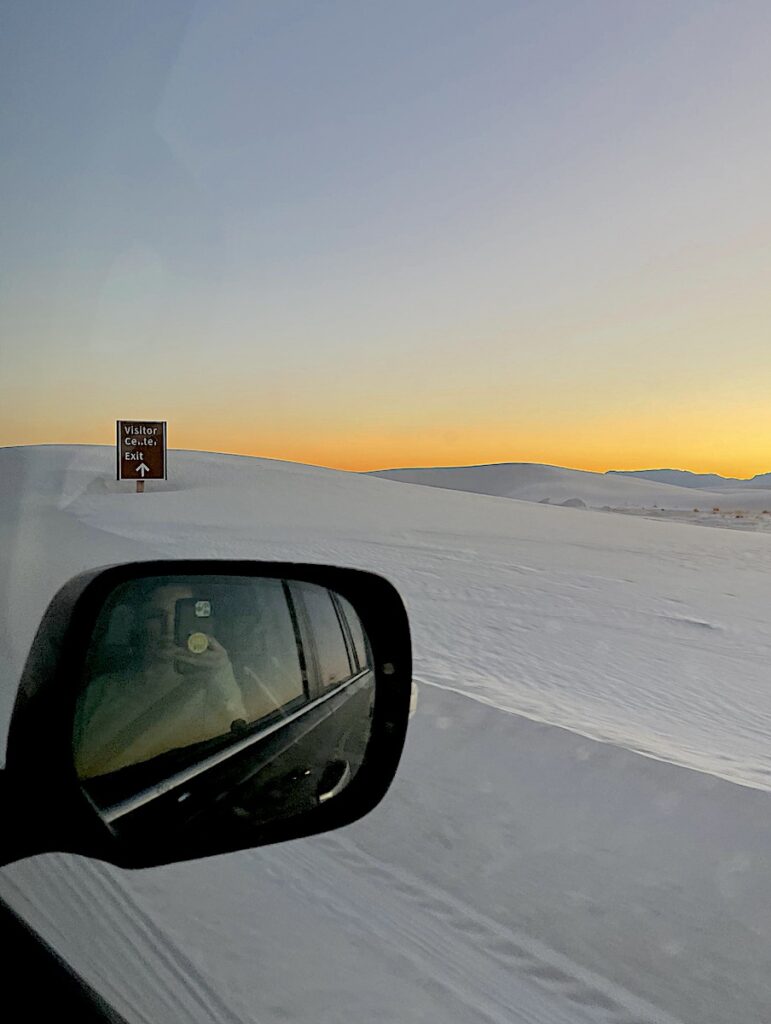
Dunes Drive is the main road through this small park, there’s no way to avoid it as it connects all attractions. The drive itself offers beautiful views of the dunes and the surrounding mountains.
In some places, you’ll see sand actively creeping onto the road, which fun and fascinating to watch. Pull-outs along the way make it easy to stop, take photos, or access trailheads.

Watch For Wildlife
At first glance, White Sands may seem barren — but there’s a surprising amount of wildlife here. Rare lizards, insects, birds, and small mammals have all adapted to blend into the white dunes.
Early morning and evening are the best times for spotting wildlife, especially during warmer months. Look for tracks in the sand to see who passed through recently (we saw lots of bird tracks!).
And as always, stay aware of your surroundings and give animals plenty of space.
Enjoy A Picnic
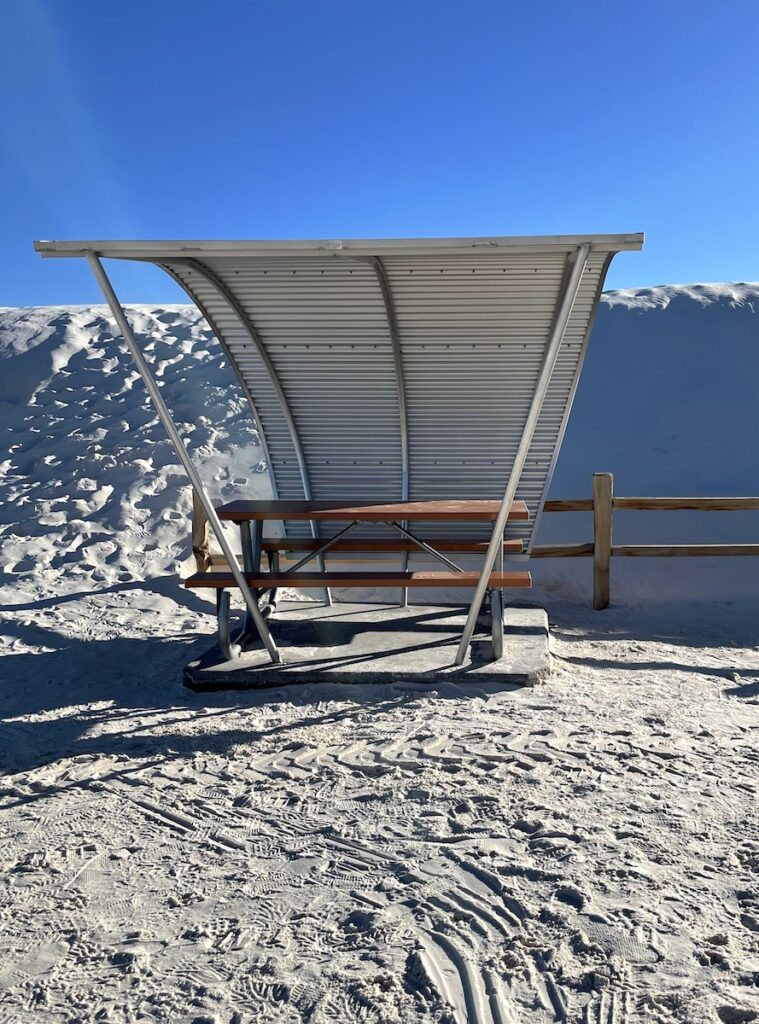
White Sands is a lovely place for a low-key picnic, especially during cooler months. Shaded picnic areas are located near the visitor center and at designated pull-outs along the drive.
Wind is common here, so eating in your car can sometimes be more comfortable than sitting outside, but on a nice day the shaded picnic benches are great. No matter where you eat, be mindful of trash — the park’s ecosystem is fragile.
Take Fun Photos
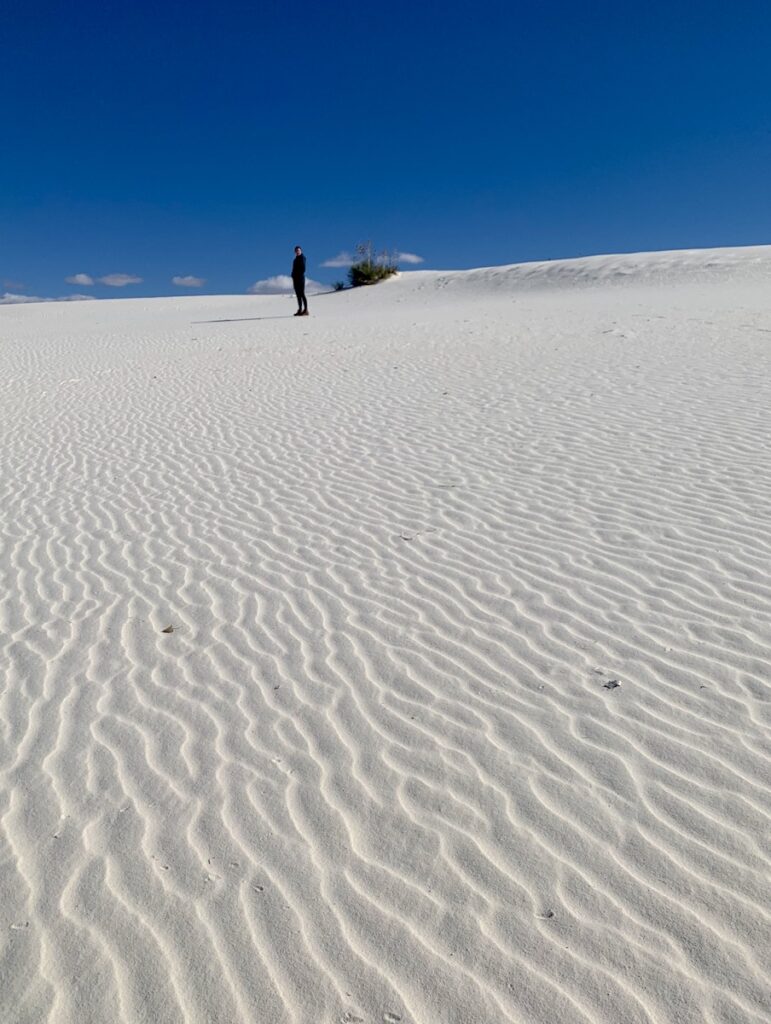
White Sands is incredibly photogenic, and the dunes create a clean, minimalist backdrop that works well for all kinds of photos. Early morning and sunset offer the best light, with softer shadows and more depth. But daytime is fun too since the bright white dunes play with perception and scale.
The landscape is so unusual, in fact, that it’s been used as a filming location for movies and commercials — just one of many strange details that make this park so different (I share more in my Weird & Interesting Facts About White Sands National Park guide).
Additionally, footprints disappear quickly as the wind reshapes the dunes, so it’s easy to find untouched areas if you walk a bit farther from trailheads.
Just remember to stay aware of your surroundings and trail markers while chasing the perfect shot.
White Sands National Park may be small, but it offers a surprisingly diverse range of experiences. Whether you’re hiking, sledding, watching wildlife, or simply enjoying the quiet, it’s a place that leaves a lasting impression — and one I’d happily return to.
I hope you’ve found this helpful in planning your visit and have a great time!
Any questions? Leave a comment below or reach out on social media.
Looking for more information? Below are additional White Sands guides or head on over to White Sands NPS.
More Information For Your Trip To White Sands National Park:
- One Day Itinerary White Sands National Park
- Where To Stay Near White Sands National Park (best towns + hotels!)
- 8 Things You Didn’t Know About White Sands National Park
Additional New Mexico Guides

Pin for later!



Keep Up With Amy!
Subscribe to the newsletter for the latest updates in your inbox. And don’t forget to connect on your favorite social platform!
Thank you!
You have successfully joined our subscriber list.