
When To Visit Zion National Park: Important Tips For All 4 Seasons

Zion National Park, located in the desert of Southern Utah, can have a wide range of weather throughout the year. The park is distinguished by Zion Canyon’s steep red cliffs, emerald pools, and hanging gardens. It’s easy to understand why this park tops many bucket lists.
I lived in Utah when I was younger, and my grandparents still live near Zion National Park today. So I’ve been lucky to visit this park in all seasons.
Lets take a look at this popular park through all four seasons and help you determine when to visit Zion.
Important Note About Zion Canyon
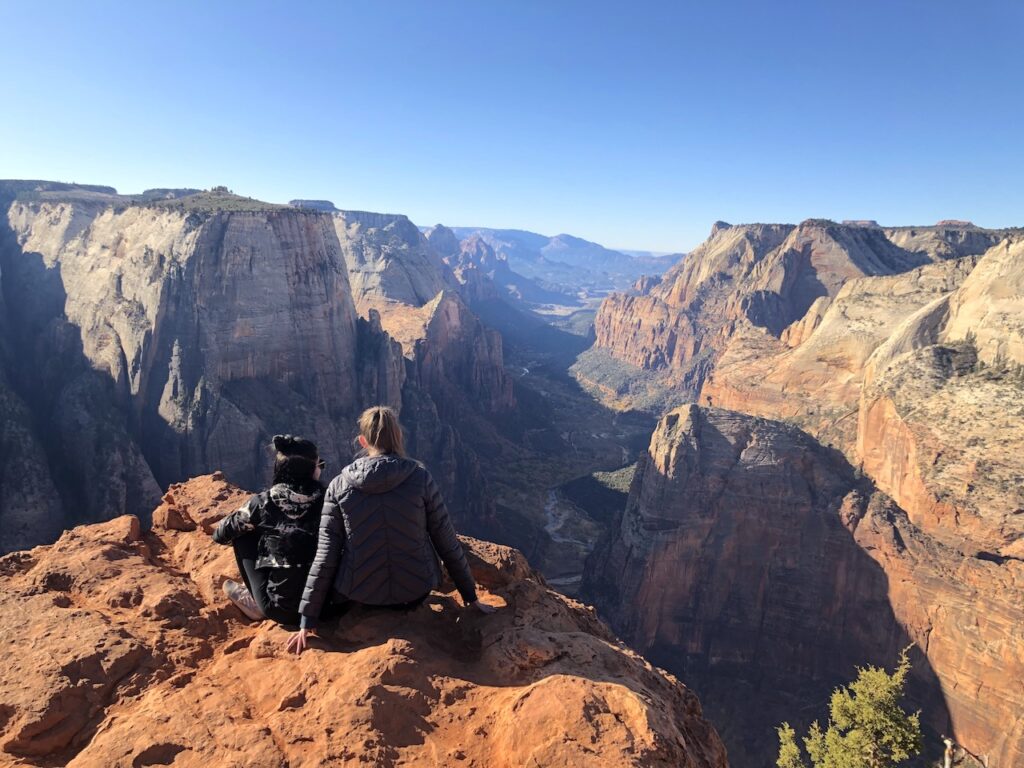
Zion Canyon is the park’s most prominent and popular feature. This is where you’ll find the most sought-after hikes and the bulk of visitors.
You’ll recognize the canyon’s vertical walls, painted in varying shades of red, looking down at the desert floor 3,000 feet below. This incredible geological feature has been slowly sculpted by the Virgin River for over 2 million years and is still changing today.
The canyon may be the park’s star, but there’s more to the park than just that feature. There’s also Upper East Canyon, Kolob Canyons, Kolob Terrace, and the Southwest Lowlands.
The base of Zion Canyon sits around 4,000 feet above sea level, with higher portions of the park exceeding 8,000 feet, and the Southwest Lowlands sitting closer to 3,000 feet. With large elevation change comes extreme weather variances.
Be aware that this post is primarily referring to weather in Zion Canyon.
When to Visit Zion National Park: Summer
June – September
Pros: All trails are typically open. All facilities are open. Lush plant life.
Cons: Very high temperatures. Significant crowds.
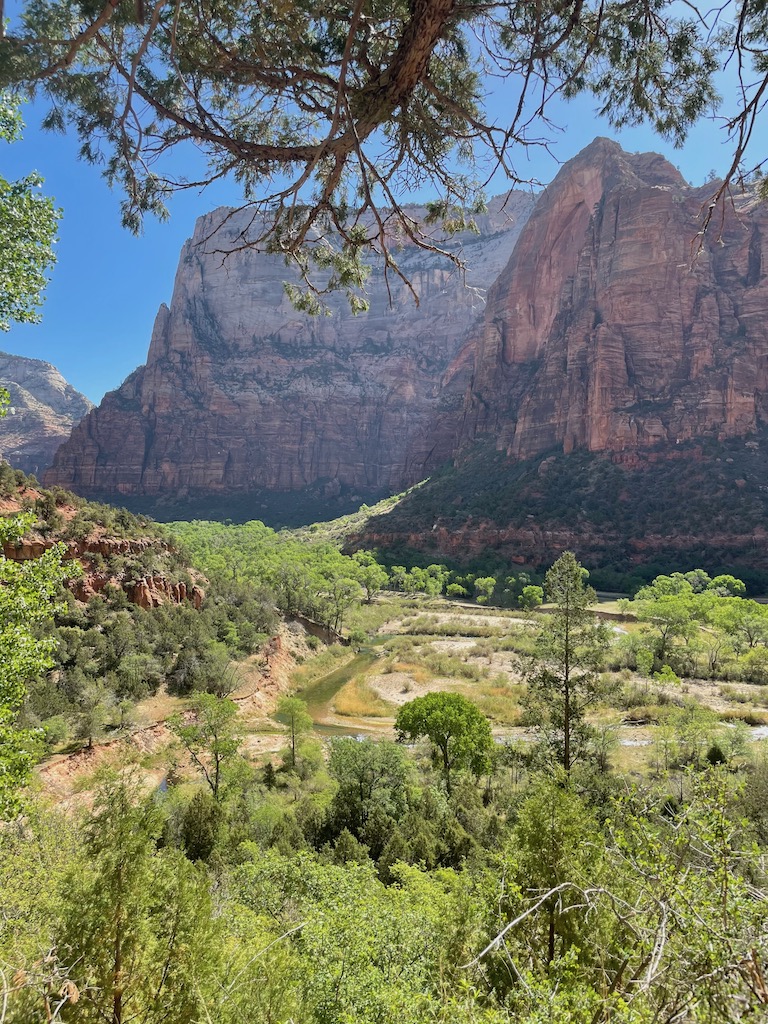
Zion Canyon is teeming with lush greenery in the warmer months thanks to the desert oasis created by the Virgin River. There are over 800 native plant species in this park, the richest diversity in Utah.
It’s a special experience to witness this park in full bloom, from the bright green trees contrasting against the red rocks to swamps (yes, desert swamps), to the mossy canyon walls and hanging gardens. There are wonderful little details everywhere when this park’s plant life is at its peak.
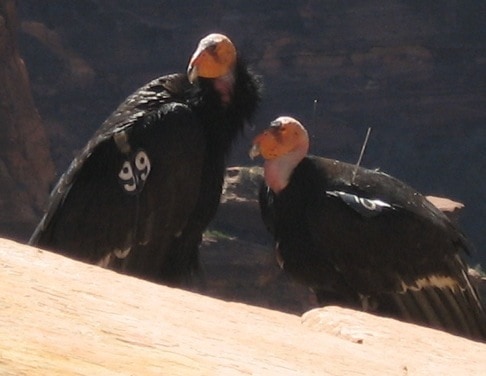
Summer is also your best chance to see the park’s California Condors. This heavily endangered animal is the largest flying bird in North America. Zion is proud to host a mating pair and its baby who nest just below Angels Landing.

Summer in Zion National Park is hot, with highs regularly exceeding 100º F. To avoid the heat it’s best to get out as early as possible or in the evenings.
You’ll find much of Zion Canyon shaded through the morning and late afternoon. Do your best to dodge the heat of the day and as always, have plenty of water on you.
Additionally, July through September is monsoon season. Meaning you may experience afternoon storms and occasional flash floods. Check in with the Visitor Center before exploring slot canyons, including The Narrows.
Summer Crowds in Zion National Park
On top of withstanding heat in the summer months you’ll also be battling crowds. From Memorial Day on tourists flock to this park, drawing about 500,000 visitors each summer month. At only 229 square miles this is one of the smaller National Parks. Compare Zion to Yosemite, which stretches over 1,200 square miles, Yellowstone with 3,500 square miles, or Rocky Mountain National Park with 415 square miles and you can see why crowds are really emphasized here.
Know that all trails in Zion Canyon will be very crowded during summer. Angel’s Landing, is an especially popular and very hazardous hike that has narrow pathways with 1,000 foot drops on either side. This hike requires a permit, which is available by lottery only. Find permit details at Angel’s Landing Permits.
Due to limited parking, a shuttle is required to access Zion Canyon. However, all other portions of the park, including Zion-Mount Carmel Highway, allow private vehicles year round.
Even with the shuttle all available parking for Zion Canyon is often full by 9:00 am. There is overflow parking available in Springdale.
If you’re set on visiting in summer but really don’t want to deal with the crowds, avoid July, visit during the week, and make sure you’re up at 7 am to catch the first shuttle. Once you’ve explored Zion Canyon, head out to Kolob Canyons and Kolob Terrace where you’ll find much smaller crowds and lower temperatures.
When To Visit Zion: Fall
October & November
Pros: Temperatures are mild. Crowds are smaller. All trails are typically open. All facilities open. Fall colors.
Cons: Not much lush plant life.

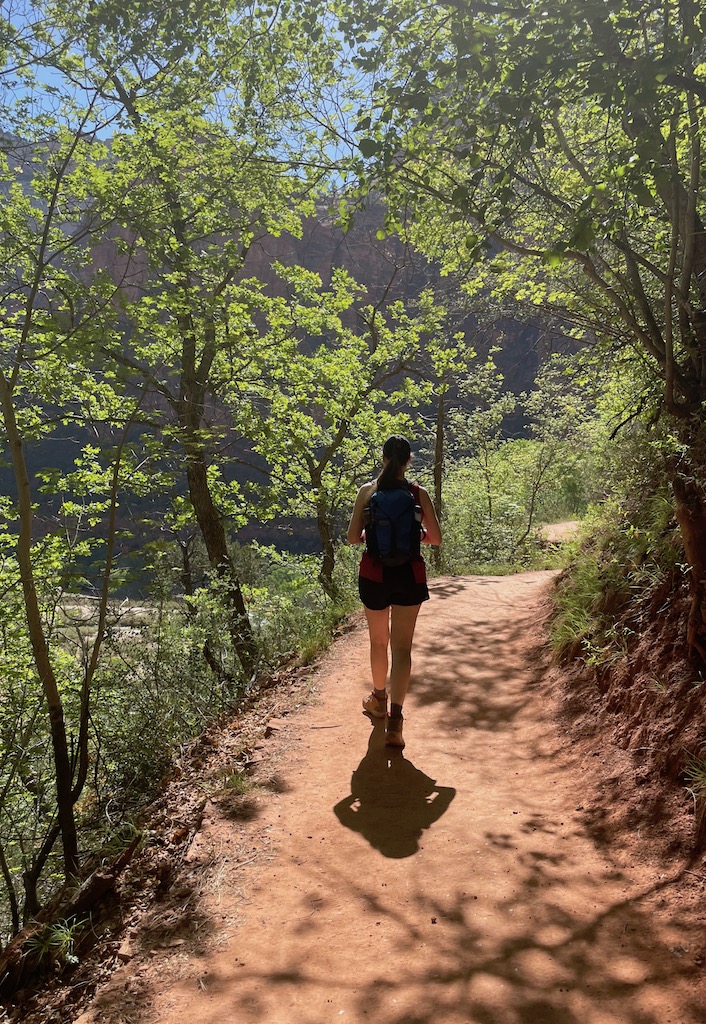
Fall temperatures average around a high of 60º or 70º F. Instead of worrying about the heat of the day, you’ll need to pack layers to deal with temperature swings. High and low temperatures can vary by 30° each day.
Additionally, you’ll find the shaded canyon to be quite cool compared to areas exposed to sun.
Below are photos taken in Zion Canyon and Upper East Canyon just a few hours apart. The temperature difference was significant.

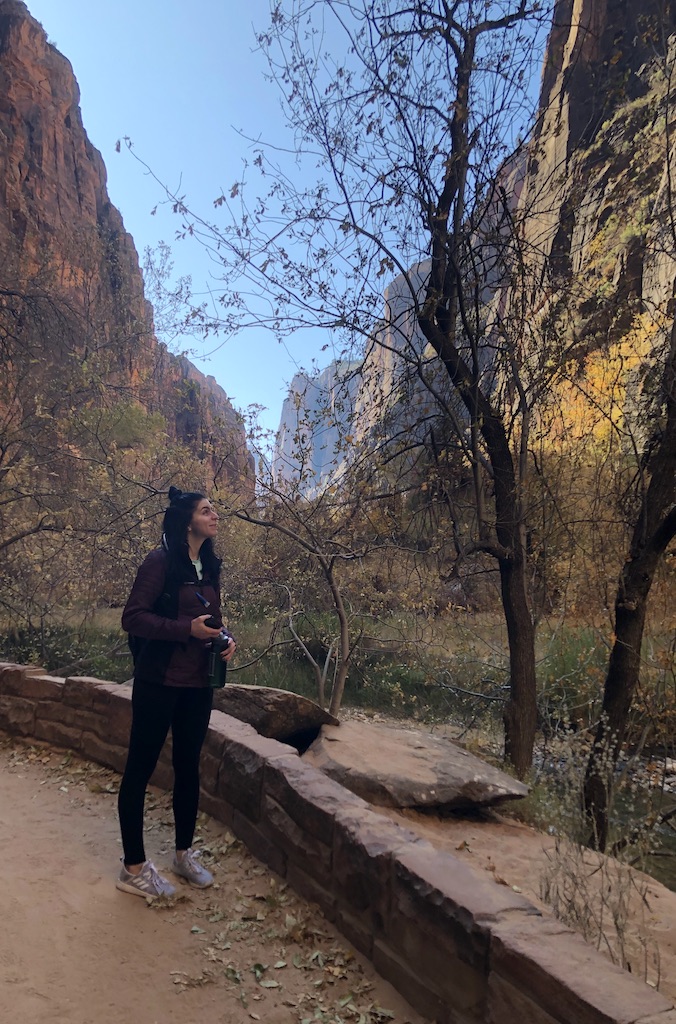
Fall can be an excellent time to do the park’s more strenuous and difficult hikes. It’s also a popular, although chilly, time to hike The Narrows.
When visiting in fall you’ll miss out on the park’s lush plant life but will be rewarded with beautiful fall colors instead. Changing leaves typically begin in mid October at higher elevations, eventually making their way down to Zion Canyon towards the end of October and early November.
Although the crowds are relatively smaller, the shuttle is still required through Zion Canyon.
You May Also Like: Zion National Park In October
When To Visit Zion National Park: Winter
December – February
Pros: Lowest number of visitors all year. A chance for mild temperatures. Zion Canyon Scenic Drive is usually open.
Cons: Some trails may be closed. Not all facilities are open. Little plant life. A chance for snow.
Winter is an excellent time to see Zion without the crowds, although it will be cooler and may be snowy. Temperatures often range from highs of 50-60°F to lows below freezing. Snow is common, half the park’s annual precipitation falls between December and March, but melts quickly at the park’s lower elevations.
Conversely, the park’s higher elevations may be difficult to access, most notably after winter storms. However the weather here is much milder compared to other parks in Utah, note my Bryce Canyon Winter Guide.
We visited Zion in mid-January hoping for snow but instead got a beautiful 60°F day with very few people in the park.
If you plan to hike know that icy conditions may exist on trails. Especially in the park’s higher elevations and sections of Zion Canyon that see little sun. Popular trails such as the Riverside Walk and Emerald Pools can remain icy throughout winter and Angels Landing can be extra hazardous this time of year. I’d bring traction devises just in case.
If you’re determined to hike the Narrows without the crowds this may be a great opportunity. However it will be very cold and you’ll definitely need a wetsuit.
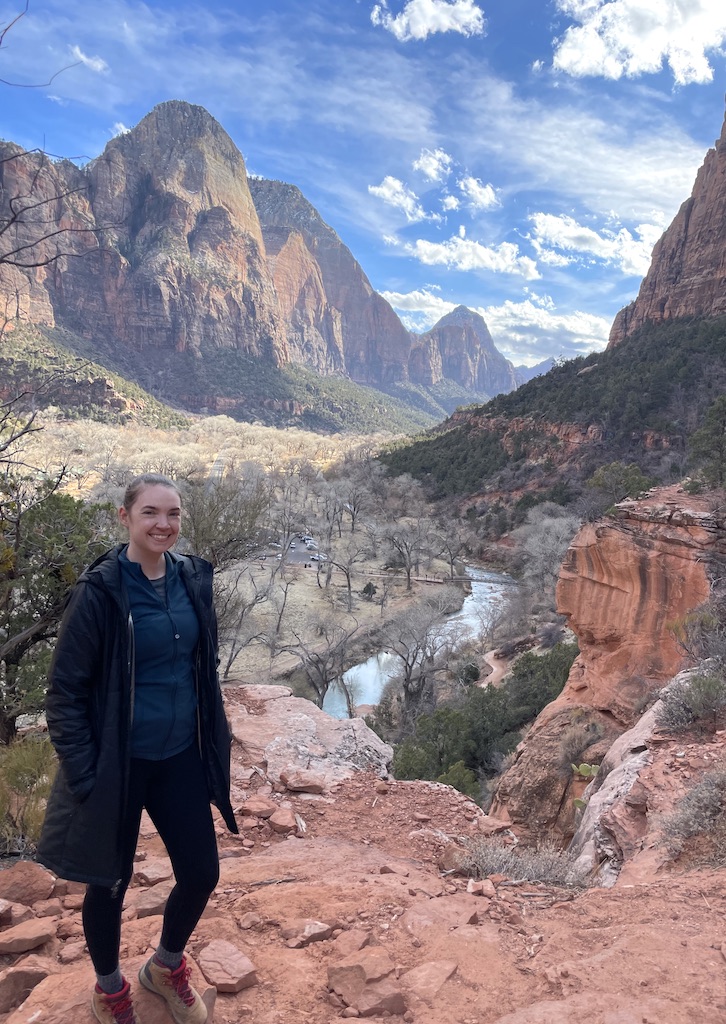

With exception of the holidays Zion Canyon Scenic Drive is often open to private vehicles during winter. A shuttle is required almost all year, so if given the opportunity don’t miss out on exploring the 12 mile, two land road through the heart of Zion Canyon.
Nothing beats moving at your own pace, stopping to photograph wildlife, or peaking out the sun roof to marvel at the massive canyon walls staring down at you.
When To Visit Zion: Spring
March – May
Pros: Abundant and lush plant life. Mild temperatures. All trails typically open. All facilities open.
Cons: Crowds rev up again. The Narrows may be closed.

As winter melts away Zion roars back to life. Waterfalls will begin to flow at full force and the Virgin River fills with spring runoff.
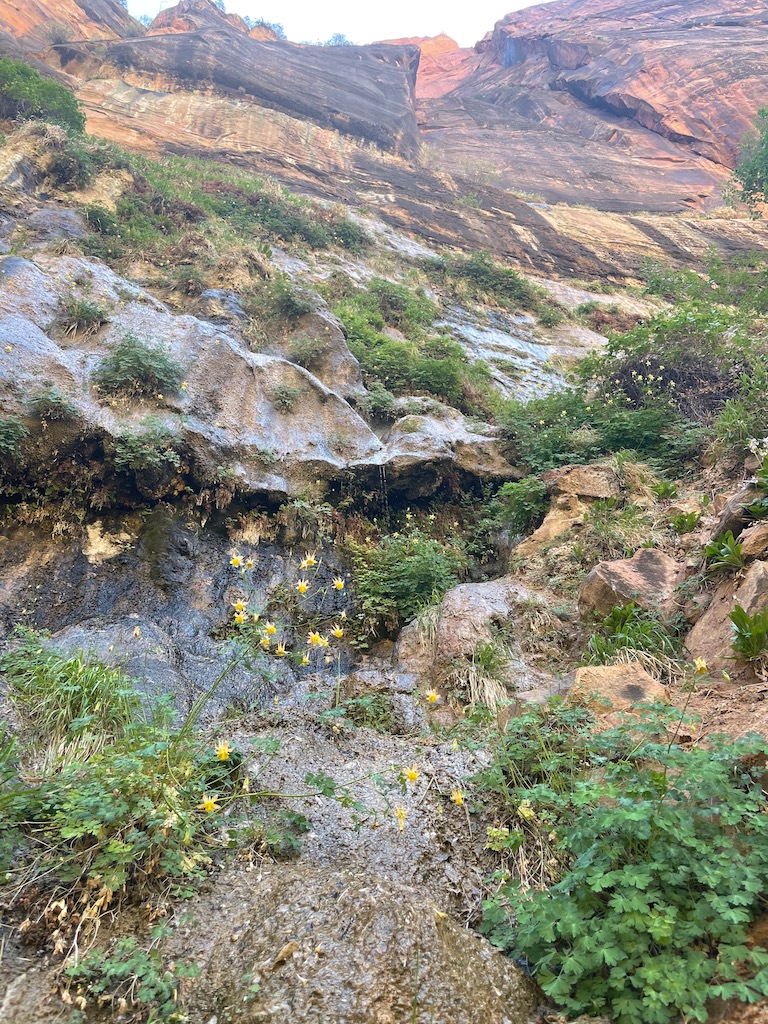
Zion is overflowing with vibrant green plant life and wildflowers contrasting the red sandstone cliffs. Although you can see the park’s famous hanging gardens and lush, green ferns through summer, spring is a spectacular time to witness it all come to life. There’s a certain vividness to the colors that only exists this time of year.
Similar to fall, spring temperatures are usually mild and the daily temperature swing can be 30° or more. Depending on winter snow totals, higher elevations may still require winter gear.
Additionally, snow melt raises river levels so the Narrows may be closed for a large portion of this season.
You May Also Like: Zion National Park In March

During spring be sure to check out waterfalls such as Lower Emerald Pools, Upper Emerald Pools and Lower Pine Creek Falls. Also keep an eye out for deer fawn, wild turkey chicks, or big horn sheep lambs.
With the increased temperatures and rebirth of plant life, the crowds return. March sees a large spike in visitors due to Spring Break but you may see relatively smaller crowds in April and early May.
By no means will you have the solidarity that comes with winter, but it’s an improvement from summer. Expect to use the park shuttle this time of year.
What Is The Best Month To Visit Zion?
In my experience fall and winter (October – February) are the best in Zion. This is due to the lack of crowds and beautiful weather. However, the park is not nearly as green and lush. To see the park in all its glory I recommend visiting in late-spring, early-summer (April – May).
When Should You Not Go To Zion National Park
I do not visit Zion from mid-June – July. There are too many people in the park this time of year.
Best Time To Visit Zion National Park To Avoid Crowds
December – February, excluding holiday weekends. For the least crowds visit in these winter months on a week day such as Tuesday or Wednesday.

If you’re trying to figure out when to visit Zion you’ll see there is no bad season in this desert paradise. It’s no wonder this is one of the most visited National Parks in the United States. I hope you find this information helpful in planning your visit to Zion National Park.
Looking for more ideas? Below are additional Utah and national park guides or head on over to Zion NPS!
More Information For Your Zion National Park Visit:
- 2 Days In Zion National Park: Everything To Know!
- The Best Things To Do In Zion Besides Hiking
- Easy Hikes In Zion National Park
- Where To Stay In Zion National Park
- 25 Fun Things To Do In Zion National Park (Best Hikes, Scenic Drives, & More)
- Zion National Park In October
- Zion National Park In March
Additional Utah Guides:
- Arches National Park Guides
- Bryce National Park Canyon Guides
- Canyonlands National Park Guides
- Moab, Utah Guides

Pin for later!



Panning a trip for a wedding in Phoenix, adding some sightseeing Grand Canyon to Las Vegas….found your site; very well written and useful!
I have been to many of your locations and you are spot on…thank you for your guidance.
Thank you, that’s so kind of you! I’m glad it’s been helpful, and I hope you have a wonderful trip 🙂