
Zion National Park In October: Everything You Need To Know + Best Things To Do

Located in southern Utah is the highly popular Zion National Park. The famous park is distinguished by Zion Canyon’s steep red cliffs, emerald pools, and hanging gardens. It’s easy to understand why this park tops many bucket lists.
Due to the canyon’s small size and high demand, it can be quite busy. However, fewer crowds and perfect weather make Zion National Park a great place to be come October.
I lived in Utah when I was younger, and my grandparents still live near Zion National Park today. So I’ve been lucky to visit this park more times than I can count.
October is a fantastic time of year to visit.
Read on for everything you need to know about Zion National Park in October, including tips for visiting and the best things to do.


Zion National Park Weather In October
Average Temperatures: 66° / 39° (High / Low F°)
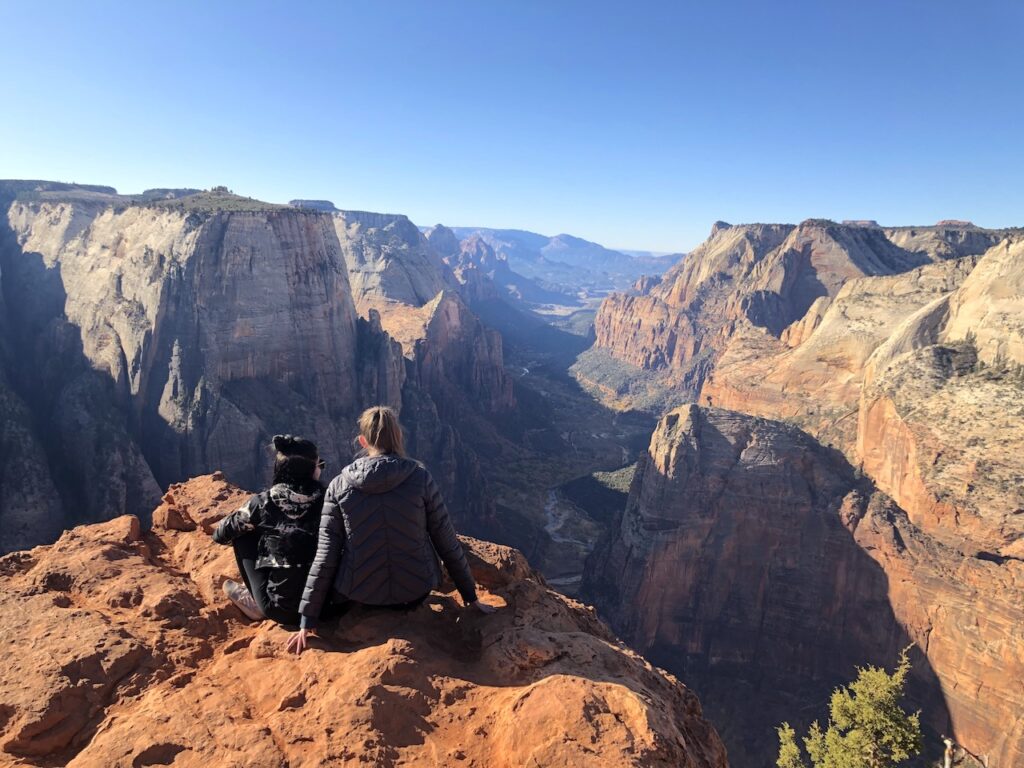
Weather-wise fall is a near perfect time to visit Zion.
Temperatures are mild, and October rainfall is low with an average of about 1” precipitation and 4 – 5 days of rain.
During your visit, it’s likely daytime temperatures will be significantly warmer than nighttime. Don’t forget to bring layers for early mornings and late evenings.
Also, heavily shaded portions of the canyon are significantly cooler than those exposed to sun. Keeping a jacket with you at all times is a good idea here.
Weather In The Different Sections Of Zion National Park
Zion Canyon is the park’s most prominent (and popular!) feature.
This is where you’ll find the most sought-after hikes and the bulk of visitors. Therefore, most Zion weather reports are referring to Zion Canyon.
This area may be the park’s star, but there’s definitely more to explore.
There’s also Upper East Canyon, Kolob Canyons, and Kolob Terrace — all located at higher elevations — which will have more extreme (and colder!) weather than Zion Canyon.
Additionally, there’s the Southwest Lowlands which are even lower in elevation than Zion Canyon and have very little shade, resulting in warmer temperatures.
If you’re visiting these lesser explored parts of the park, be sure to check proper forecasts.
Note: Zion’s Kolob Canyon can see snow in October.

Fall Foliage In Zion National Park
The deciduous trees of Zion Canyon begin to turn mid – late October, and into early November.
Fall foliage in the higher elevation areas of Zion — again Kolob Canyon, Upper East Canyon, etc. — will normally see change late September into early October.
The fall colors will not be nearly as dramatic as other sections of the United States (ahem, the New England). However, considering this is a desert environment, it’s pretty incredible the amount of color you’ll find here.

Getting Around Zion National Park In October
Shuttle In Zion Canyon
Accessing Zion Canyon (Zion Canyon Scenic Drive) in October requires taking the shuttle bus from the visitor center.
The shuttle service runs frequently, stops at all major trailheads and attractions, and is (usually) narrated.
If you’re coming in from Springdale, there’s also a shuttle, Springdale Line, which will take you from Springdale to Zion Canyon Village.
Zion Canyon Village is where the visitor center and Zion Canyon Shuttle are located.
Those staying in Springdale, this shuttle is your best option. Traffic going into the park can be heavy, bottling at the welcome stations. You will be able to bypass this in the Springdale Shuttle.
Both shuttles are free. They do require park admission, but do not require a permit or reservation.
Keep an eye on current shuttle schedules at Zion Canyon Shuttle System.
Bike
Visitors are welcome to bike Zion Canyon Scenic Drive, instead of taking the shuttle.
It’s 8 miles from the visitor center to Temple of Sinawava, which is where the roadway ends. Be aware the road can be narrow and you’ll have to be aware of the shuttle buses, there’s no bike lane.
But this is still a popular option for those who are able.
Drive
While Zion Canyon Scenic Drive is closed to private vehicles in October, there are other roads open.
Zion-Mt. Carmel Highway (which connects State Route 9 through the park), the Zion-Mt. Carmel Tunnel, Kolob Terrace Road, and Kolob Canyons Scenic Drive are open to vehicles any time of year.

The Best Things To Do In Zion National Park In October
Visitor Center
The visitor center is located in Zion Canyon Village, which is also where the Zion Canyon Shuttle begins. So you’ll most likely be starting your day here.
Tip: Be sure to arrive early or late in the afternoon to ensure available parking spots. Since you aren’t visiting in summer months, parking shouldn’t be too difficult (yay!) but still tends to fill, especially on weekends.
Zion has a large visitor center with lots of goodies for purchase, and park rangers available to answer questions. There’s no food here, aside from basic snacks, you’ll have to head to Zion Lodge for an in-park restaurant.
There are also bathrooms, which are some of the largest and nicest you’ll find in the park.
Go For A Hike
Going for a hike is one of the best ways to experience this park throughout the year.
It’s a must considering Zion has some of the most famous hikes in the entire NPS system.
Below are a few of the most loved day hikes in and around Zion Canyon, perfect for hiking Zion National Park in October.
Angels Landing
One of the most popular hikes in Zion is Angels Landing.
This is arguably the crown jewel of the park. It helped secure Zion’s position as one of the most famous national parks in the United States.
The 5.3 mile hike features a 1,640 foot elevation change and 21 steep switchbacks, but is famous for the last .5 mile stretch.
The final stretch is where hikers traverse a knee-shaking exposed ridge with 1,000 foot sheer drops on either side.
This hike is not for the faint of heart — or those afraid of heights.
But if you’re up for a challenge, you’ll be rewarded with near 360-degree views of the incredible Zion Canyon.
This hike requires a permit, which is available only by lottery. You can find details at Angel’s Landing Permits.
The Narrows
Another of the park’s most popular hikes is the Narrows.
The unusual trail is in the Virgin River.
This stretch of the river is surrounded by 2,000 foot vertical walls, painted in varying shades of red.
There’s even sections where the canyon walls are only 20 – 30 feet wide, it’s a really incredible site to see.
Hiking the Narrows in October is best done with dry pants — water temperature is usually in the 50°F’s this time of year.
Proper outerwear can be rented from Zion Outfitter or Zion Adventures outside the park. You’ll also need study shoes and hiking poles for stability.
Fortunately the hike is much less crowded this time of year. However, the water is cooler and can be deeper than in the summer months.
For information regarding river temperature, flow rate, etc. check with the rangers at the visitor center. They will also inform you if there is any danger of flash floods.

Riverside Walk
In order to access the Narrows, you’ll follow the paved Riverside Walk for a mile before entering the river.
Many park-goers rush through the Riverside Walk to reach the famous Narrows, but I encourage you to take your time here.
This section has so much beauty, including some of the best hanging gardens in Zion.
Most of the hanging gardens are dormant by October, but you’ll still get a good idea for the ample plant life found in this desert canyon.

Observation Point Trail
The Observation Point hike is 7 miles with a 700 foot gradual elevation change.
The trail is above the canyon, so don’t expect typical Zion views until the end of the hike.
The trail concludes with fantastic sweeping views of Zion Canyon — you’ll even look down on Angels Landing from here.
If the thought of hiking Angels Landing makes you queasy, but you want the epic canyon views, this is for you.
Currently Observation Point is only accessible via East Mesa Trail, which requires driving out of the park and hiking back in.
The dirt road to the trailhead is not passable if there’s been recent rain, be respectful of private property.

Upper, Middle, & Lower Emerald Pools
The Emerald Pools are a series of trails leading to glistening waterfalls and quiet pools, surrounded by jaw-dropping views of Zion’s sheer, red walls.
There’s a few different routes you can follow here.
My favorite is to take the Lower Emerald Pool trail to Lower Emerald Pool from Zion Lodge. Then detour to Upper Emerald Pool, and head back down following Middle Emerald Pool to Zion Lodge.
You can also do this as an out-and-back, or utilize Kayenta Trail and Grotto Trail to make this a longer loop, etc. — there’s really no right or wrong way to go about it.
If you’re looking for the easiest option, just do Lower Emerald Pool as an out-and-back.
Best of all, Lower Emerald Pool is one of the prettiest sections. You can walk behind a waterfall and view lots of incredible hanging gardens.
In my opinion, these are some of the best hikes in Zion in terms of effort to reward ratio.

Weeping Rock
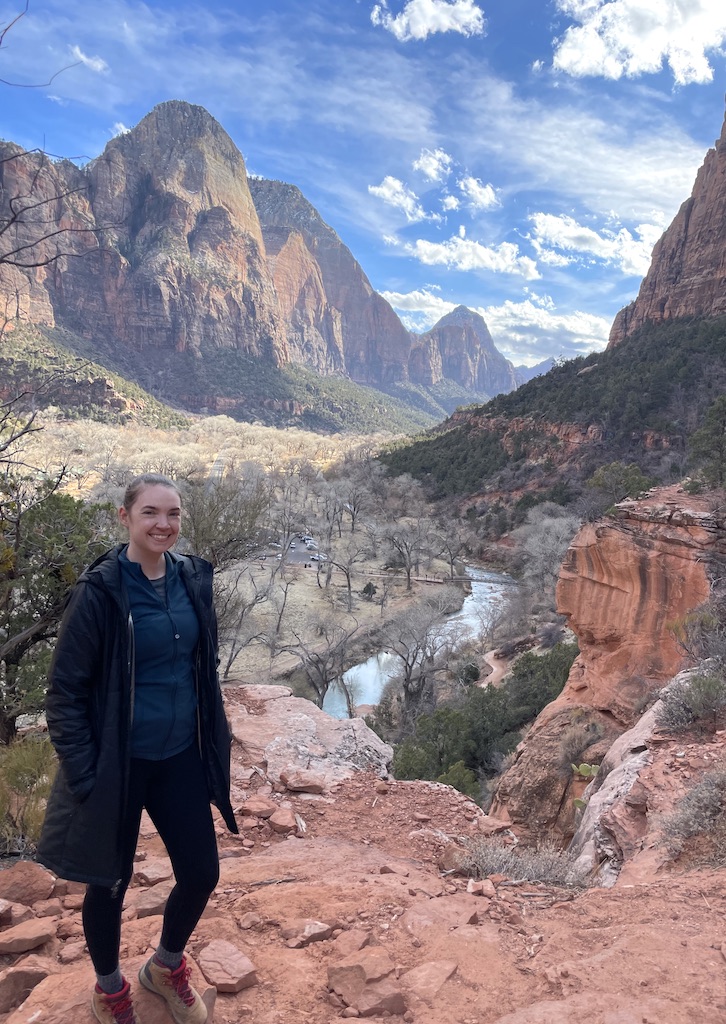
Weeping Rock is a natural sandstone alcove or overhang carved into the Navajo Sandstone formation.
The name comes from the fact that water seeps out of the sandstone and creates a dripping effect, resembling tears falling from the rock ceiling.
It also results in some pretty incredible hanging gardens.
Weeping Rock is an easy .3 mile hike that most will be able to do.
Canyon Overlook Trail
The Canyon Overlook trail is a short hike with beautiful views of Zion Canyon.
The sandstone is slippery in spots and there a few steep drop offs here and there, but aside from that this 1 mile hike is relatively easy.
This trailhead is located on the east side of the Zion-Mt. Carmel Tunnel, outside of the shuttle zone.
There’s a very small lot for compact vehicles only, or you can park alongside the road.

Go For A Scenic Drive
While Zion Canyon Scenic Drive is off-limits to vehicles, there’s still great places for a scenic drive in Zion.
Zion-Mt. Carmel Highway and Zion-Mt. Carmel Tunnel are some of my favorite places here.
There’s a number of pull offs along these road. Which allows you to get out and explore the wild landscape that is Zion National Park.
Tip: Keep an eye out for bighorn sheep, there are a number of them east of the Zion-Mt. Carmel Tunnel.
Another beautiful route is Kolob Canyons Scenic Drive.
This is a five mile scenic drive along Kolob Canyons Road. The drive has lots of beautiful red rocks and scenery but with a fraction of the crowds.
Looking for more non-hiking ideas? Check out The Best Things To Do In Zion Besides Hiking.
GPS Guided Tour
If you plan to drive the park I recommend a GPS based audio guide.
Guide Along is an audio tour downloaded to your phone which will guide you through Zion National Park.
Not only does it supply tons of information about the park but it also provides tips about where to pull over for the best viewpoints and easy, accessible trails worth stopping for.
The guided audio follows your GPS, therefore provides information and tips in real time and allows you to set the pace of the tour.
Be sure to download the tour before heading to the park, it’ll then work even when you no longer have cell service.
The Zion audio tour also includes nearby Bryce Canyon National Park.
You can purchase it here: Guide Along Zion National Park.
Watch For The California Condors
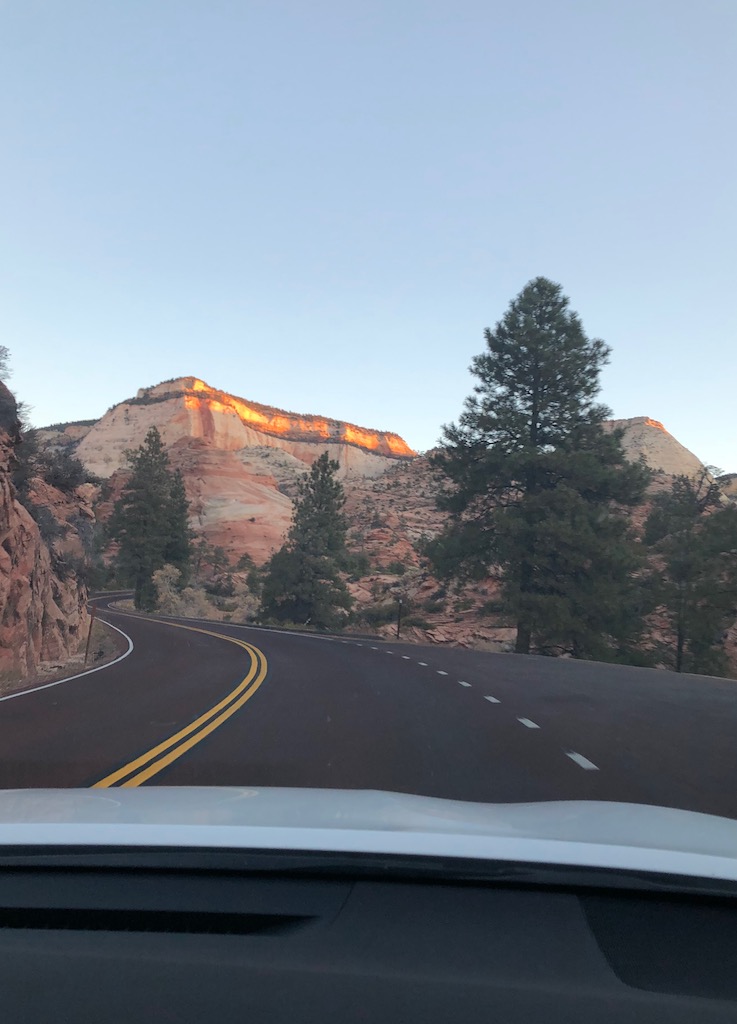
While in Zion Canyon, keep an eye out for California Condors.
This heavily endangered vulture-like bird is the largest flying bird in North America.
Zion is proud to host a mating pair and its baby who nest just below Angels Landing.
Did you know? A California Condor’s wings can stretch nearly 10 feet from tip to tip.
With some luck, you can see the condors from the Big Bend shuttle stop.
There’s often park rangers here observing the birds and providing information for park-goers.
Don’t forget your binoculars, their nest is waaay up there.
Tip: Also keep an eye out for deer and turkey, which make their way to Zion’s lower elevations in the cooler months.

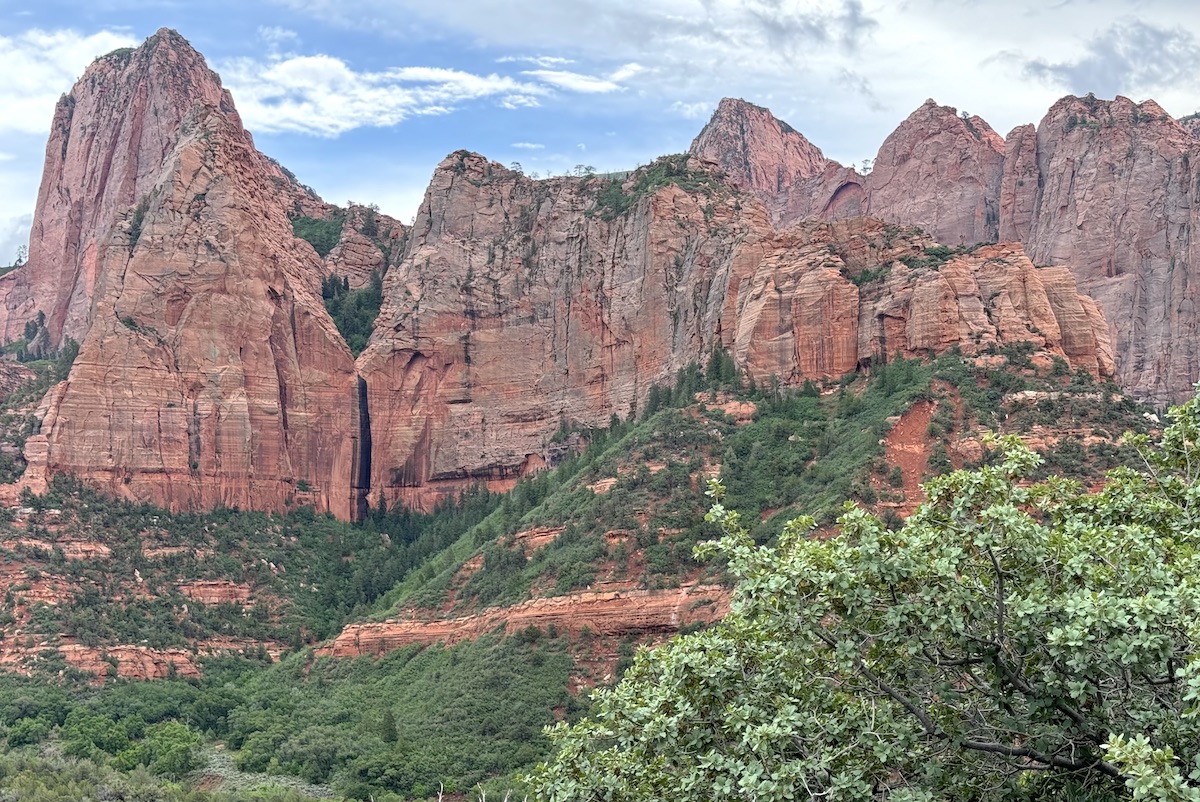
Kolob Canyon
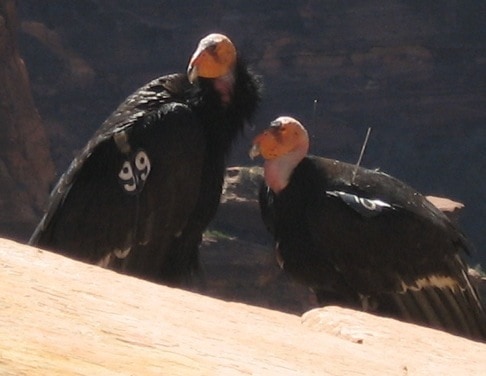
Known for bright orange cliffs, finger canyons, and quiet solitude is Kolob Canyon.
Kolob Canyon is the underrated and lesser known side of Zion National Park.
Located about an hour from from Zion Canyon’s South Entrance, it features its own visitor center, Kolob Canyon Scenic Drive, and beautiful hiking trails.
Tip: Keep in mind, Kolob Canyon is normally about 10 degrees cooler than Zion Canyon, and can see snow in the month of October.
Most Popular Hikes In Kolob Canyon
While you’re here there’s a number of beautiful hikes worth considering.
Some of the most popular Kolob Canyon hikes are:
- Timber Creek Overlook – 1.1 miles, 255 elevation change, rated moderate.
- Kolob Arch – 13.9 miles, 1,669 elevation change, rated hard.
- Taylor Creek Trail – 4.9 miles, 590 elevation change, rated moderate.
- Camp Creek – 1.7 miles, 383 elevation change, rated moderate.
Where To Stay Near Zion National Park During October
Where To Stay In The Park
Zion National Park Lodge, often referred to simply as Zion Lodge, is located in the park and open year-round.
This is one of the best places to stay, so it can be incredibly difficult to snag reservations here in peak season.
But with lesser crowds in fall, you do have a chance.
You can check rates and availability here: Zion National Park Lodge.
There are also camp grounds available in the park, reservations are required.
You can find more information at Campgrounds In Zion.
Where To Stay Just Outside The Park – Springdale
Springdale sits just outside the South Entrance of Zion Canyon and is the most popular place to stay any time of year.
If you’re not able find lodging in the park, this is the best option. Springdale is just minutes from the park’s South Entrance (this is the main entrance).
Additionally, Zion National Park offers a free shuttle from Springdale into the park. This is so convenient and allows you to avoid park traffic.
Popular accommodations in Springdale include:
- SpringHill Suites by Marriott Springdale
- Desert Pearl Inn
- LaFave: Luxury Hotel Apartment Rentals
- Zion Canyon Lodge
- The Bungalows at Zion
- Holiday Inn Express Springdale
- Red Rock Inn Cottages
Springdale is small but has a number of good restaurants and basic amenities… Be sure to grab a bite at Oscar’s Cafe!
For more information, check out Where To Stay In Zion National Park.
Where To Stay – Additional Nearby Towns
Additional nearby towns include:
- Hurricane – 35 minutes (23 miles) to Zion’s main entrance.
- St. George – 1 hour (41 miles) to Zion’s main entrance.
- Kanab – 1 hour (41 miles) to Zion’s main entrance. (The East Entrance is closer, but to access Zion Canyon shuttle, you need to get to Zion Canyon Village, which is next to the main entrance.)
- Cedar City – 1 hour, 5 minutes (58 miles) to Zion’s main entrance.
- Brian Head – 1 hour, 35 minutes (89 miles) to Zion’s main entrance.

What To Wear In Zion National Park In October
As mentioned at the beginning of this post, October in Zion sees considerable temperature swings.
There’s often mild, sunny days with low temperatures during the mornings and evenings.
Layers will be well utilized during this time of the year.
Additionally, sun protection is a must.
Tip: If you plan to hike in Kolob Canyon or the Narrows, where there’s cooler temperatures, you’ll want to dress on the warmer side.
Be sure to wear closed-toe, sturdy shoes. Tennis shoes are fine if you don’t have hiking boots, just make sure they have good traction, the sandstone in Zion is very slick.
As you can see there’s so much to do in Zion National Park in October. This is truly one of the best times to visit Zion. I hope you have a great time.
Any questions or additional ideas? Please leave a comment below or reach out on social media.
Looking for more ideas? Below are additional Utah and national park guides or head on over the the National Park Service.
More Information For Your Zion National Park Visit:
- 2 Days In Zion National Park Itinerary
- The Best Things To Do In Zion Besides Hiking
- The Most Fun Things To Do In Zion National Park
- Easy Hikes In Zion National Park
- Where To Stay In Zion National Park
- The Best Time To Visit Zion National Park: What To Know About Each Season
- Zion National Park In March
Additional Utah Guides:

Pin for later!



Keep Up With Amy!
Subscribe to the newsletter for the latest updates in your inbox. And don’t forget to connect on your favorite social platform!
Thank you!
You have successfully joined our subscriber list.