
3-Day Olympic National Park Itinerary

Olympic National Park is one of the most unique national parks in the United States. You’ll find rugged Pacific coastline, temperate rainforest, alpine mountain views, glacier-carved lakes, and some of the most diverse landscapes in the country.
Because the park is so spread out, planning your itinerary thoughtfully makes a huge difference.
This 3-day Olympic National Park itinerary focuses entirely on the national park itself — covering the major highlights and the best way to group different areas together, while following my exact route during my first visit.
3-Day Olympic National Park Itinerary
Day 1: Hoh Rainforest & The Beaches
This is one of the most rewarding days in the park — you’ll experience both the Hoh Rainforest and the Pacific coastline, which feel completely different from each other.
Timing matters a lot here, so it’s worth planning your day around it.
In summer the Hoh Rainforest is best visited very early in the morning to avoid crowds (and long wait times at the entrance), while the beaches are best explored around low tide when more of the shoreline and tide pools are exposed.
During my visit, high tide was in the morning and receding throughout the day, so we started in the rainforest and spent the afternoon along the coast. Depending on tide charts during your trip, you might need to move things around.
Hoh Rainforest
Start your morning at the Hoh Rainforest, one of the most unique areas in Olympic National Park.
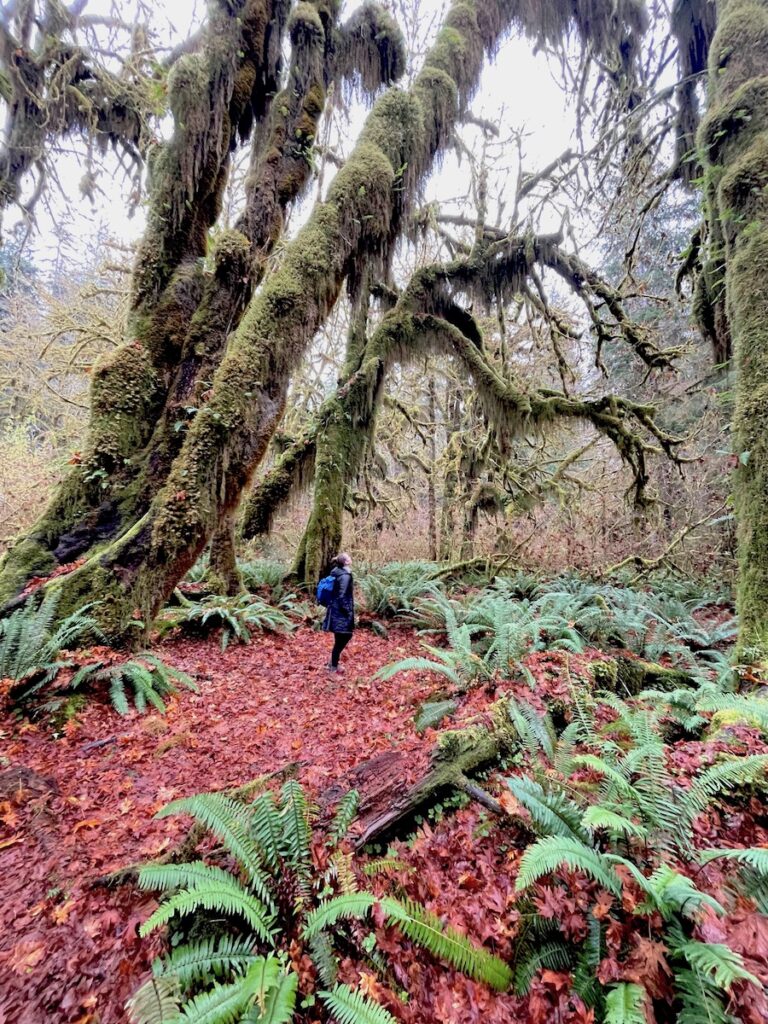
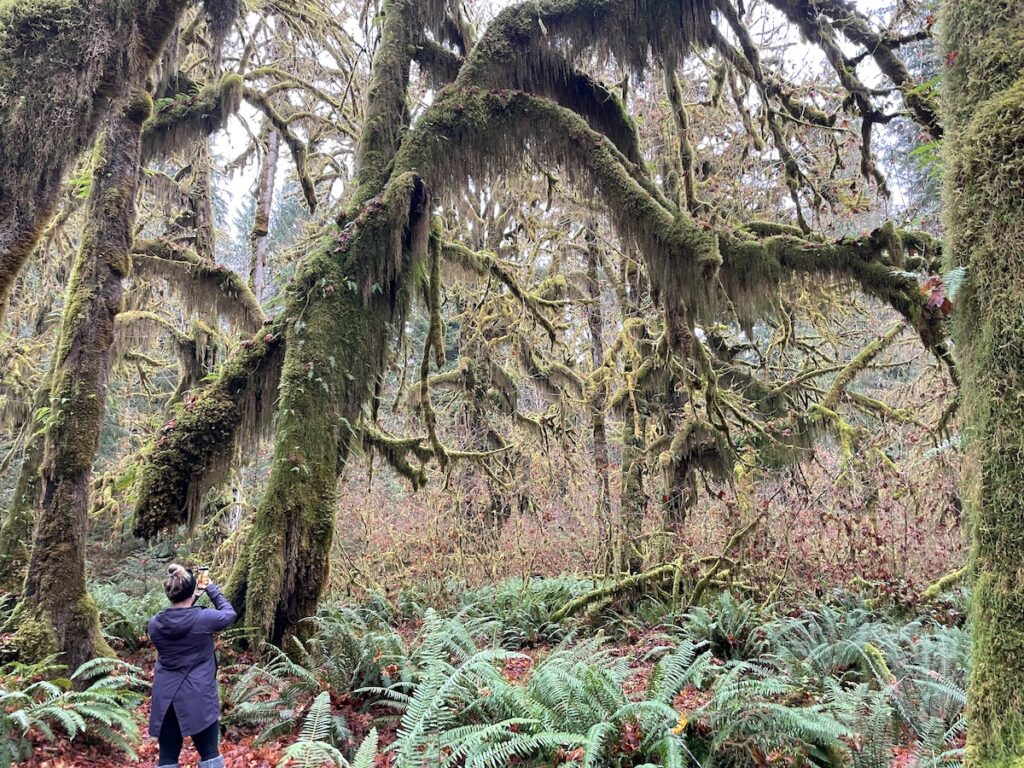
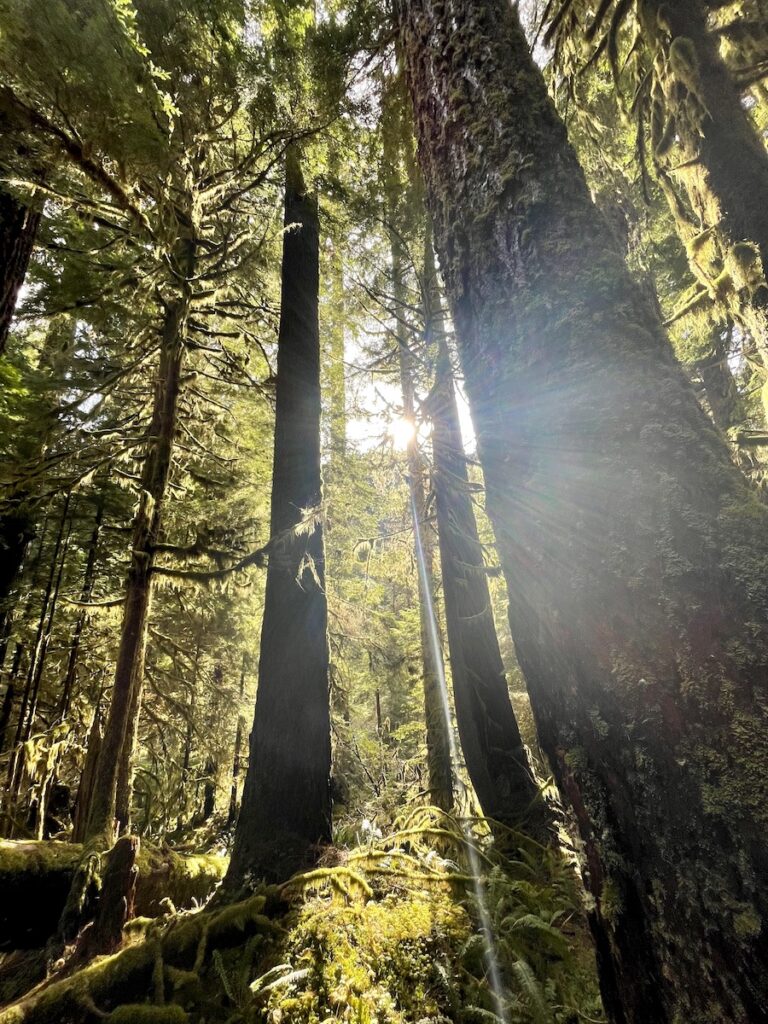
This is a temperate rainforest, meaning it’s cool, damp, and incredibly green year-round. You’ll see massive trees, thick moss hanging from branches, and a forest floor covered in ferns. It’s stunning and feels completely different from anywhere else in the park — and honestly, much of the continental United States.
Hall of Mosses & Sprue Nature Trail
The easiest way to experience the Hoh Rainforest is by walking the Hall of Mosses and Spruce Nature Trail.
Both trails are short, flat loops located right near the visitor center, and they do a great job of showcasing the landscape without requiring a long hike. Expect towering spruce and hemlock trees, layers of moss, and a lot of small details along the trail.
You don’t need to do anything strenuous here — this is one of the best places in the park for an easy but really memorable walk.
For more information and tips, check out my Hoh Rainforest Hikes Guide.
Plan to spend at least 1 – 2 hours in this area, depending on how often you stop for photos.
Hoh Rainforest Visitor Center
Before heading out, it’s worth stopping into the visitor center.
You can grab souvenirs, use the restroom, and most importantly, talk to park rangers if you have questions. They were especially helpful during our visit when it came to beach recommendations, tide information, and tide pooling conditions.
If you’re unsure where to go along the coast, this is a good place to get updated advice before continuing your day.

Visit The Beaches
From the rainforest, make your way toward the coast. Again, low tide is ideal, but if high tide is your only option, that’s fine too — just know some beaches are easier to explore when the tide is lower.
Below are the beaches I visited. We started farther south and worked our way north, which made the most sense based on where we were ending the day.
Kalaloch Beach & Tree Of Life
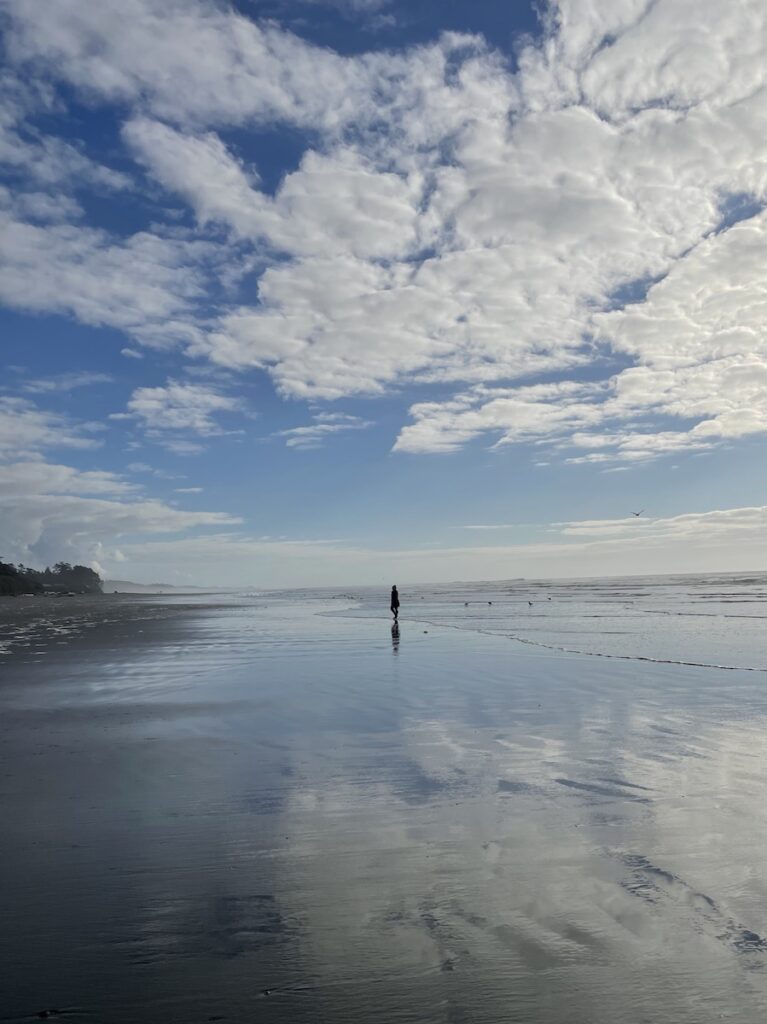
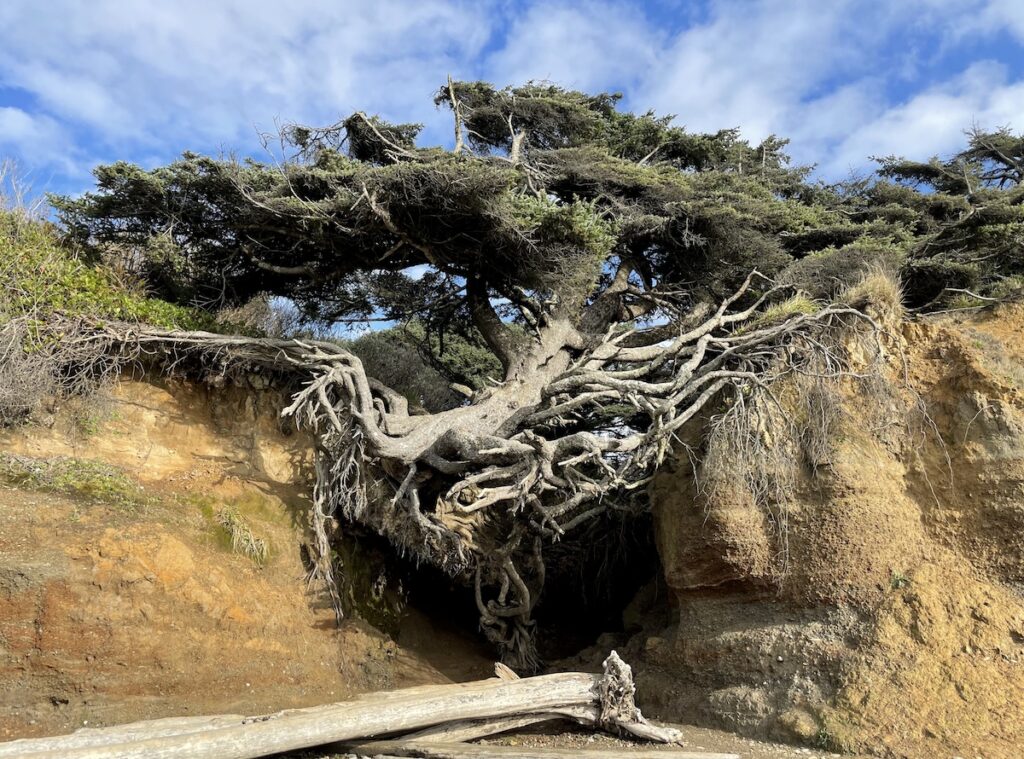
Our first stop on the coast was the Kalaloch Tree of Life.
This is a Sitka spruce that’s somehow still standing despite having most of its roots exposed from erosion beneath it. For most it’s a quick stop — you only need about 10 – 15 minutes — but it’s right along the route and easy to add in. We actually ended up spending quite a bit of time here because the low tide created really beautiful reflective conditions along the beach.
Important: At high tide, access to the tree can be limited.
Ruby Beach
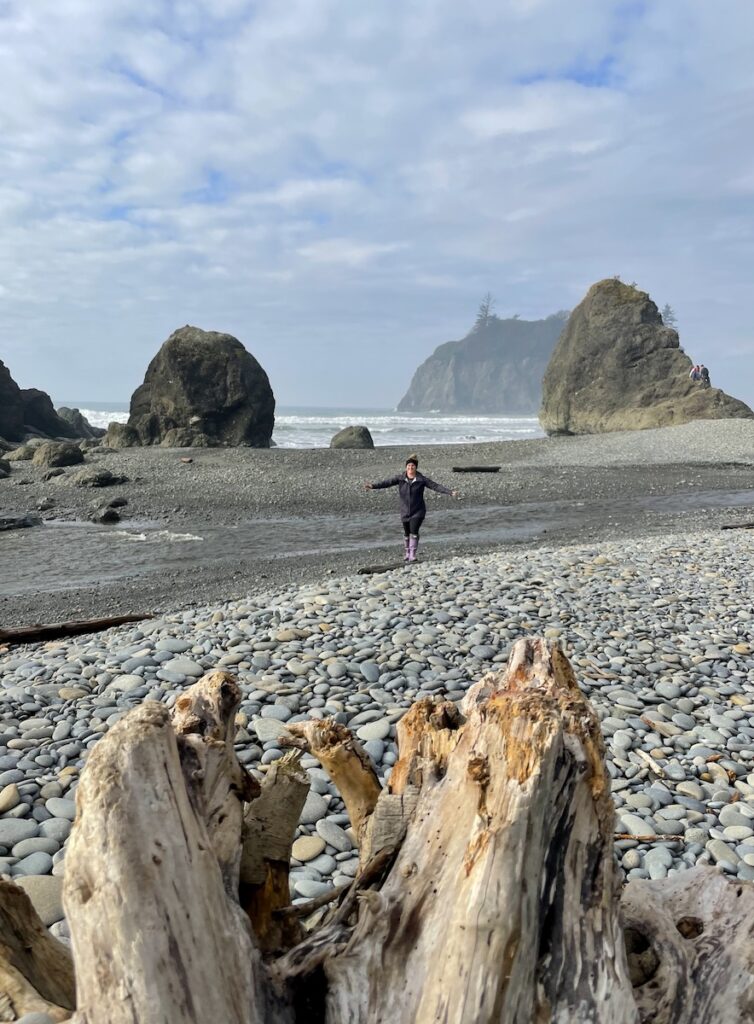
Next, continue to Ruby Beach — one of the most well-known stops in Olympic National Park.
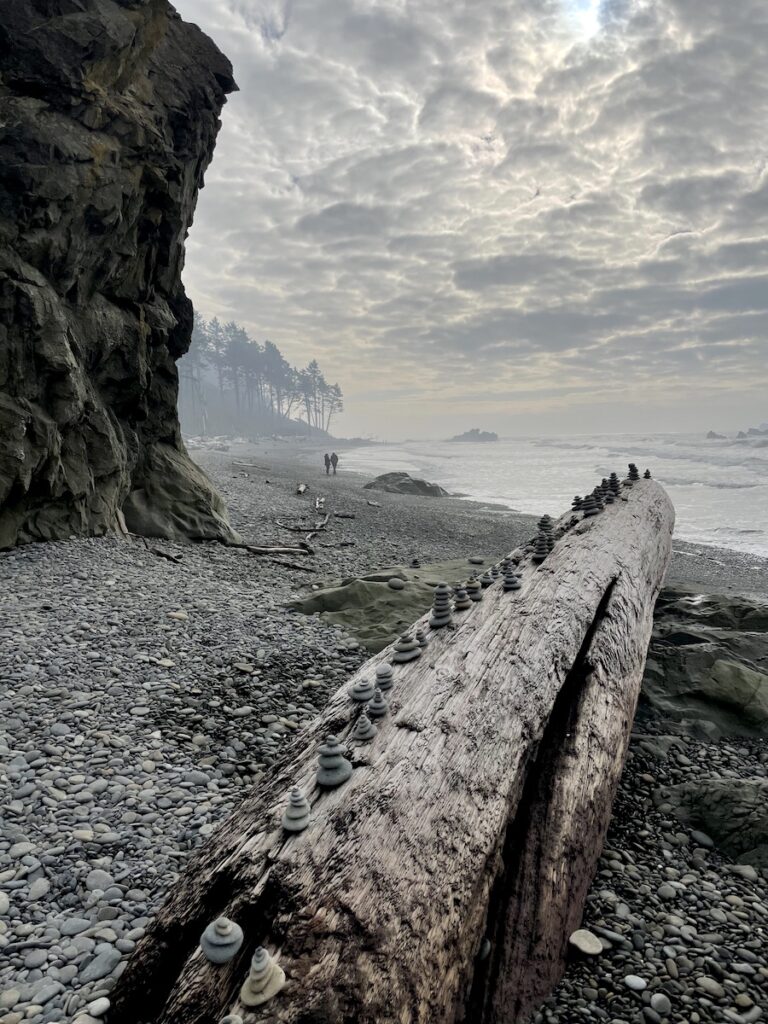
This is where you’ll get that classic Pacific Northwest scenery: sea stacks, driftwood, and a wide, open shoreline. It’s a great place to slow down, walk along the beach, and explore.
Plan to spend at least an hour here, but you could easily stay longer.
Note: Getting down to the beach requires climbing over some driftwood. It’s manageable, just something to be aware of.
First, Second, & Third Beach (La Push Area)
If you have time and energy, continue north to explore the beaches near La Push.
Each one offers a slightly different experience:
- First Beach — easiest access (no hike), but also the busiest
- Second Beach — short hike in, a good balance of effort and scenery
- Third Beach — longer hike (about 1.2 miles), quieter and more remote
These beaches have a similar rugged feel to Ruby Beach, but with fewer crowds as you move farther out.
If tide pooling is a priority, these are great beaches.
Note: This area is part of the Quileute Tribe’s land as well as Olympic National Park. Visitors are welcome, but it’s important to follow posted guidelines and be respectful of the area.
Day 2: Sol Duc Falls & Lake Crescent
Day 2 is a bit more relaxed, but still includes some of the most scenic spots in the park.
This day stays on the northern side of Olympic National Park and requires less driving than Day 1, making it a nice balance after a longer day along the coast.
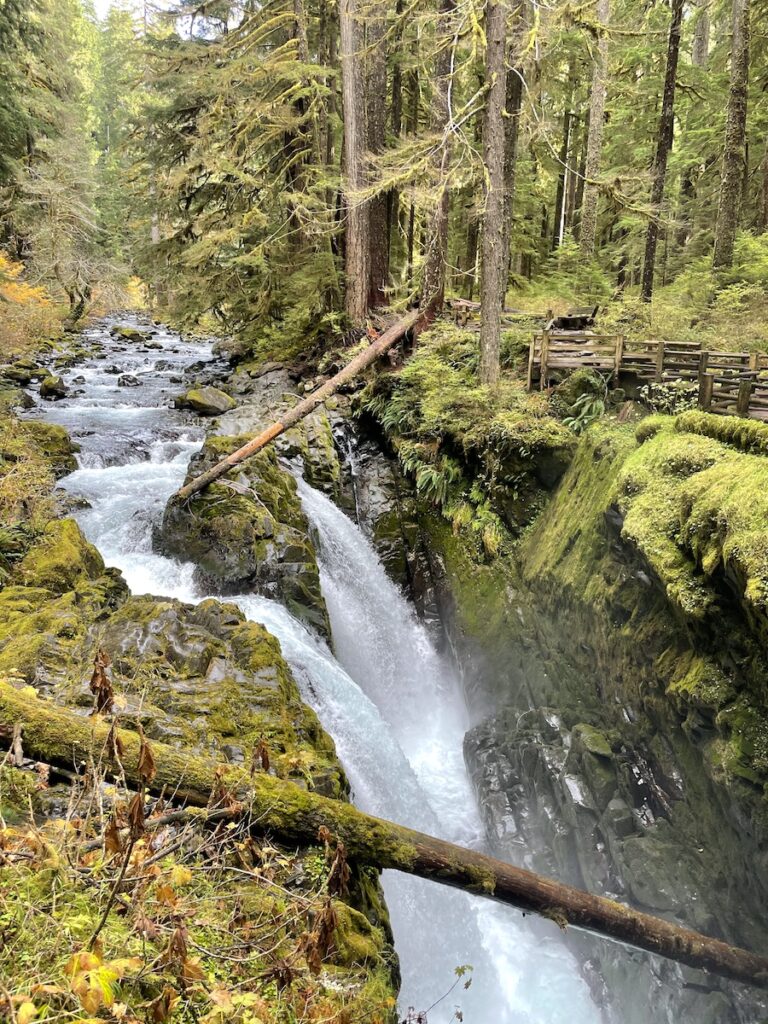
Hike Sol Duc Falls
Start your day with a visit to Sol Duc Falls.
The trail is about 1.6 miles round trip, relatively flat, and easy to follow, making it one of the more accessible hikes in the park.
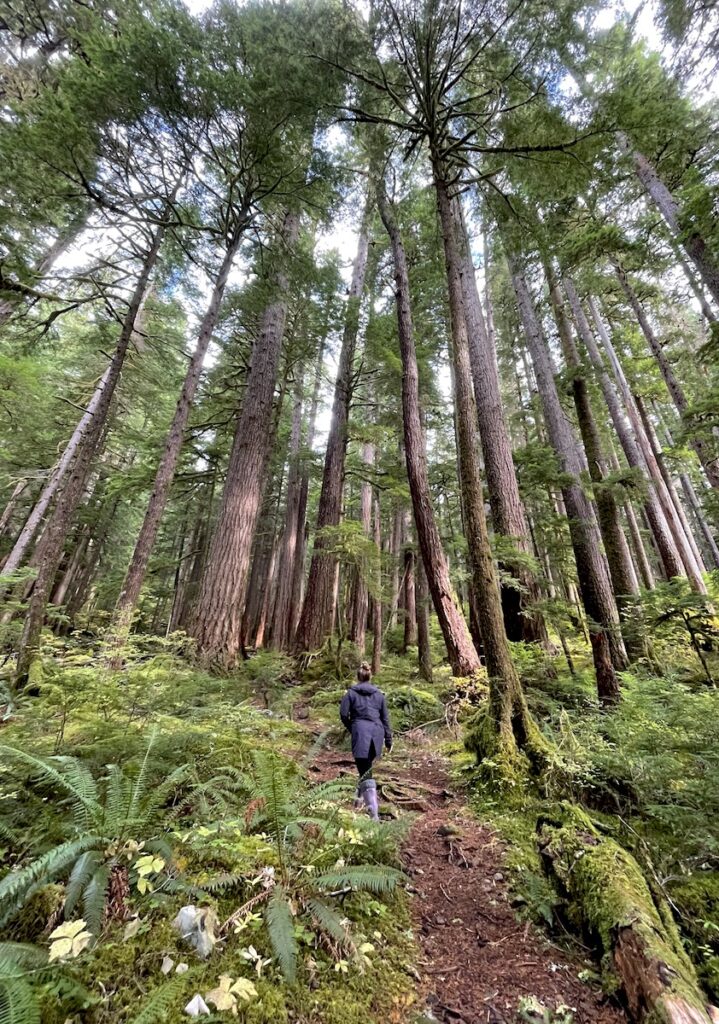
What makes this one stand out is the setting — you’ll walk through dense forest with moss-covered trees before reaching the falls, which split into multiple channels as they drop into a narrow canyon.
It’s a short hike, but one of the more unique waterfalls in the park.
If you’re looking to extend the hike, you can connect to the Lovers Lane Loop for a longer route.
Optional: Sol Duc Hot Springs
If you’re interested in something more relaxing, you can stop at Sol Duc Hot Springs after your hike.
The resort has several mineral hot spring pools along with a freshwater pool, and it’s an easy place to spend an hour or two if you want a break from hiking.
Hours vary by season, and the springs are typically closed in winter, so it’s worth checking ahead before adding this to your itinerary. You can find booking information at Sol Duc Hot Springs.
Salmon Cascades
Nearby is a quick stop worth adding to your itinerary, the Salmon Cascades.
This is a very short stop, with the overlook just steps from the parking area — but during the right time of year, you may be able to see salmon jumping upstream.
- Coho salmon: September – October
- Steelhead trout: late March – May
Our visit didn’t land in either season but it was still a very scenic and peaceful stop.
Lake Crescent
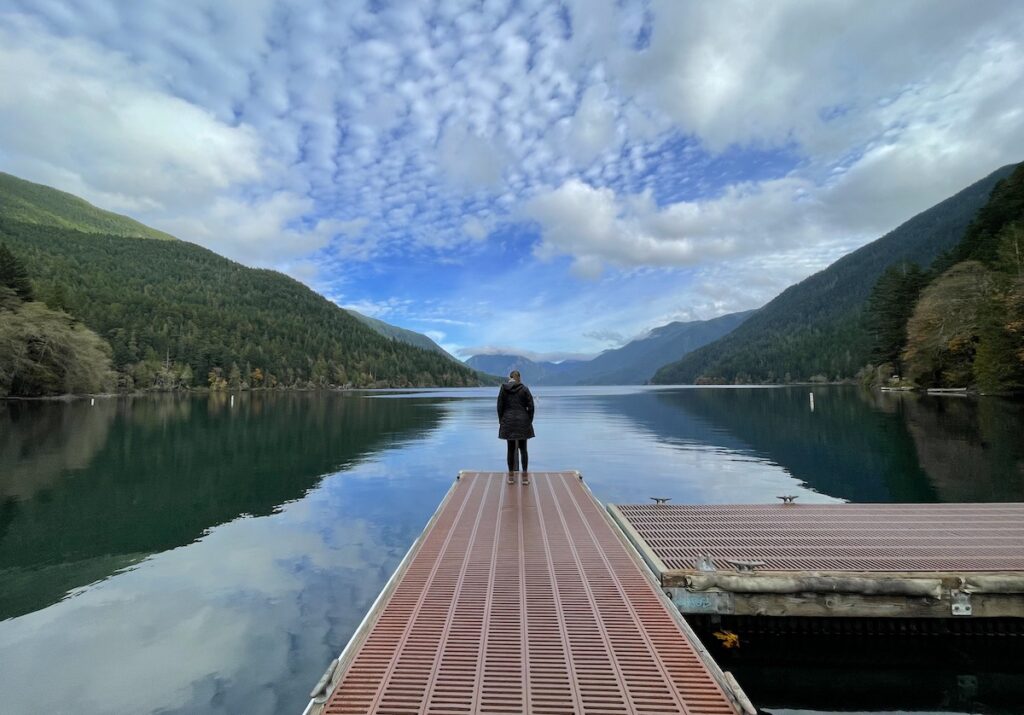
Next, spend the afternoon at Lake Crescent. The gorgeous lake is deep, glacially carved, and known for its pristine blue water. I loved this spot.
Best of all, you can easily make this as low key or as active as you want.
We kept it simple, walking along the shoreline and spending some time on the docks, but if you’re up for it, you could:
- Kayak or paddleboard
- Swim (Devil’s Punch Bowl is a popular spot)
- Hike nearby trails like Spruce Railroad Trail or Marymere Falls
Plan to spend at least a couple of hours here, but it’s an easy place to linger longer if you want a slower afternoon.
Tip: If you’re short on time, you’ll still get great views just driving along Highway 101, which runs right along the lake. There are a few pull-offs along the highway.
Day 3: Hurricane Ridge + Flexible Afternoon
After two full days exploring different areas of the park, Day 3 is a bit more flexible.
The main focus is Hurricane Ridge, but I’d recommend keeping the rest of your day open. This gives you time to slow down, revisit a favorite area, or fit in anything you didn’t get to earlier in your trip.
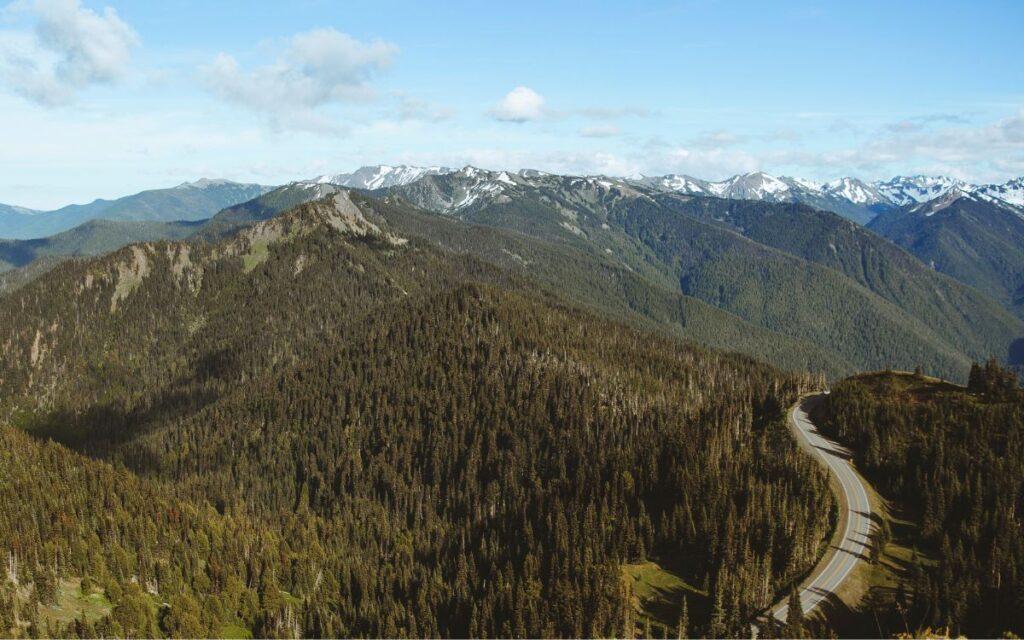
Hurricane Ridge
Start your morning with a drive up to Hurricane Ridge.
It’s about 17 miles from Port Angeles, and the road itself is part of the experience — winding uphill with increasingly wide views of the Olympic Mountains as you go.
At the top, you’ll get sweeping alpine views that feel completely different from the rainforest and coastline you saw the last two days.
How much time you spend here really depends on your preference.
If you’re looking for something easy:
- Take in the views from the Hurricane Ridge Visitor Center area
- Walk the short trails near the main viewpoint
- Watch for wildlife (this is one of the better areas in the park for spotting deer and other animals)
If you want more of a hike, there are several longer trails in this area as well (Hurricane Hill is most popular!).
Winter here brings snowshoeing, cross-country skiing, and sledding. Although be aware, winter access is limited to weekends only and is weather-dependent.
Note: Due to a recent fire, you may experience limitations and closures in this area. Check out Olympic National Park Conditions or speak with a park ranger at a visitor center.
Elwha Valley
On your way back down from Hurricane Ridge, consider stopping in the Elwha Valley.
This area is just west of Port Angeles and is one of the easier sections of the park to access, but it still feels quieter and less visited than other areas.
The main draw here is the Elwha River, along with a few short, easy hikes to waterfalls. What makes this area especially interesting is the massive river restoration project that took place after two dams were removed from the Elwha River — one of the largest dam removal projects in U.S. history. Since then, the river has been slowly returning to its natural state, helping restore salmon runs and reshape the surrounding ecosystem.
Optional Afternoon
For the rest of the day, I’d keep things flexible.
This is a good time to revisit anything you wanted more time for — whether that’s another hike, more time along the coast, or a slower afternoon at Lake Crescent.
If you’re looking to add something new within Olympic National Park, you could also consider heading farther south to Lake Quinault. It’s a quieter area of the park with scenic drives, waterfalls, and optional boat tours. Although, this is on the opposite side the park and will be a lot of driving.
For more in-park ideas, check out The Best Things To Do In Olympic National Park.
For something more remote, Shi Shi Beach or Cape Flattery are both incredible, but they require more time and planning. Both are located on Makah Tribal land and require a Makah Recreation Pass for access. Additionally, it’s a very lengthy drive to get there.
If you’d rather slow things down, you can also spend the afternoon outside the park in nearby towns like Port Angeles, Sequim, or Forks. It can be a nice way to break up your trip if you’re looking for a more relaxed end to your visit. For ideas, check out the Top Things To Do On The Olympic Peninsula.
Olympic National Park Entry Fee & Reservations
Olympic National Park charges an entrance fee, which is valid for 7 days.
You can either pay per vehicle at park entrances ($30 covers 7-day access) or use an America the Beautiful pass if you have one.
Just be aware that not all areas of the park have staffed entrance stations, so depending on where you enter, you may need to use a self-pay station.
Unlike some other national parks, Olympic National Park does not currently require timed entry reservations.
However, some nearby tribal lands and recreation areas — including places like Shi Shi Beach and Cape Flattery on Makah Tribal land — require separate passes or fees in addition to your national park entrance fee. Always check current access requirements ahead of your visit.
Getting Around & Parking
You’ll need a car to explore Olympic National Park — there’s no shuttle or reliable public transportation connecting the different areas.
One of the most important things to understand is that the park is very spread out. You’ll likely be driving a few hours each day, especially when moving between the rainforest, coastline, and mountain areas.
Roads are generally well-maintained, but most are two-lane and slower than expected, so it’s best to plan extra time for driving.
Parking can also be limited at popular trailheads and viewpoints. Hoh Rainforest and Hurricane Ridge are the most competitive areas for parking during peak summer season. Beaches tend to be easier, but can still fill up on busy days.
Tip: Start your days early in summer, and have a backup plan in case a parking lot is full.
I’d also recommend filling up on gas when you have the chance and downloading offline maps on Google Maps, cell service is very limited throughout most of the park.
Best Time To Visit
Summer (June – September)
This is the best time to visit for overall access and weather. You’ll get the most consistent conditions and full access to higher elevation areas like Hurricane Ridge. It’s also the busiest time of year.
Spring (April – May)
A quieter, more transitional season. Expect some lingering snow at higher elevations and muddy trails, but the rainforest is especially green.
Fall (October – November)
Fewer crowds and a more moody atmosphere. Expect rain, shorter days, and limited access to some higher elevation areas. This is when I visited (mid-October), I loved it!
Winter (December – March)
The quietest time to visit. Hurricane Ridge becomes a winter recreation area, and the coast and rainforest take on a more dramatic feel. Expect frequent rain at lower elevations and snow at higher elevations. Seasonal closures are common this time of year.
Weather In Olympic National Park
One of the most important things to know about Olympic National Park is how varied the weather can be, no matter the time of year.
The park has distinct microclimates, meaning conditions can change significantly depending on where you are.
On the same day, you could simultaneously experience: sunshine near Port Angeles or Sequim, rain in the Hoh Rainforest, sun or fog on the coast, and cooler, windier conditions at Hurricane Ridge.
Because of this, it’s important to be prepared for a wide range of conditions, even in summer.
What To Wear & Pack For Olympic National Park
Packing for Olympic National Park is all about being prepared for changing conditions.
As I mentioned above, even within the same day, you’ll likely move between different environments — rainforest, coastline, and mountains — each with its own distinct weather patterns.
Here’s what I recommend bringing:
- Waterproof jacket – essential for the rainforest and coastal areas
- Comfortable hiking shoes or boots -they will get muddy
- Layers – light sweaters, long sleeves, and a jacket you can easily adjust (even in summer)
- Daypack – for snacks, water, and extra layers
- Reusable water bottle – you’ll be out for long stretches and not all areas have water stations
- Snacks – food options inside the park are very limited
- Sunglasses – especially for coastal and alpine areas
- Swimsuit (optional) – for places like Lake Crescent or hot springs
Even in summer, mornings and evenings can feel cool, and the rainforest will almost always feel damp — so it’s better to be slightly over-prepared.
If visiting outside of summer, make sure to bring very warm layers. The chilly coastline, damp rainforest humidity, and cooler temperatures on Hurricane Ridge will cut through light layers quickly. During my fall visit, I constantly wore my Patagonia fleece under either a lightweight winter jacket or rain jacket depending on the conditions — the thicker fleece layer made a huge difference in staying warm.
Where To Stay Near Olympic National Park
Because Olympic National Park is so spread out, there’s no single “perfect” base — your ideal location depends on which areas you want to prioritize.
Here are the main options to consider:
• Port Angeles — Most popular base. It’s closest to Hurricane Ridge and the northern park entrance, while still within a reasonable drive of Lake Crescent, the coast, and the Hoh Rainforest. It also has the best selection of restaurants, shops, and hotel options. This is where I stayed during my trip and I found the drive times very manageable, though I visited in the off-season when traffic and crowds were less of a factor.
• Forks / La Push area — best if you want to prioritize the rainforest and beaches. This puts you closer to Hoh Rainforest, Ruby Beach, and La Push, but accommodations and dining options are more limited.
• Lake Quinault — a more remote option on the southern end of the park. Best if you want a quieter, nature-focused stay, but less convenient for seeing multiple areas in a short trip.
For a 3-day itinerary like this, it’s common to stay in multiple places. Spend one night in Port Angeles and two nights in the Forks / La Push area, for example.
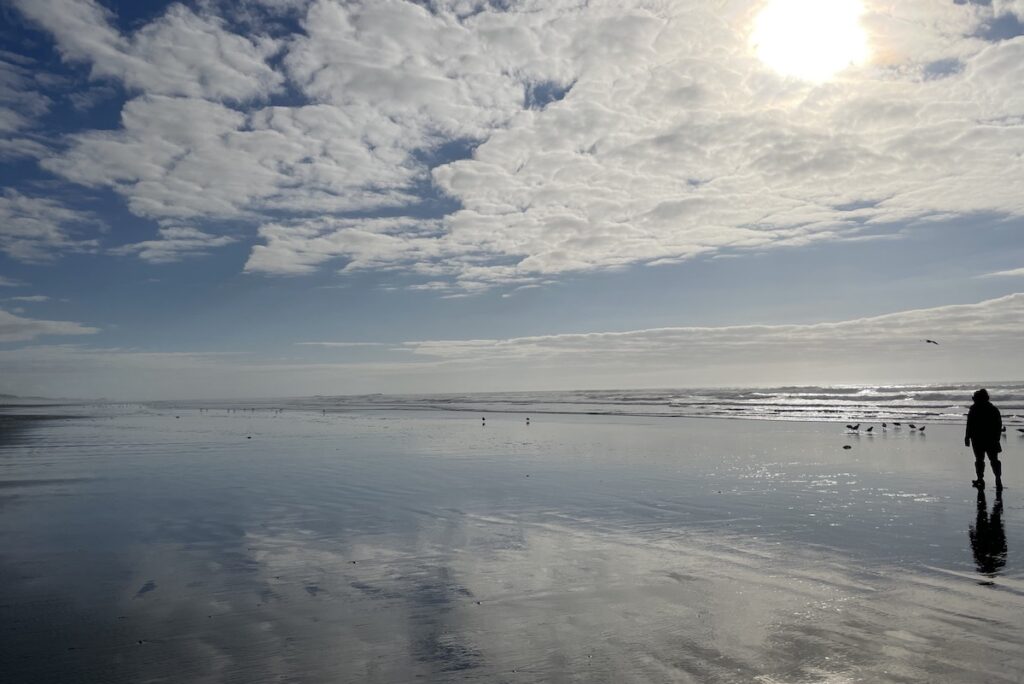
I loved my time in Olympic National Park and already want to return and explore even more. Between the rainforest, rugged coastline, alpine views, and glacier-fed lakes, it’s one of the most diverse national parks I’ve visited. I hope this itinerary helps you plan an incredible trip of your own!
Any questions? Please leave a comment below or reach out on social media.
Looking for more ideas? Check out my additional Olympic National Park and Olympic Peninsula guides below.
Olympic National Park Guides:
More For Your Olympic Peninsula Vacation:
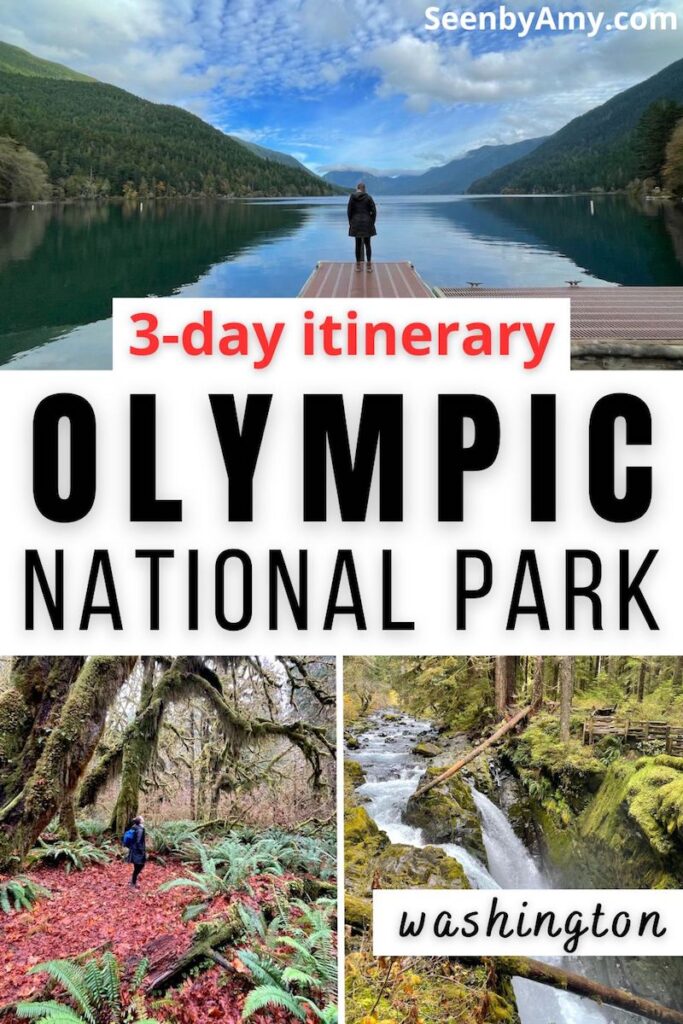
Pin for later!



Keep Up With Amy!
Subscribe to the newsletter for the latest updates in your inbox. And don’t forget to connect on your favorite social platform!
Thank you!
You have successfully joined our subscriber list.