
Olympic Peninsula Itinerary: 3-Day Weekend Guide

The Olympic Peninsula is one of the most unique regions in Washington — and honestly, one of the most diverse landscapes you can visit in the U.S.
Within a relatively small area, you’ll find rugged coastline, alpine mountain views, temperate rainforest, and glacier-fed lakes. It’s the kind of place where your day can go from moss-covered trails to dramatic ocean views within a short drive.
A friend and I spent three days exploring the Olympic Peninsula, using Port Angeles as a base, and this itinerary covers exactly how to plan a similar trip — including the top highlights that are worth your time.

3-Day Olympic Peninsula Itinerary
Day 1: Waterfalls + Lakes + Hot Springs
Port Angeles, Washington
We stayed in Port Angeles, which works really well as a home base for this part of the peninsula. It’s right on the water, close to the Olympic National Park entrance, and has just enough restaurants and shops to make it feel convenient without being overly busy.
We started the morning with breakfast at New Day Eatery (great vegan options), then took a quick walk along the harbor and popped into a few local shops — including Odyssey Bookshop, which was a highlight.
Hike Sol Duc Falls
From Port Angeles, head into Olympic National Park and make your way to Sol Duc Falls.
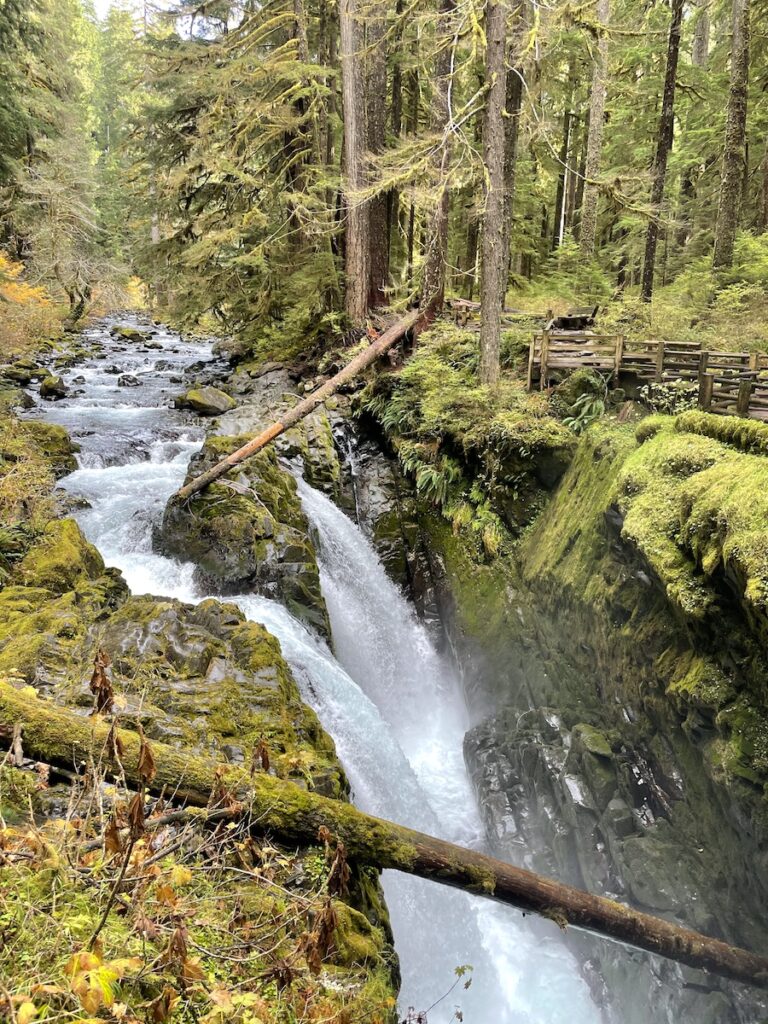
This was our first stop, and it’s a really good introduction to the rainforest side of the park. The trail is short (about 1.6 miles round trip), flat, and easy to follow, but the scenery is what makes it memorable — dense forest, moss-covered trees, and lots of little details along the way.
The falls themselves are unique, splitting into multiple channels as they drop into a narrow canyon.
Tip: If you want to turn this into a longer hike, you can add on the Lovers Lane loop.
Optional: Sol Duc Hot Springs
Sol Duc Hot Springs were closed during our visit, but this is something I’d absolutely add if they’re open when you go.
The resort has multiple mineral hot spring pools plus a freshwater pool, and it’s an easy place to spend an hour or two relaxing after your hike. Hours vary by season, and they typically close in winter, so it’s worth checking ahead.
Salmon Cascades
On your way back out, you can make a quick stop at the Salmon Cascades, located along Sol Duc Hot Springs Road.
This is a very short stop — we spent maybe 10 minutes here — but during the right time of year, you can watch salmon jumping upstream.
- Coho salmon: September–October
- Steelhead trout: late March–May
We didn’t see any during our visit, but it’s still a scenic pull-off if you’re already in the area.
Lake Crescent
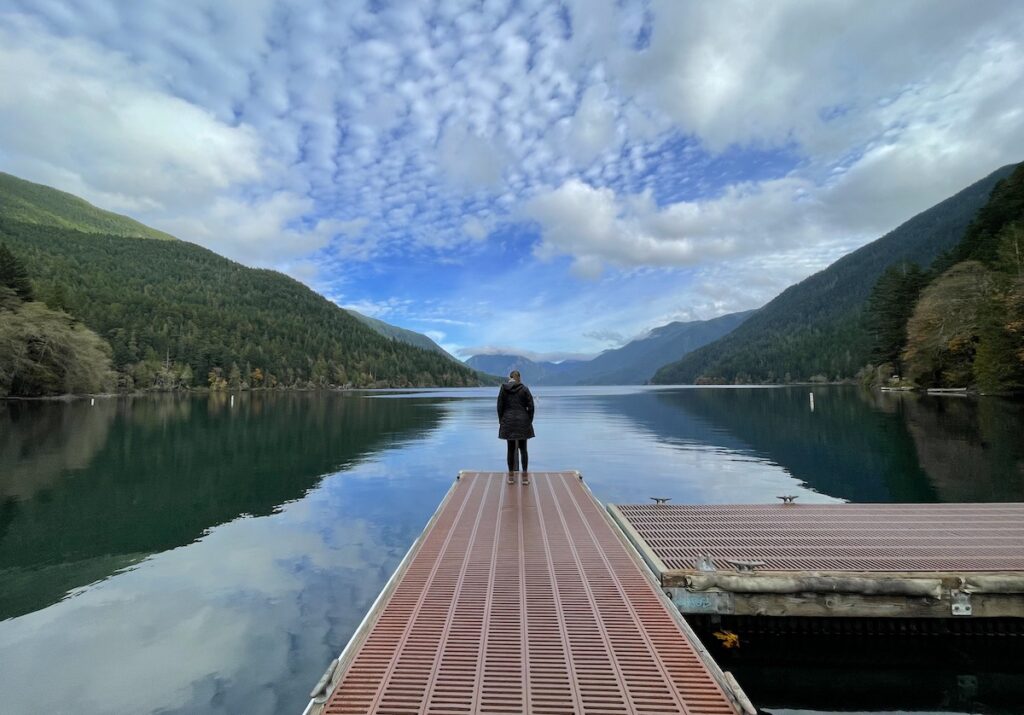
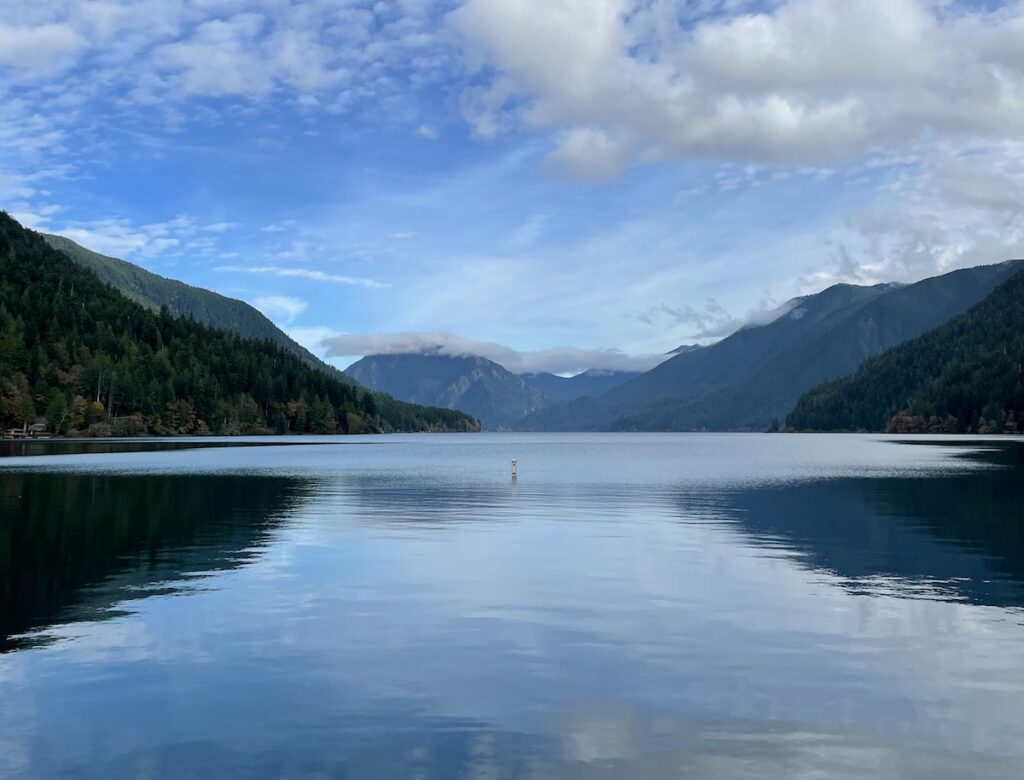
Next, head to Lake Crescent — one of the most beautiful and relaxing stops on the peninsula.
This deep, glacially carved lake is known for its incredibly clear blue water and mountain scenery, and how you spend your afternoon here really depends on your travel style and energy level.
If you’re short on time (or just want a more relaxed afternoon), you can absolutely treat this as more of a scenic stop. Highway 101 runs directly along the lake, and there are several viewpoints, shoreline pull-offs, and dock areas where you can stop and take in the scenery without committing to a full activity-heavy afternoon.
But if you want to slow down a bit, Lake Crescent is also a great place to spend several hours. Some popular activities here include:
- Kayaking or paddleboarding
- Swimming (Devil’s Punch Bowl is a popular spot)
- Hiking nearby trails like Marymere Falls or the Spruce Railroad Trail
- Relaxing along the shoreline or docks
- Having a late lunch or drink at historic Lake Crescent Lodge
The lodge itself is worth stopping at even if you’re not staying overnight. It has that classic Pacific Northwest lodge atmosphere and sits right along the water with beautiful lake views.
You could easily spend an entire afternoon here, but even a shorter stop still feels worth it.
Tip: If you’re short on time, you’ll still get great views just driving along this section of Highway 101.
Optional: Wine Tasting Or Cideries
If you’d rather end the day with something a little slower-paced instead of spending a full afternoon at Lake Crescent, the Olympic Peninsula actually has a surprising number of wineries and cideries — especially around Port Angeles and Sequim.
This can be a really fun way to slow down after a more active morning of hiking and waterfalls. Many of the tasting rooms have mountain, forest, or water views, and the atmosphere tends to feel very relaxed and low key compared to larger wine regions.
Tip: If you’re short on time, you’ll still get great views from Highway 101, which runs along the lake.
Dinner In Port Angeles
After a full day, head back to Port Angeles for dinner.
We ate at Next Door Gastropub, but a few other spots that were on our list:
- Spruce
- Strait Slice Pizza Co.
- Bella Italia (fun stop if you’re a Twilight fan)
If you’re not too tired, this is also a good time to grab a drink at one of the local breweries before calling it a night.
Day 2: Rainforest + Pacific Coast + Twilight
This was easily one of my favorite days of the trip. You get two completely different landscapes — the Hoh Rainforest and the rugged Pacific coastline — and both are incredible in their own way… Oh and some Twilight sightseeing (yes, the vampire book-turned-movie!).
It’s a longer day with more driving, but it’s 100% worth it.
Hoh Rainforest
Start your morning in Olympic National Park at the Hoh Rainforest — one of the most unique areas in the park.
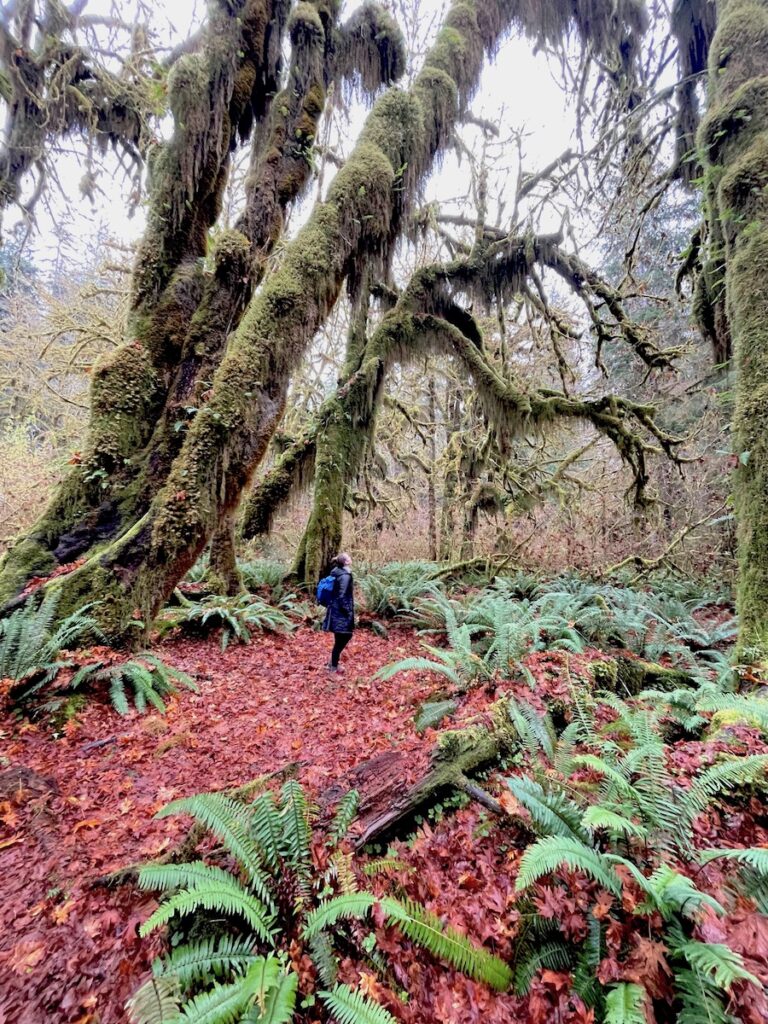
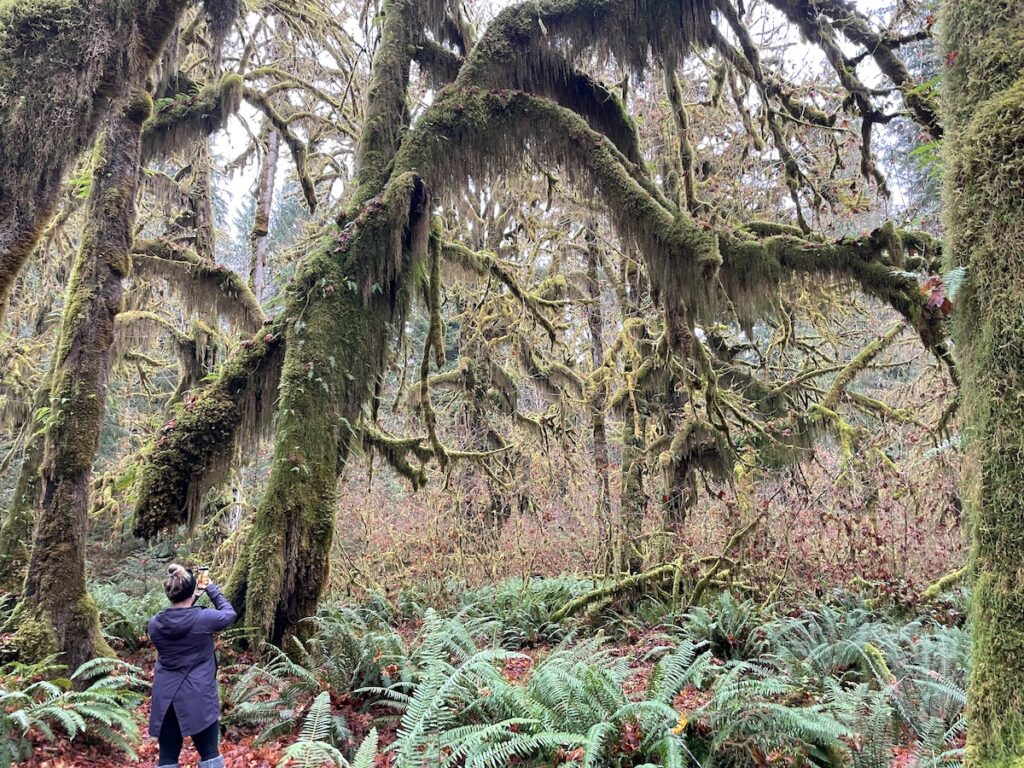
This is a temperate rainforest (basically a cold rainforest), and it gets an average of around 140 inches of rain per year. The result is exactly what you’d expect — dense forest, massive trees, and everything covered in layers of green moss and ferns.
It’s incredibly stunning.
Hall of Mosses & Spruce Nature Trail
The easiest way to experience the Hoh Rainforest is by walking the Hall of Mosses and Spruce Nature Trail.
Both trails are short, flat, and accessible from the same parking area near the visitor center, but they do a great job of showcasing the landscape — towering spruce and hemlock trees, hanging moss, and a ton of smaller details along the forest floor.
We spent about three hours here, mostly because we kept stopping for photos.
This is one of those places where you don’t need a long or difficult hike — there are incredible sights right from the trailhead.
Kalaloch Tree Of Life
Next, head toward the coast and make a quick stop at the Tree of Life (also called the Kalaloch Tree).
This is a Sitka spruce that’s somehow still standing despite having most of its roots exposed from erosion underneath it.
You only need about 10–15 minutes here, but it’s an easy stop and worth seeing while you’re in the area. We ended up staying a bit longer just to enjoy the quiet beach.
Important: Check tide conditions before you go — the tree may not be safely accessible at high tide.

Ruby Beach
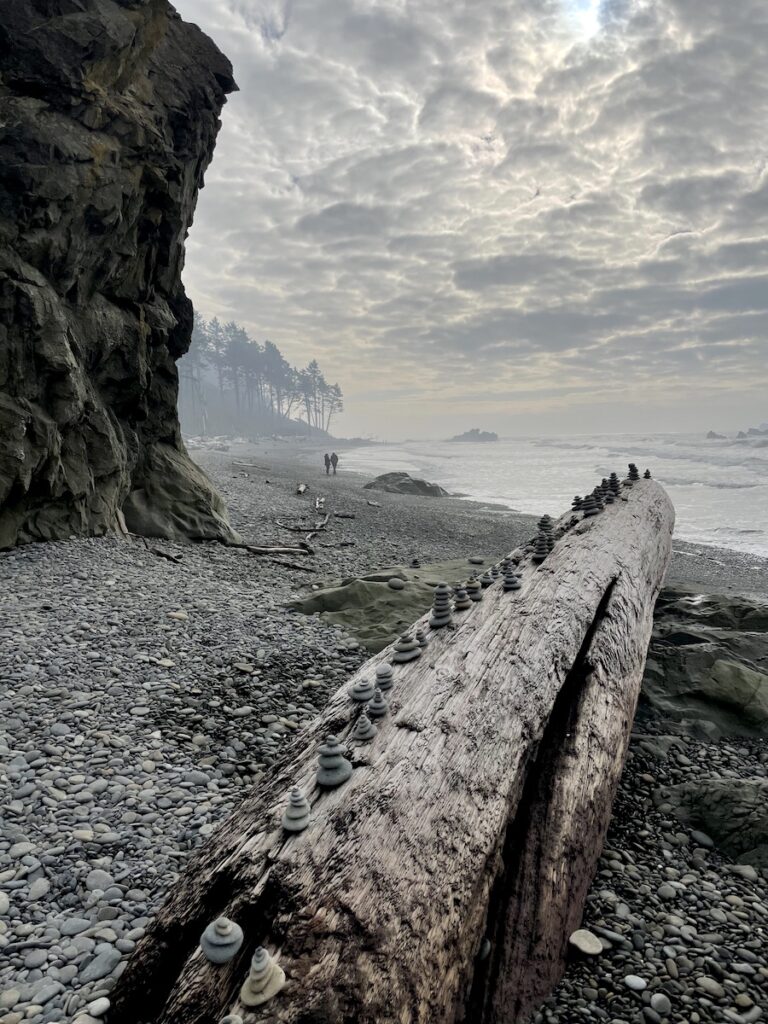
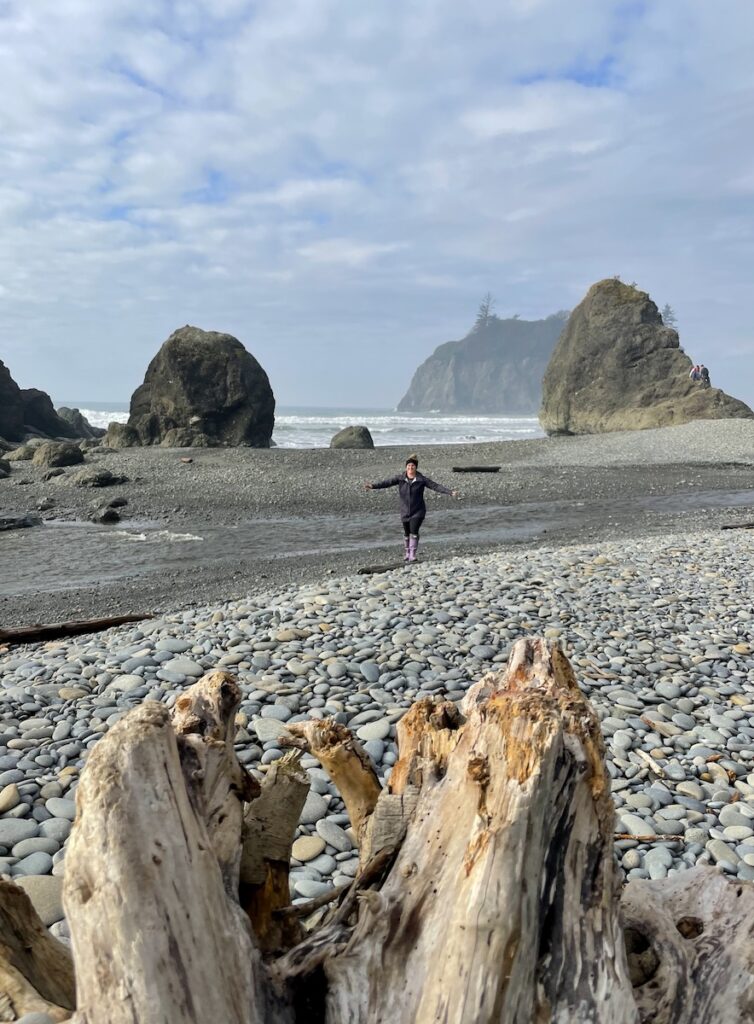
From there, continue down the coast to Ruby Beach — one of the most popular (and most scenic) beaches on the peninsula.
This is where you really get that classic Pacific Northwest coastline — sea stacks, driftwood, and wide, open shoreline.
Plan to spend at least an hour here walking the beach, exploring, and taking it in.
Tip: If you can, try to time this for low tide. This is when tide pools are exposed, and it’s one of the best ways to experience the area.
Note: Getting down to the beach requires climbing over some driftwood. It’s very doable, just something to be aware of.
Explore La Push
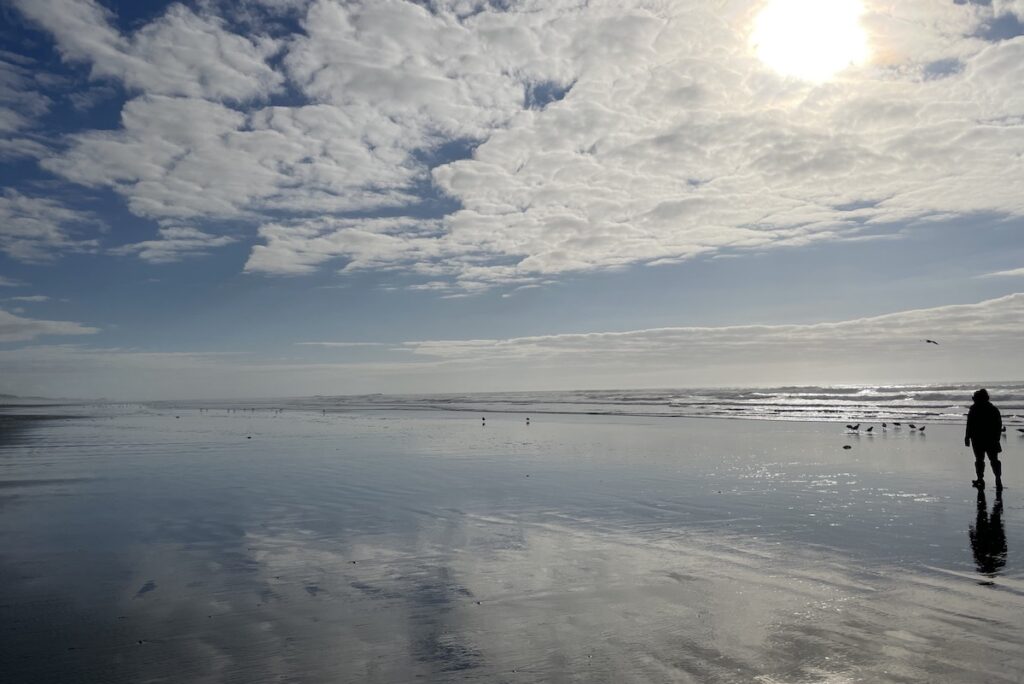
If you have time, continue north to La Push, which is home to First, Second, and Third Beach.
- First Beach – easiest to access (no hike), but the busiest
- Second Beach – short hike in, great balance of effort and scenery
- Third Beach – longer hike (about 1.2 miles), quieter and more remote
These beaches have a similar rugged feel to Ruby Beach, with dramatic rock formations and great wildlife spotting.
If you’re interested in tide pooling, this is another good area to prioritize at low tide.
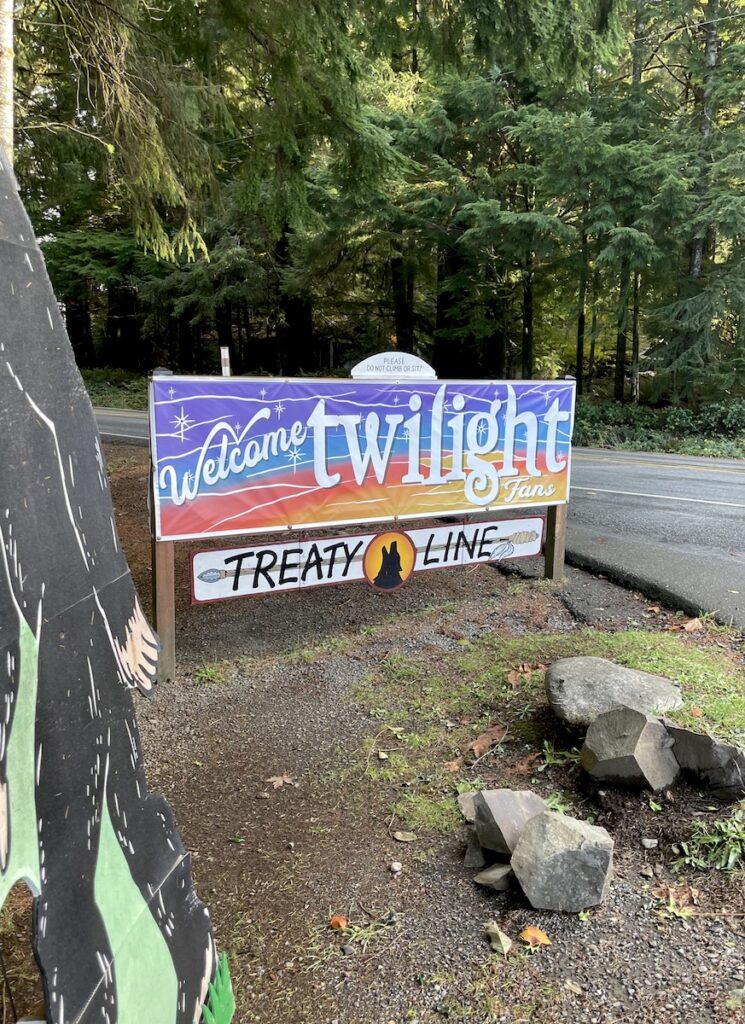
Note: La Push is not only part of Olympic National Park but also part of the Quileute Tribe’s land. Visitors are welcome, but it’s important to be respectful of the area and its cultural significance.
Optional Stop: Forks (Coffee + Twilight Stops)
On your way back, pass through Forks.
This is a small logging town that became well-known as the setting for the Twilight series. While most of the filming actually took place in Oregon, the town has leaned into its claim to fame, and you’ll find a few themed stops if you’re interested.
I have a full guide with places to stop in and around Forks: Twilight Self-Guided Tour.
If you’re not into Twilight, it’s still worth stopping for one of the drive-through coffee stands — a very Pacific Northwest experience and a good break before the drive back.
Tip: You can do this at the beginning or end of the day depending on timing, you’ll pass through Forks multiple times today no matter.
Return To Port Angeles
After a full day, head back to Port Angeles.
This was a long day for us, so we kept things simple with dinner (and Twilight movies!) at our Airbnb and called it an early night. If you still have energy, The New Moon Craft Tavern is a good option for a casual drink and live music.
Day 3: Choose Your Final Day On The Olympic Peninsula
By Day 3, you’ve already seen a lot of the peninsula’s biggest highlights, so I’d treat your final day a little more flexibly depending on your travel style.
If you want one last nature-focused day, head up to Hurricane Ridge and spend the afternoon exploring Sequim and Dungeness Spit. But if you’d rather experience a different side of the region, a day trip to Victoria, British Columbia is also an amazing option from Port Angeles.
Option 1: Day Trip To Victoria, British Columbia
One of the coolest things about visiting the Olympic Peninsula is how easy it is to add Canada into your trip.
From Port Angeles, you can take the Black Ball Ferry to Victoria, British Columbia in about 90 minutes. The ferry itself is part of the experience, with great views throughout the ride.
Victoria feels completely different from the Olympic Peninsula — more polished and historic, with walkable streets, waterfront views, tea shops, bookstores, gardens, and a really strong coastal atmosphere.
A few popular things to do include:
- Walking around the Inner Harbour
- Visiting Butchart Gardens
- Exploring Chinatown
- Visiting local cafes, pubs, and bookstores
- Afternoon tea experiences
- Shopping along Government Street
You definitely don’t need a car for the day. Once you arrive, most of the main attractions are very walkable.
Important: Ferry reservations are strongly recommended during peak season, and don’t forget your passport.
Option 2: Hurricane Ridge + Sequim + Dungeness Spit
This is an alternate option if you’d rather stay on the Olympic Peninsula today.
Hurricane Ridge
Start your morning with a drive up to Hurricane Ridge, one of the most accessible alpine areas in Olympic National Park.
The drive itself is beautiful, winding uphill from Port Angeles into the mountains with increasingly expansive views along the way. Once you reach the top, the scenery feels completely different from the rainforest and coastline you explored earlier in the trip.
If you want a more relaxed morning, you can simply enjoy the viewpoints and shorter walking trails near the visitor area. If you’re up for more activity, the Hurricane Hill Trail is one of the most popular hikes and offers incredible panoramic views.
This area is also one of the best spots on the peninsula for wildlife viewing, especially deer and mountain goats.
Tip: Parking fills very early in summer, so getting an early start here is important.
Sequim
After Hurricane Ridge, head east toward Sequim for a slower afternoon. Because the town sits in the Olympic rain shadow, the weather here is often sunnier and drier than nearby areas on the peninsula, giving it a completely different feel from the rugged western coastline.
This is a great place to slow down a bit — grab coffee or lunch, visit a winery or cidery, explore local shops, or visit nearby lavender farms if you’re here in summer.
Dungeness Spit
Finally, finish the day at Sequim’s Dungeness Spit National Wildlife Refuge.
This is the longest natural sand spit in the United States and one of the more unique landscapes on the Olympic Peninsula. The area is especially popular for birdwatching, beach walks, and wildlife spotting.
You don’t necessarily need to hike the entire spit to enjoy it — even a shorter walk gives you beautiful coastal views and a very peaceful atmosphere.
Afterward, head back toward Port Angeles for dinner or spend one final evening relaxing before heading home the next day.
Additional Things To Do On The Olympic Peninsula
While this 3-day Olympic Peninsula itinerary covers the main highlights, there’s a lot more you can add depending on your travel style and how much time you have.
A few ideas that didn’t make it into this itinerary:
- Cape Flattery — the northwesternmost point in the contiguous U.S., with incredible coastal viewpoints and an easy boardwalk trail
- Rialto Beach — similar to Ruby Beach, but often less crowded with dramatic sea stacks and great coastal views
- Shi Shi Beach — one of the most beautiful beaches in Washington, but requires a longer hike to access (best for those with extra time)
- Lake Quinault — a quieter alternative to Lake Crescent with scenic drives, waterfalls, and fewer crowds
For a more detailed breakdown, check out my full guide to The Best Things To Do On The Olympic Peninsula.
Where To Stay On The Olympic Peninsula
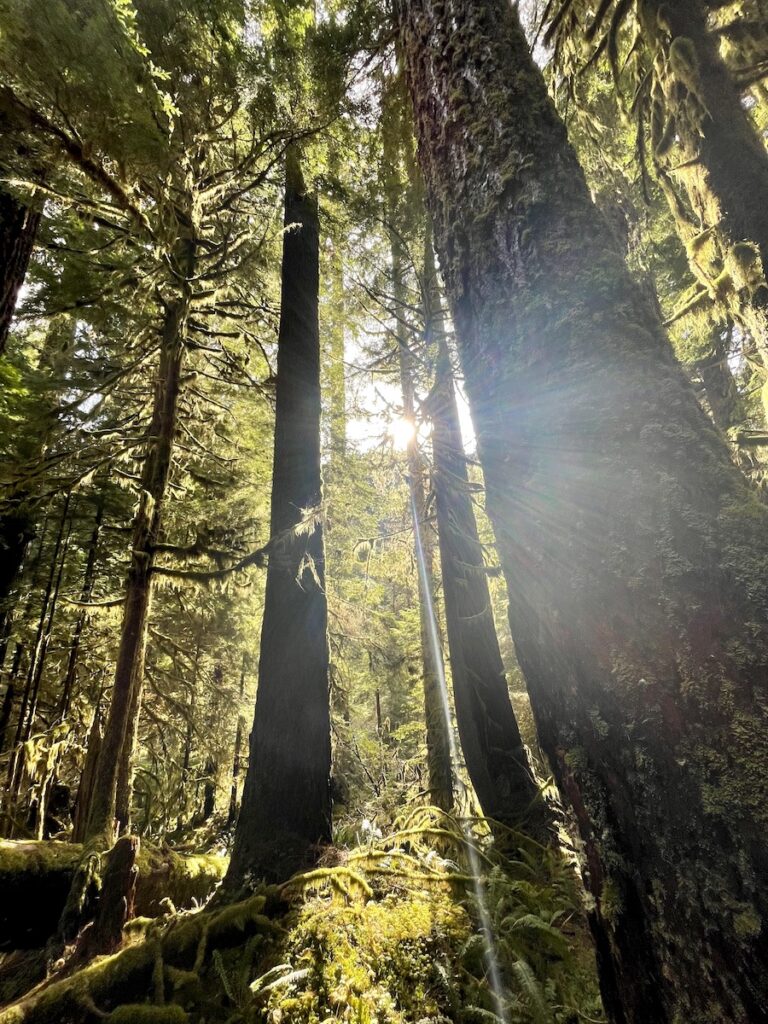
Where you stay on the Olympic Peninsula matters more than you might expect — distances are bigger than they look, and driving times add up quickly.
For this itinerary, I based myself in Port Angeles, which is one of the most convenient locations if you want to see a lot of Olympic National Park, while still having a solid selection of restaurants, coffee shops, and basic amenities.
Here’s a breakdown of the main areas to consider:
- Port Angeles — best overall base for this itinerary (central, convenient, good amenities). Check out Olympic Lodge.
- Forks area — closer to the rainforest and beaches, but more limited in terms of dining and hotel options. Quileute Oceanside Resort is a good option in La Push.
- Sequim — slightly outside the park, but sunnier (in the “rain shadow”) and a good option if you want something quieter. The Holiday Inn Express is a well-rated option here.
- Lake Quinault — a quieter, more remote option on the southern end of the peninsula. Lake Quinault Lodge is a classic option.
Getting To The Olympic Peninsula
Most trips to the Olympic Peninsula start by flying into Seattle.
From there, you have a few different route options depending on your preferences:
- Drive via Tacoma (no ferry) — this is the most straightforward route, driving south around Puget Sound before heading north into the peninsula. Expect about 2.5 – 3.5 hours to Port Angeles depending on traffic.
- Ferry + drive — a more scenic option is taking the ferry from Seattle to Bainbridge Island, then continuing the drive from there. This can save time depending on traffic and adds a really nice start to the trip.
- Alternate airport (Portland) — you can fly into Portland (this is what we did!), but it’s typically a longer drive (4 – 5+ hours), so Seattle is usually the better option.
No matter which route you take, you’ll want to rent a car — it’s essential for getting around the peninsula.
Getting Around The Olympic Peninsula
Getting around the Olympic Peninsula requires a car — there’s no reliable public transportation connecting the main areas, and rideshare options are very limited. Distances between stops can be deceiving on a map, and it’s common to spend a few hours driving each day, especially when moving between the mountains, rainforest, and coastline.
Roads are generally easy to drive, but many are winding, two lanes, and slower than expected, so it’s best to plan for extra time.
I’d also recommend filling up on gas whenever you have the chance, as stations can be sparse in certain areas, and downloading offline maps ahead of time since cell service inside Olympic National Park can be inconsistent. Once you arrive at each stop, most areas are very walkable and easy to explore on foot.
When To Visit The Olympic Peninsula (Weather + Microclimates)
One of the most important things to understand about the Olympic Peninsula is that it has distinct microclimates — some of the most dramatic in North America — meaning the weather can feel completely different depending on where you are.
On the same day, you could experience sunshine in Sequim and Port Angeles, rain in the Hoh Rainforest, fog along the coast, and cooler alpine conditions at Hurricane Ridge.
It’s essential to be prepared for variety.
Here’s what to expect by season:
Summer (June–September)
This is the best time to visit for overall weather. You’ll get the most consistent sunshine, clearer coastal views, and full access to areas like Hurricane Ridge. It’s also peak season, so expect more crowds and higher prices. While some areas may be warm, others can be chilly, so pack layers.
Spring (April–May)
A transitional season with fewer crowds, but more unpredictable weather. Snow may still linger at higher elevations, and trails can be muddy. The rainforest is especially lush this time of year.
Fall (October–November)
Quieter with fewer crowds, and a great time to experience the moody, atmospheric side of the peninsula. Expect rain, shorter days, and limited access to some higher elevation areas. (This is when I visited!)
Winter (December–March)
The quietest season. Hurricane Ridge becomes a winter recreation area (with limited access), and the coastline and rainforest take on a dramatic, stormy feel. Expect frequent rain at lower elevations.
What To Pack For The Olympic Peninsula
Packing for the Olympic Peninsula is all about being prepared for changing conditions — even within the same day. Layers are key no matter the season, especially since you’ll likely move between different environments (coast, rainforest, mountains).
Here’s what I recommend bringing:
- Waterproof jacket — this is essential, especially for the rainforest and coastal areas
- Comfortable hiking shoes or boots — ideally something with good traction for muddy or uneven trails
- Layers — think light sweaters, long sleeves, and a jacket you can easily take on and off
- Daypack — for hikes, snacks, and extra layers
- Reusable water bottle — you’ll be out for long stretches of the day
- Snacks — especially helpful given the longer driving distances between stops
- Sunglasses — for brighter coastal or alpine areas
- Swimsuit (optional) — if you plan to swim or visit places like Lake Crescent or hot springs
Even in summer, mornings and evenings can feel cool, and the rainforest will almost always feel damp (and chilly!) — so it’s better to be slightly over-prepared than underprepared here.
Additional Tips For Visiting The Olympic Peninsula
A few final things to know before your trip:
Download maps ahead of time – Outside of the main towns, cell service is limited throughout much of the peninsula, especially in Olympic National Park. I highly recommend downloading offline maps on Google Maps before you go, along with saving key stops, directions, and reservation details.
You’ll need a national park pass – Olympic National Park covers a significant portion of the peninsula and requires an entrance fee. You can either pay per vehicle at the entrance or use an America the Beautiful pass if you have one. Not all areas have staffed entrances, so it’s a good idea to purchase your pass in advance or be prepared to use self-pay stations where available.
Some areas require separate tribal access or fees – Certain places on the Olympic Peninsula — including areas around La Push — are located on Quileute Tribal land. These areas are managed separately from the national park and may have their own rules, access points, or parking fees. Always check signage and respect local guidelines.
Plan for longer driving times than expected – Distances don’t look far on a map, but roads are often winding and slower. It’s normal for drives between major stops to take longer than expected, so try not to overpack your days.
Check tides before visiting the coast – If you’re planning to visit beaches like Ruby Beach or explore tide pools, timing your visit around low tide is key. It’s when you’ll get the best access and see the most (park rangers are a great resource if you have questions about this!).
Pack for changing weather – Even in summer, conditions can shift quickly between different parts of the peninsula. Layers and a waterproof jacket go a long way here.
I loved my time on the Olympic Peninsula and can’t wait to come back someday. The variety of landscapes here is incredible and makes it such a unique place to explore. I hope you found this helpful in planning your trip and have the best time!
Looking for more ideas? Below are additional Olympic Peninsula guides or head on over to Visit Olympic Peninsula!
More For Your Olympic Peninsula Vacation:
- Best Things To Do On The Olympic Peninsula
- Twilight Self-Guided Tour (Forks, La Push, & Port Angeles)
Olympic National Park Guides:
- Olympic National Park 3-Day Itinerary
- Best Things To Do In Olympic National Park
- Top Hoh Rainforest Hikes
- All Olympic National Park Guides

Pin for later!



Keep Up With Amy!
Subscribe to the newsletter for the latest updates in your inbox. And don’t forget to connect on your favorite social platform!
Thank you!
You have successfully joined our subscriber list.