
15 Fun Things To Do On West Side Of Rocky Mountain National Park

Snow-capped peaks, exciting scenic drives, and ample wildlife characterize beautiful Rocky Mountain National Park.
But did you know, the park is divide into two sections? The west side and the east side.
The two sections are connected via Trail Ridge Road, the highest continuously paved road in North America. During summer, visitors can easily navigate the park’s two sides, separated by about 45 miles and 1.5 hours of driving.
Come winter, however, Trail Ridge Road closes up and the east and west side are divided. Navigating between the two suddenly requires 3.5 hours across 145 miles.
If planning to stop by the lesser-visited west side (great decision!) and wondering what to do, I’ve put together some of the best things to do on the west side of Rocky Mountain National Park (RMNP).
I’ve lived in Denver most of my life and have visited RMNP more times than I can count. The west side of RMNP is full of hidden gems waiting to be explored.

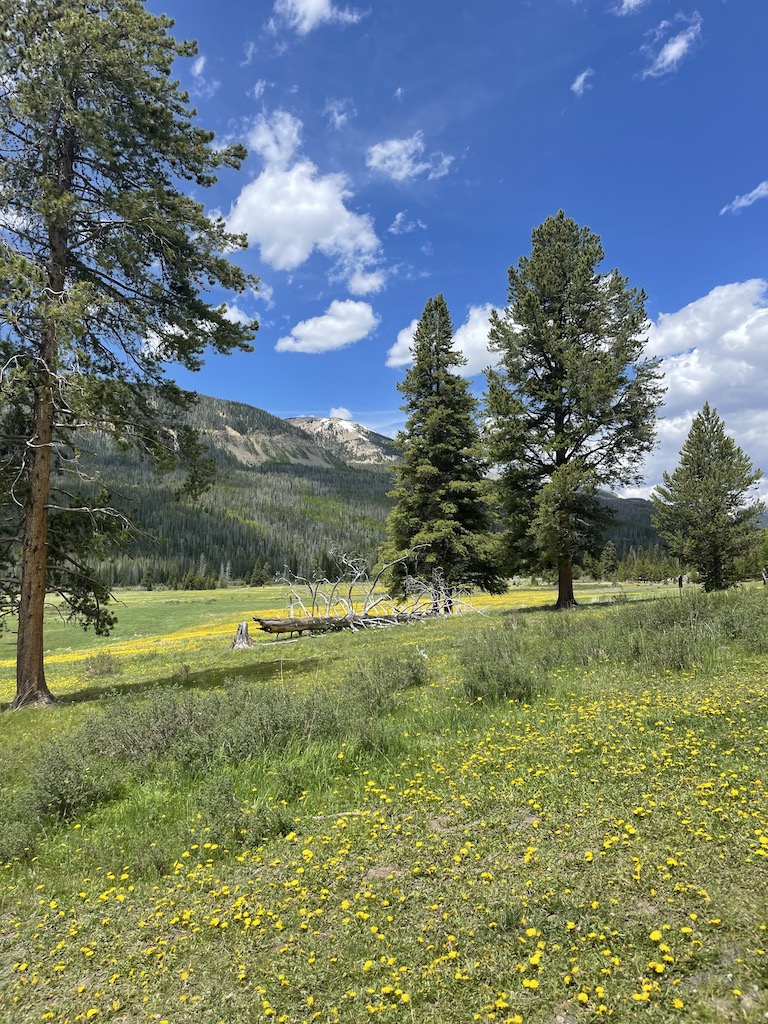

Top Things To Do On The West Side Of Rocky Mountain National Park
Hike
During your time on the west side of Rocky Mountain National Park going for a hike is one of the top things to do.
Hiking here is a fun and rewarding experience. On the trails you can expect scenic beauty and diverse terrain with open meadows, alpine lakes, and snow-capped peaks. If you’re lucky, you may even spot wildlife!
Admittedly, hiking trails on the park’s west side aren’t as famous as the east side (looking at you, Dream Lake). However, there’s still some really great options for varying skill levels. Whether you’re looking for an easy hike or backpacking trip, there are great options.
Some of the best hikes on the west side of Rocky Mountain National Park include:
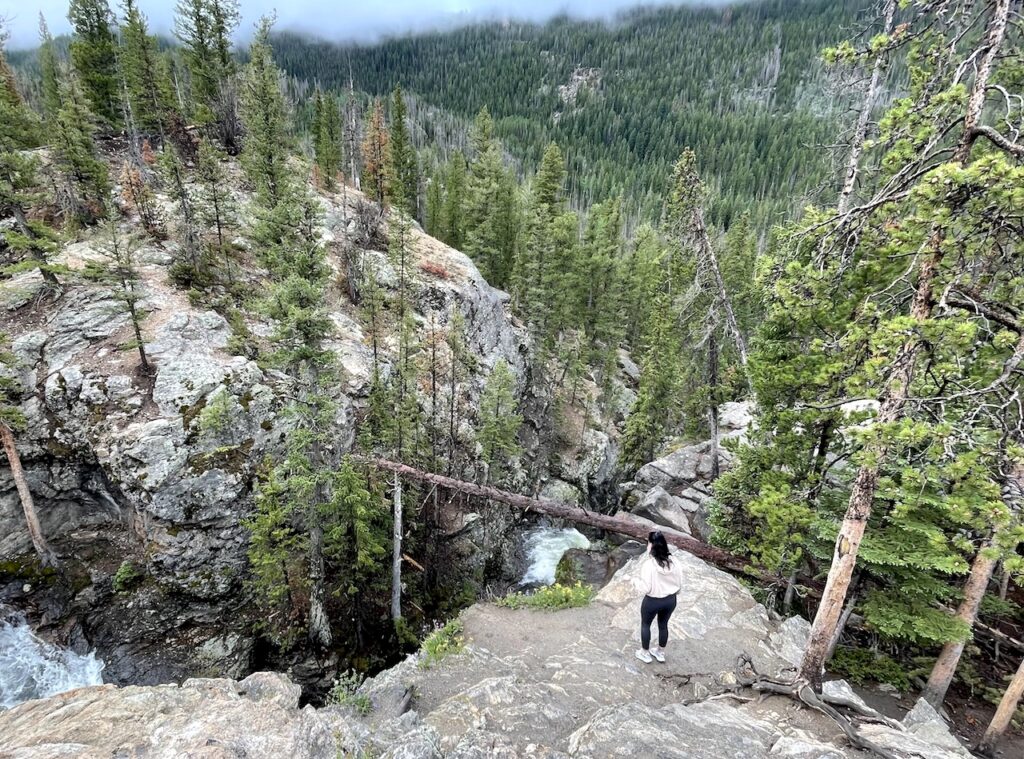
- Adams Falls – (.6 miles, 100 foot elevation change, rated easy)
- East Inlet Trail – (18 miles, 2,910 foot elevation change, rated hard – this trail begins at same spot as Adams Falls, consider following a small portion of this trail after completing Adams Falls for beautiful views).
- Lulu City via Colorado River Trail – (7.3 miles, 895 elevation change, rated moderate)
- Cascade Falls – (6.8 miles, 633 foot elevation change, rated moderate)
- Green Mountain Trail – (3.5 miles, 731 foot elevation change, rated moderate -consider hiking as a loop with Onahu Trail)
- Mount Ida Trail – (9.4 miles, 2,414 foot elevation change, rated hard)
- Coyote Valley Trail – (1.9 miles, 45 foot elevation change, rated easy)
Drive Trail Ridge Road
When visiting Rocky Mountain National Park, a scenic drive along Trail Ridge Road is a must.
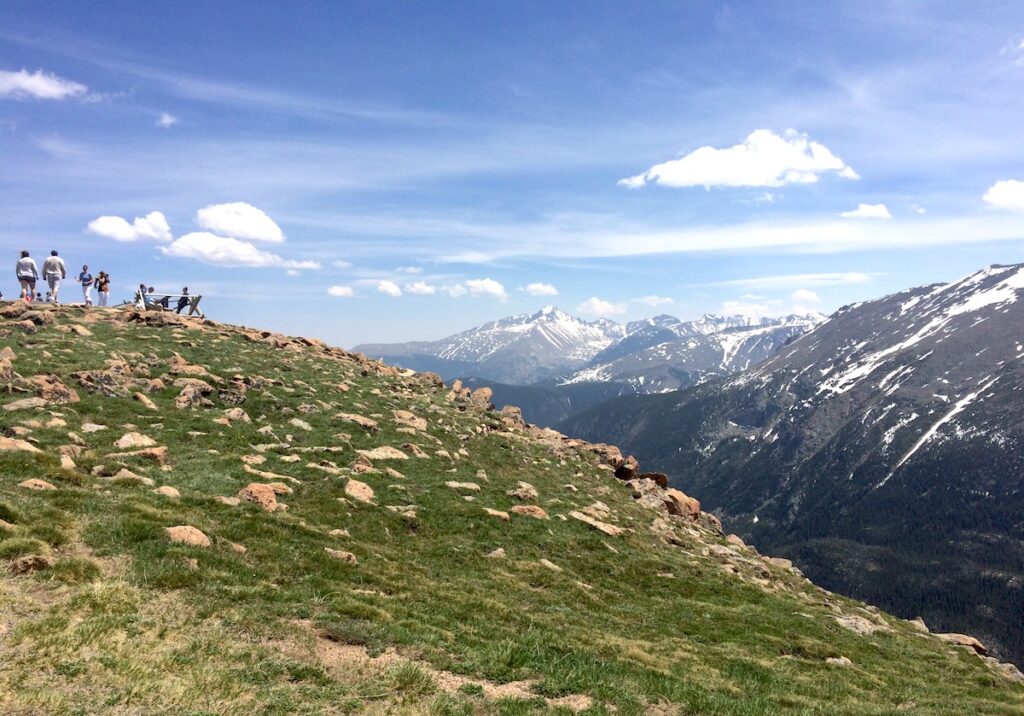
The gorgeous road winds through the upper elevations of Rocky Mountain National Park, crossing the continental divide. All while offering incredible views of mountain vistas, alpine tundra, and wildlife.
The 48 mile road connects the park’s east and west side, and reaches an elevation of 12,183 feet above sea level. An elevation so high, it’s one of the highest continuous paved roads in the United States.
The full drive requires about 2 hours. You’ll want to take your time, there are many excellent viewpoints worth stopping at and wildlife sightings can be abundant.
If just driving the west side (to the Alpine Visitor Center and back) budget about an hour, or more time if you plan to make stops.
Trail Ridge Road is only open Memorial Day – early fall and can close at any time due to weather. I’ve driven this road many times and the weather has usually been great. However, once in August, while it was sunny and warm at the park’s lower elevation, we encountered snow along Trail Ridge Road.
It’s unlikely you’ll experience snow during summer. However, don’t underestimate the extreme weather variances which occur at this elevation.
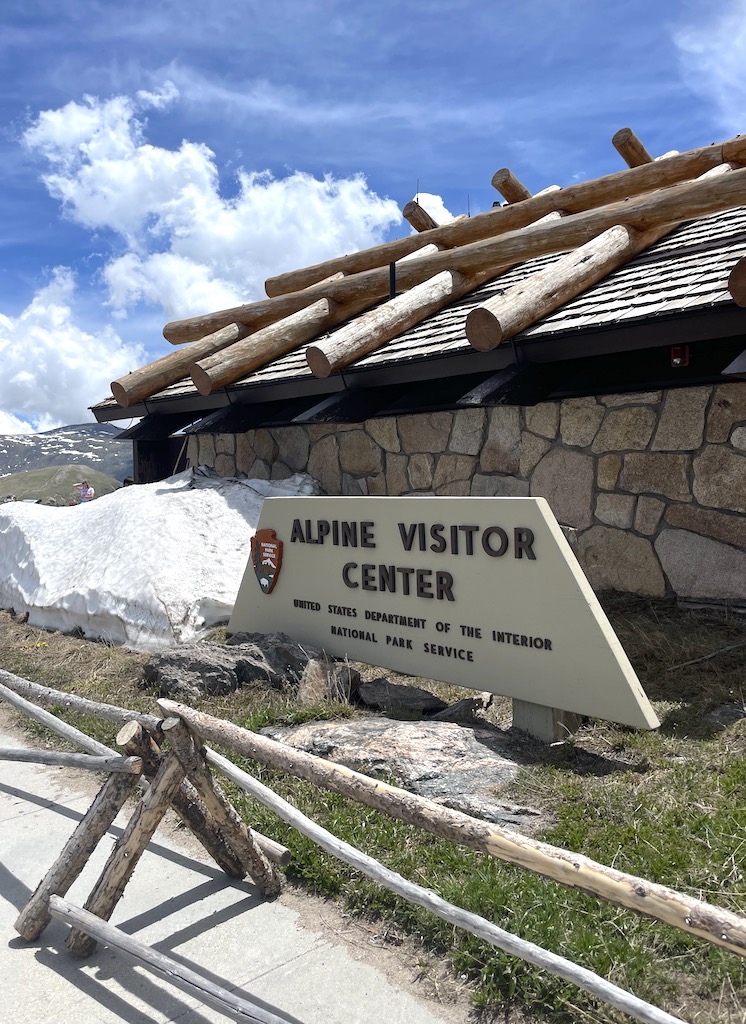
Alpine Visitor Center
The Alpine Visitor Center is the highest elevation visitor center in the National Park System at 11,796 feet above sea level.
Located near the summit of Trail Ridge Road, and roughly at the park’s east/west meeting point, this is a must-stop during your scenic drive.
The center offers a range of facilities for visitors, including restrooms, a gift shop, snack bar, and small museum.
Here you can find exhibits on the geology, ecology, and history of the park, or chat with park rangers. The visitor center also has excellent panoramic views of the surrounding alpine tundra.
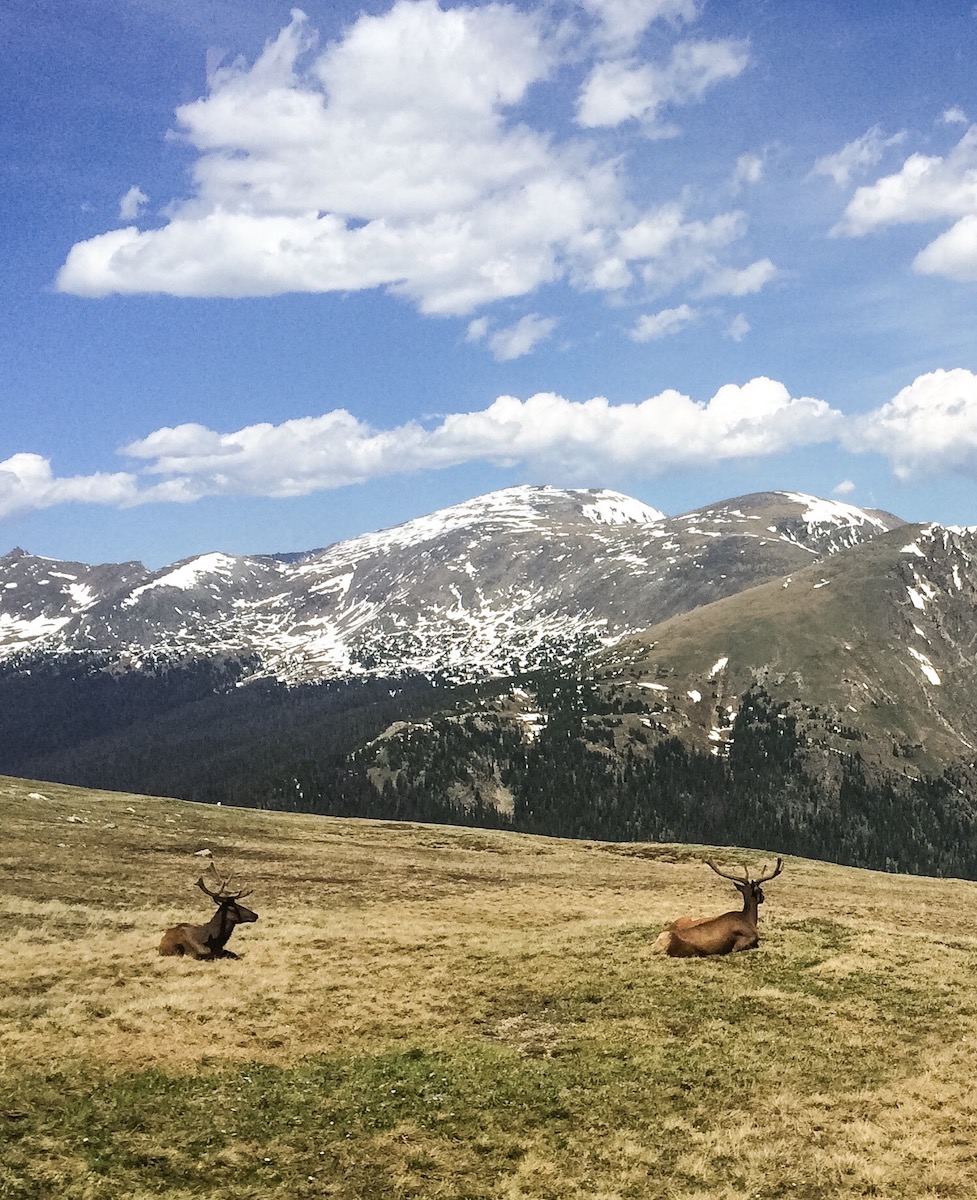
Watch For Wildlife
Rocky Mountain National Park is home to a diverse range of wildlife, there’s no doubt this is a big draw for many visitors.
Park-goers can expect to see bighorn sheep, elk, mule deer, moose, marmots, pikas, and many species of birds. More illusive animals in the park include coyotes, fox, otters, mountain lions, and black bears.
Of course, spotting any wildlife will require some luck. Visiting early or staying late will be rewarding for most wildlife-seekers, this is because animals are most active around dawn and dusk.
Where to spot animals depends on the season and what exactly you’re hoping to see. Kawuneeche Valley, Harbison Meadow, and Trail Ridge Road are among the most popular spots to watch for wildlife on RMNP’s west side.
If you’re hoping to see moose, the west side of RMNP is your best bet! I’ve seen a moose twice in this area of the park, and never on the east side.
Please remember to keep plenty of distance between yourself and wildlife, especially moose (bring binoculars for better viewing!).
Additionally, keep quiet, respect the animals, and do not feed any wildlife in the park — not even the cute, yet seriously aggressive, squirrels.
View The Colorado River
This famous 1,450 mile long river, so powerful it carved out the Grand Canyon, starts here on Rocky Mountain National Park’s western side.
The river can be seen from a distance on Trail Ridge Road in the Kawuneeche Valley. But for a close up look, check out Coyote Valley Trail, Holzwarth Historic Site, or Colorado River Trail.
Those who want to see the headwaters, follow Lulu City via Colorado River Trail (7.3 miles, 895 elevation change, rated moderate), this trail follows the headwaters of the famous river.

Holzwarth Historic Site
The Holzwarth Historic Site is among the most popular stopping points on the west side of the park.
The site was originally settled by the Holzwarth family in the early 1900s, when the family established a dude ranch to accommodate travelers seeking adventures in the newly established and rugged Rocky Mountain National Park.
Today, visitors can tour the many buildings of Never Summer Ranch, including the lodge, barn, guest rooms, and dining hall. Additionally, one of the buildings has been converted into a museum, for those interested in learning the property’s history.
The site is open year-round, 24/7. However, it’s only staffed in summer months during operating hours. If you wish to really explore the site, be sure to visit when staff is on site. Operating hours vary, check RMNP Holzwarth Historic Site before heading out.
Accessing the Holzwarth Historic Site requires a quick .5 mile hike from the parking area. It’s a smooth, unpaved trail with little elevation change, which will be easy for most. However, there’s little shade along the path.
Kawuneeche Valley
Kawuneeche Valley is one of the most beautiful sites in the park, and a must-see during your time on the west side of RMNP.
The lush valley, home to the winding Colorado River framed by snow-capped peaks, is visible from Trail Ridge Road.
The valley is often full of wildflowers and wildlife come summer months. In fact, I’ve rarely not seen wildlife in this area, most often we spot elk or deer in the distance.
Stop at one of the many pull offs in the area, or follow a trail through the meadow. Either way, Kawuneeche Valley is worth a stop to admire its serene beauty.

See The Continental Divide
The continental divide is a ridge of high ground separating the continent’s river systems, this particular divide spans the entire length of North and South America. Water on the west side flows toward the Pacific Ocean, while water on the east flows toward the Atlantic Ocean.
This divide is called the The Continental Divide of the Americas (also referred to as The Great Divide), and is the longest continental divide in the world.
Colorado is home to miles and miles of The Great Divide — it cuts the entire state in half — a portion of which can be seen here in RMNP.
The divide is located at Milner Pass and marked by a large sign just off Trail Ridge Road. There’s a small lot for cars to park.
While you can’t really see anything, know it’s a prominent geographical feature and a neat little stop.

Go For A Picnic
If you’re spending more than a few hours in Rocky Mountain National Park, a lunch break will be in order.
The park doesn’t really sell food, aside from small snacks available at the visitor centers. So, plan to pack a lunch and find a cozy spot to enjoy a picnic during your day in RMNP.
Picnic tables will be marked on the RMNP map, which you’ll receive upon entering the park. The map can also be accessed here: Rocky Mountain National Park Map.
Popular spots for a picnic on the west side of Rocky Mountain National Park include:
- Habison Meadows
- Coyote Valley Trailhead
- Holzwarth Historic Site
- Lake Irene
Of course, you can picnic just about anywhere, whether or not there’s a table. Just be sure to pack out any trash. There will not be trash bins unless you’re at a designated picnic site.

Poudre Lake
Located right next to the continental divide is Poudre Lake and the headwaters of the Cache La Poudre River.
This is a great place to spot wildlife around dawn and dusk or to enjoy hiking.
While the Poudre River is very popular for fishing, Poudre Lake actually has no fish. This is because the lake, located 10,000 feet above sea level, completely freezes through each winter.
The lake is visible from Trail Ridge Road and can be seen from the continental divide parking area.

Horseback Riding
Horseback riding on the west side of RMNP provides a unique way to experience the beauty and serenity of the park.
Whether you’re a beginner or experienced rider, exploring the trails on horseback allows you to connect with nature and enjoy scenic views.
Winding River Resort offers 1 or 2 hour rides for individuals or families, offering a great way to get out and enjoy the park.
The resort is located right on the edge of Kawuneeche Valley, you’ll waste no time before hitting the gorgeous landscape of the Rocky Mountains.
Check pricing and availability for horseback riding at Winding River Resort: Horseback Riding at Winding River Resort.

Watch The Sunset
If time permits, be sure to stick around for a sunset while visiting the west side of Rocky Mountain National Park. The park’s mountain vistas and alpine landscapes provide a stunning backdrop, resulting in unforgettable sunsets.
Additionally, the park’s abundant wildlife are particularly active at this time of day. You have a great chance of spotting deer, elk, or even a moose!
There are many great spots, but Farview Curve and Kawuneeche Valley are some of the best places to watch the sunset on the west side.
Kawuneeche Visitor Center
The Kawuneeche Visitor Center is located just before the west entrance of Rocky Mountain National Park (Grand Lake Entrance).
This is a great place to start or end your day. Here you can speak with park rangers, ask questions, and find information about the park.
There’s also information exhibits, a gift shop / book shop, and restrooms.
Things To Do On The West Side Of The Park During Winter
Winter in Rocky Mountain National Park is pretty quiet, especially on the west side. But there are a few things to do, below are some ideas:
- Go snowshoeing.
- Join a ranger-led snowshoe tour (be sure to book the western side of the park, find information here: Ranger-led Snowshoe Walks).
- Enjoy cross-country skiing.
- Go for a sleigh ride (you can book through Winding River Resort).
- Watch for bald eagles, who have communal winter roost site in the area.
In winter, roughly mid October until Memorial Day Weekend, the west side of Trail Ridge Road closes at Many Parks Curve. This is near the Timber Lake Trailhead, about 10 miles into the park.

Visit Grand Lake
Grand Lake is the town on the west side of Rocky Mountain National Park. It sits right on the park’s edge and should definitely be visited during your time here.
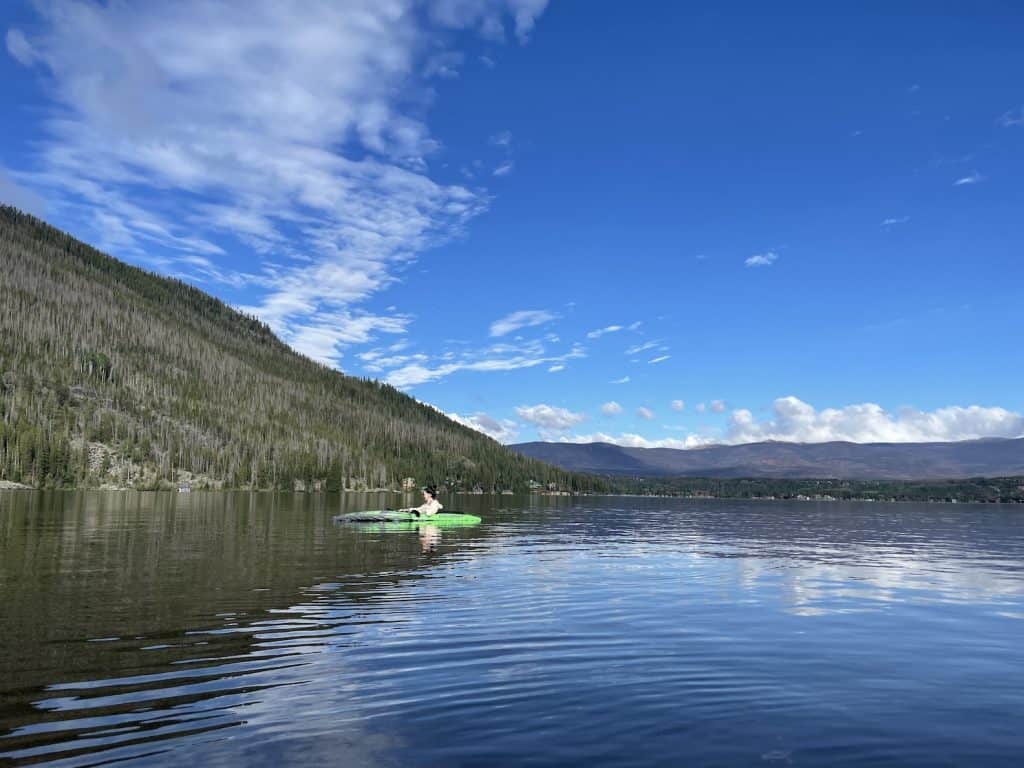
The town of Grand Lake is named for Grand Lake, which is the state’s largest natural lake. It’s framed by mountain peaks, making it not only a popular spot for water activities, but also incredibly scenic.
Between lake activities and entertainment in town, there’s quite a few things to do in the area. A few ideas are listed below:
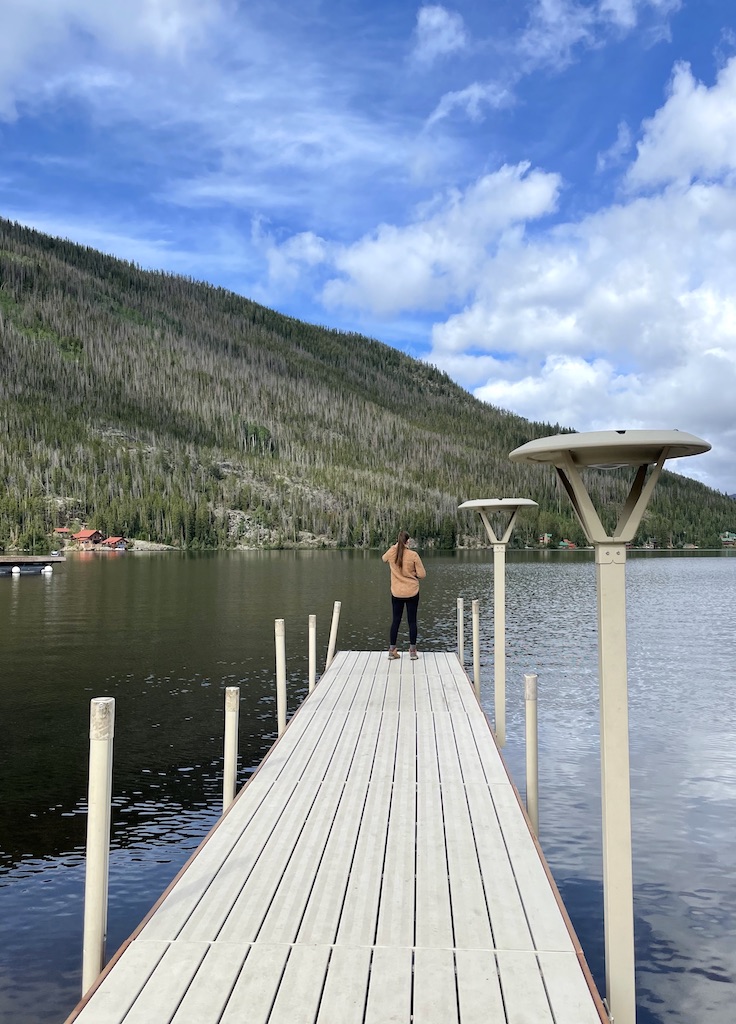
- View the lake from public docks off Grand Ave.
- Rent a boat for the day.
- Kayak or stand up paddle board.
- Walk the historic boardwalk and explore shops along Grand Ave.
- Grab food from one of the many popular restaurants in town.
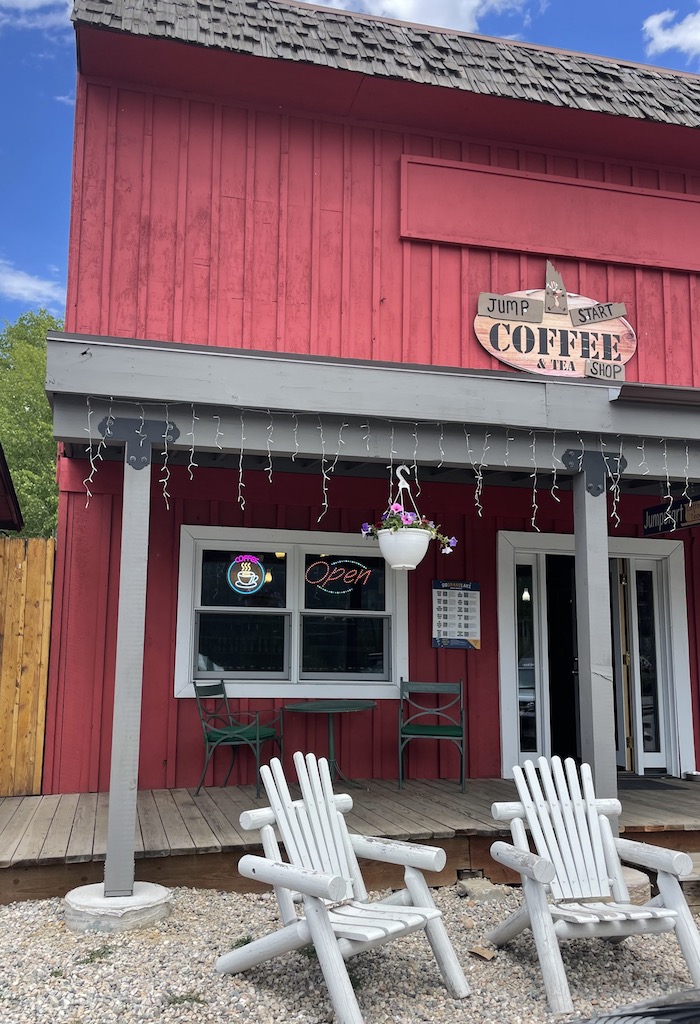
If you only have an hour or two here, I recommend viewing the lake, strolling Grand Ave, and grabbing food or coffee.
The easiest spots to view the lake are from Grand Lake Marina or the Public Boat Launch by Adams Falls/ East Inlet Trail parking.
For many more ideas, check out The Best Things To Do In Grand Lake, Colorado.

Rocky Mountain National Park West Side One Day Itinerary
If you have one day on the west side of Rocky Mountain National Park, there are many different ways you can spend your time.
Below is a sample itinerary for one day in RMNP:
- Hike Adams Falls and a small portion of East Inlet Trail.
- Drive Trail Ridge Road.
- See Kawuneeche Valley and the Colorado River.
- Visit Holzwarth Historic Site.
- Stop at the continental divide.
- Stop by the Alpine Visitor Center.
- Throughout the day, watch for wildlife – this side of the park has lots of moose and elk.
Rocky Mountain National Park Reservations
During peak season, late-May through mid-October, timed-entry reservations are required to visit Rocky Mountain National Park.
These must be secured in advance and are required in addition to the standard park entrance fee.
There are two types of permits available: Park Access and Park Access+.
- Park Access+ includes access to the entire park including Bear Lake Road — home to some of RMNP’s most popular hikes on the east side of the park such as Dream Lake and Emerald Lake.
- Park Access includes access to the park except Bear Lake Road. You’ll still be able to explore areas like Trail Ridge Road and Old Fall River Road.
Reservations can be made online at Recreation.gov or by phone. If booking online, you can head directly to the Timed-Entry Reservations RMNP.
(If you’re staying in Estes Park for part of your trip and don’t have a Park Access+ reservation, you have a third option: the Hiker Shuttle. This shuttle runs from the Estes Park Visitor Center to the Bear Lake Park & Ride Station. It requires its own separate reservation, which can also be made through Recreation.gov.)
No matter which option you choose, keep in mind that time slots book up quickly — especially the early ones. I recommend getting online the moment reservations become available and booking the earliest entry time you can to beat the afternoon crowds.

Getting To Rocky Mountain National Park West Entrance
For those wondering, yes, you can enter Rocky Mountain National Park on the west side. You’ll do so utilizing the Grand Lake Entrance.
Grand Lake Entrance (west side entrance) – 2.5 miles from Grand Lake, 103 miles from Denver.
To get here from Denver, follow I-70 west to US 40 towards Granby. Then follow US 34 to Grand Lake. The park’s west entrance is on the edge of town.
The west entrance to Rocky Mountain National Park is open year-round.
Parking & Getting Around West Side RMNP
The only major road on the park’s west side is Trail Ridge Road. From this road you can access most activities listed in this guide.
Traffic on Trail Ridge Road can be heavy during peak times, however, timed-entry reservations have helped control this. Wildlife, however, can still cause minor traffic jams.
Along Trail Ridge Road you’ll find a mixture of large parking lots and small pull outs. Parking can be limited during peak times, such as holidays and weekends. I normally visit RMNP on week days and am able to easily find parking.
Overall, you’ll (usually) find the park’s west side to be much quieter than the east.
What To Pack For Rocky Mountain National Park
Most visitors don’t need anything special for a visit to Rocky Mountain National Park.
Comfortable athletic wear or basic hiking gear will do. Two key items you don’t want to forget though, are layers and sun protection.
Mornings and evenings will be chilly compared to midday. Pack layers which are easy to take on and off, and always carry a light rain jacket or wind breaker in case an afternoon storm hits.
Below are items I pack when visiting Rocky Mountain National Park in summer or early fall:
- Shorts or lightweight pants
- Tank top
- Light weight long sleeve shirt or fleece
- Rain jacket or windbreaker
- Hiking boots or sneakers with good traction
- Wool socks
- Hat
- Sunglasses
- Sunscreen
- Small first aid kit
- Reusable water bottle
- Snacks/ lunch
For those hiking, as a general rule, plan to drink about 32 oz of water for every 2 hours of hiking. I carry two 40 oz water bottles in my backpack at all times. Additionally, I keep a 64 oz Hydro Flask in my car for refreshing, cold water after the hike.
There aren’t many places to get food in the park, especially on this side, so be sure to pack lunch and snacks.
For those visiting in winter or spring, head on over to my other guide, Rocky Mountain National Park In Winter, for more information.
Where To Stay On Rocky Mountain National Park West Side
The town of Grand Lake is just 2 miles from the RMNP west entrance. This is a popular tourist destination, with plenty of hotel and vacation rental options.
Some top hotel locations are Grand Lake Lodge and Gateway Inn.
There’s also great vacation rentals throughout town, check out Grand Lake: Best Cabins For Rent.
If you’re having trouble finding a place, check out Granby. The nearby town is located about 20 minutes from Grand Lake.
Where To Camp On Rocky Mountain National Park West Side
The only campground on the west side of Rocky Mountain National Park is Timber Creek Campground. Reservations are required and should be booked well in advance.
For information about camping here, check out RMNP Camping.
Camping options near RMNP west side, include:
- Grand Lake KOA (formerly Elk Creek Campground)
- Green Ridge Campground
- Winding River Resort
Weather In Rocky Mountain National Park
Below are average monthly temperatures in Rocky Mountain National Park:
- January – 27° / 13° (High/ Low F°)
- February – 28° / 13°
- March – 36° / 18°
- April – 42° / 23°
- May – 51° / 30°
- June – 63° / 39°
- July – 69° / 45°
- August – 66° / 44°
- September – 59° / 38°
- October – 46° / 29°
- November – 34° / 20°
- December – 25° / 12°
The summer months see pleasant, mild weather. Afternoon thunderstorms are common this time of year and can be dangerous, especially at high elevations above the tree line.
Snow and persistent wind are common occurrences in Rocky Mountain National Park during winter and spring.
It’s important to note, the park’s east and west sides can see very different weather. Additionally, elevation, which varies greatly throughout the park, will also affect conditions.
Weather can be unpredictable and change very abruptly here. It’s important to be prepared for anything.
Visitors should check the park’s website — NPS RMNP Weather — or stop at a visitor center for the latest weather and trail conditions before heading out on a hike or other outdoor activity.

How Much Time Do You Need On Rocky Mountain National Park West Side?
A half day will allow you to see the highlights of Rocky Mountain National Park’s west side.
Those who don’t plan to hike, will only need a few hours.
Those who plan to hike multiple trails, will need a full 1 – 2 days to explore the area.
When Is The Best Time To Visit Rocky Mountain National Park?
Summer, mid June – August, is a great time to visit Rocky National Park. Snow is melting, temperatures are mild, and Trail Ridge Road is open.
Keep in mind that Rocky Mountain National Park sees snow well into May, sometimes into June. Don’t expect summer weather and snow-free trails until about mid or late June.
Fall is a lovely time of year to visit. You can expect changing leaves from mid September into early October. There is a chance for snow this time of year, but most days are sunny and pleasant. Most trails are open, Trail Ridge Road is usually open until mid October, but may close with more frequency this time of year.
Winter and spring are very snowy and cold. If you wish to see the park with fewer crowds, this is the best time to do so. Many trails are open for snowshoeing or cross-country skiing, but aside from that, much of the west side is closed in winter.
What’s The Difference Between The West & East Side Of RMNP?
Rocky Mountain National Park is divided between east and west sides.
Both sides have their own entrances, plenty of hiking, great views, and lots of wildlife.
As mentioned above, the two sections are connected via Trail Ridge Road, the highest continuous paved road in North America. During summer, visitors can easily navigate the two sides, which are separated by about 45 miles and 1.5 hours of driving.
Come winter, however, Trail Ridge Road closes up, therefore the east and west side are divided. Navigating between the two suddenly requires 3.5 hours across 145 miles.
So what’s the difference between the two sides? The east side is considered part of the Front Range and the west side part of the Western Slope. The two areas have geological differences, which you’ll notice in the differing landscapes, and even different climates.
The park’s east side has more dramatic and rugged mountain views, which leads to more iconic hiking trails. Here you’ll find famous trails like Dream Lake, Emerald Lake, and Sky Pond.
The west side has really beautiful meadows and lush valleys amid mountain peaks.
While both sides have ample wildlife, I think the west side wins out. The largest factor being the moose found in this area. Yes, moose are found throughout the park, but you’re much more likely to spot one on the west side.
The east side of the park is most popular. Therefore, it has more visitor facilities, multiple entrances, multiple camping grounds, and larger crowds.
The west side of the park has fewer facilities and is relatively a quieter, more remote experience.
Grand Lake sits at the park’s west entrance and Estes Park at the east. Both are popular tourist towns, but Estes Park is generally busier.
To understand the differences between the two towns, check out my other posts:
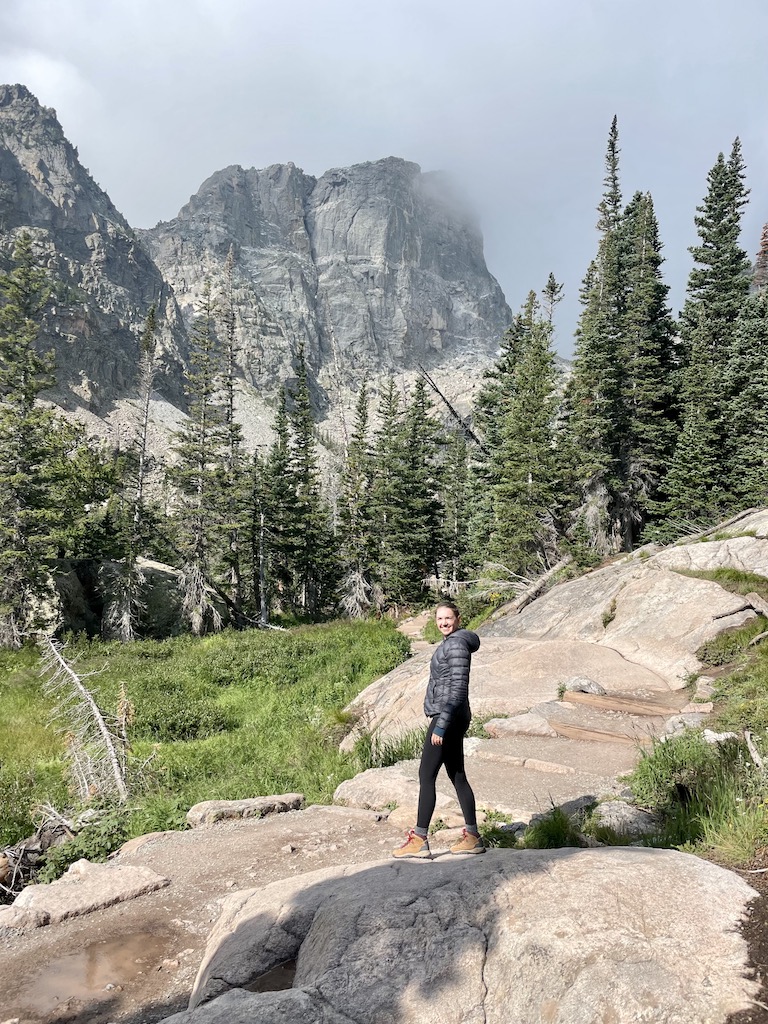
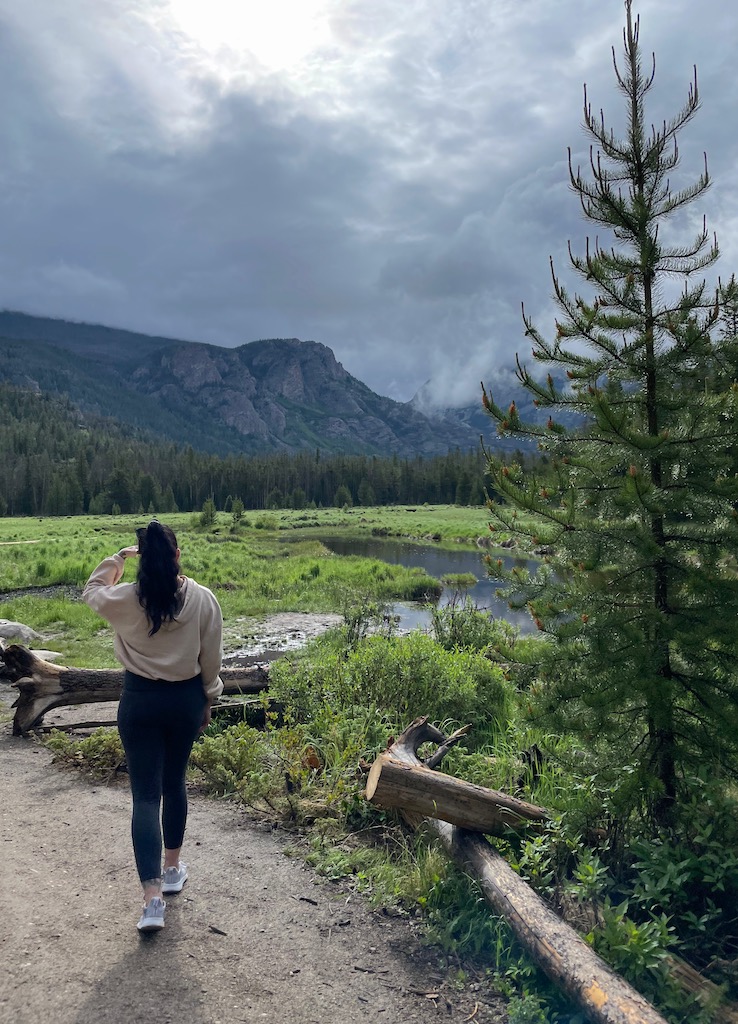
As you can see, there are many great things to do on the west side of Rocky Mountain National Park. I hope this has been helpful in planning your trip and have the best time!
Any questions? Please leave a comment below or reach out on social media.
Looking for more ideas? Below are additional Colorado guides or head on over to RMNP NPS.
More Information For Your Visit To Rocky Mountain National Park:
- One Day In Rocky Mountain National Park: What To Do
- The Best Rocky Mountain National Park Tours
- Fall In Rocky Mountain National Park: Best Things To Do
- Winter In Rocky Mountain National Park: The Best Things To Do
More Information For Your Colorado Vacation:
Pin for later!



Keep Up With Amy!
Subscribe to the newsletter for the latest updates in your inbox. And don’t forget to connect on your favorite social platform!
Thank you!
You have successfully joined our subscriber list.